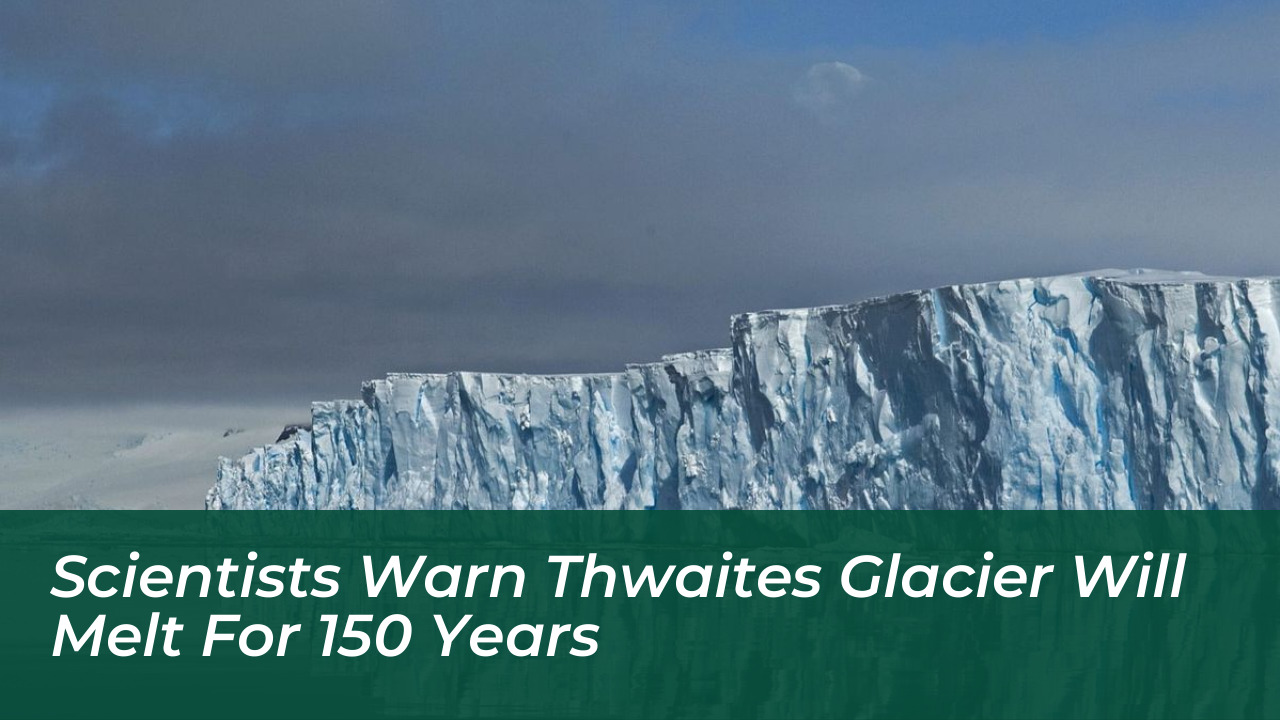

Two comprehensive scientific studies have issued a stark warning regarding Antarctica’s critical ice mass. The Thwaites Glacier will continue losing ice for at least the next 150 years, even under extreme ocean-cooling scenarios. Published in October 2026, the research highlights how historical melting patterns and complex physical processes hidden beneath the glacier accelerate ice loss. This drives up global sea level rise and exacerbates coastal flooding risks worldwide.
Researchers from the British Antarctic Survey led the investigations alongside a collaborative team from the University of California, Irvine, and NASA’s Jet Propulsion Laboratory. Their findings outline a long-term trajectory for the West Antarctic ice sheet. This sheet remains vulnerable to ongoing environmental changes regardless of short-term stabilization efforts.
Current Impacts and Potential Global Consequences
Scientific literature often refers to Thwaites as the “Doomsday Glacier.” Located in West Antarctica, it currently accounts for approximately 4% of global sea level rise. Glaciologists closely monitor its retreat because of its immense size and instability.
Research reported by CNN indicates that a total collapse of the Thwaites Glacier could unleash catastrophic consequences for coastal regions across the globe. It would raise worldwide sea levels by approximately 65 centimeters, which is equivalent to more than 2 feet. Such a rise would displace millions of people living in low-lying coastal cities and island nations, requiring massive investments in defensive infrastructure.
Revised Modeling Doubles Sea Level Rise Projections
Adding urgency to the crisis, a separate study published in the journal Nature Communications introduced advanced modeling techniques. These techniques help researchers better understand how the glacier interacts with warm seawater. The improved models revealed that the glacier’s contribution to global sea level rise by the year 2100 could reach 1.2 inches. This figure is double previous estimates. Crucially, it accounts for projections even without factoring in any additional global warming.
Key Findings from the 2026 Studies
- Extended Ice Loss: Thwaites Glacier will continue to degrade for a minimum of 150 years.
- Resilience to Cooling: Ice loss is projected to persist even under extreme hypothetical ocean-cooling scenarios.
- Current Contribution: The glacier currently drives about 4% of total global sea level rise.
- Worst-Case Potential: A complete collapse threatens to raise global sea levels by over 2 feet (65 cm).
- Near-Term Revisions: New seawater interaction models double previous century-end sea level rise projections to 1.2 inches.
Scientists continue to refine their observations of subsurface melting and ice shelf weakening. The new data underscores the urgent need for global climate mitigation strategies and long-term coastal adaptation planning to prepare for decades of unavoidable ice retreat.