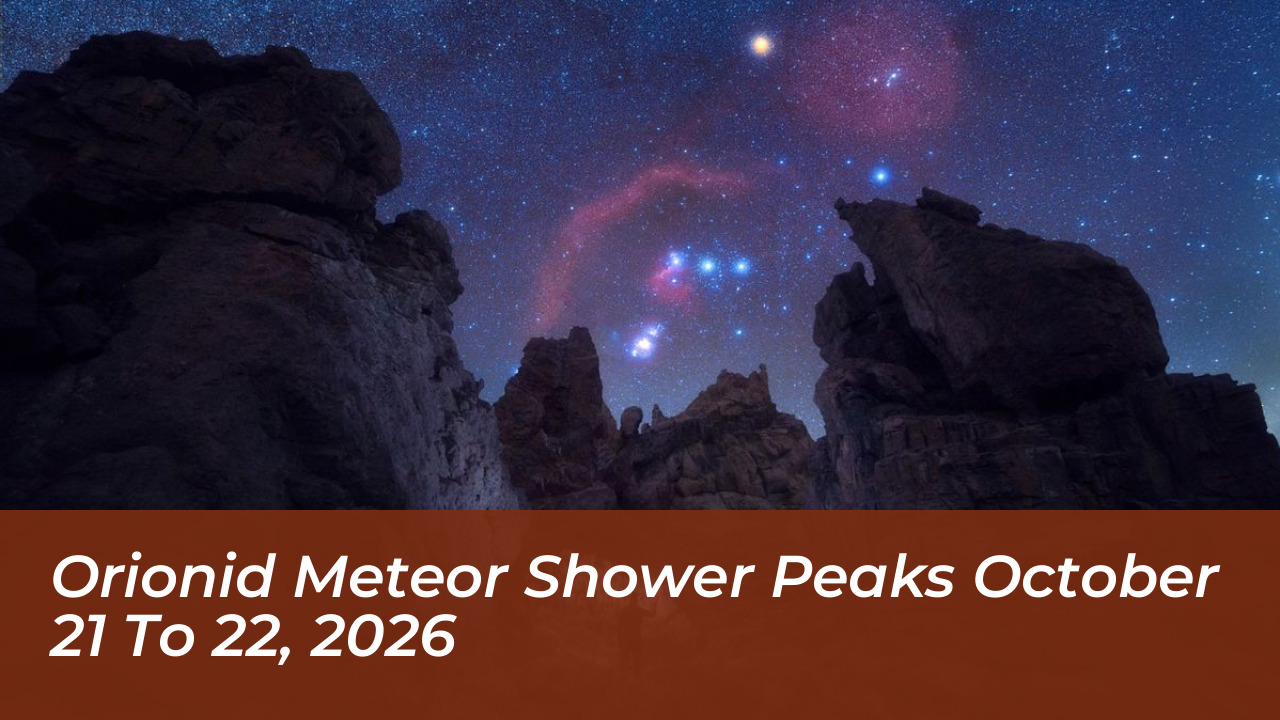

Skywatchers across the United Kingdom, Europe, and North America can prepare for an impressive celestial display as the annual Orionid meteor shower reaches its peak overnight from October 21 to 22, 2026. This recurring astronomical event occurs annually as Earth travels through a dense trail of cosmic debris left behind by Halley’s Comet.
Astronomers and stargazers estimate that observers under ideal dark-sky conditions could catch around 20 meteors per hour. According to data from Sky & Telescope, the Orionids remain active over an extended period, running this year from October 2 through November 7.
Although shooting stars can flash across any region of the night sky, their apparent radiant point of origin lies within the prominent constellation Orion. One of the greatest advantages of viewing the Orionids is accessibility, as the shower can be easily observed with the eye, requiring no specialized equipment such as telescopes or binoculars.
Viewing Challenges and Moon Phase
Despite high expectations for the event, skywatchers will face a notable viewing challenge this season. A bright waxing gibbous Moon will illuminate the night sky during the peak, making fainter meteors harder to spot.
Reports from Space.com indicate that the Moon will be roughly 80% illuminated on the peak night. Fortunately, this obstruction will ease during the early morning hours. The Moon is expected to set around 3 a.m. local time across Europe and North America on October 22, opening a clear window for optimal dark-sky viewing before dawn.
Tips for Watching the Orionid Meteor Shower
- Find Dark Skies: Travel away from bright city lights and urban light pollution to maximize visibility.
- Give Your Eyes Time to Adjust: Spend at least 20 to 30 minutes in the dark without looking at phone screens to let your eyes adapt to night conditions.
- Dress Warmly: October nights can feature chilly temperatures, so bring blankets, jackets, and comfortable reclining chairs.
- Be Patient: Meteors arrive in spurts with lulls in between, so give the display at least an hour of dedicated observation time.