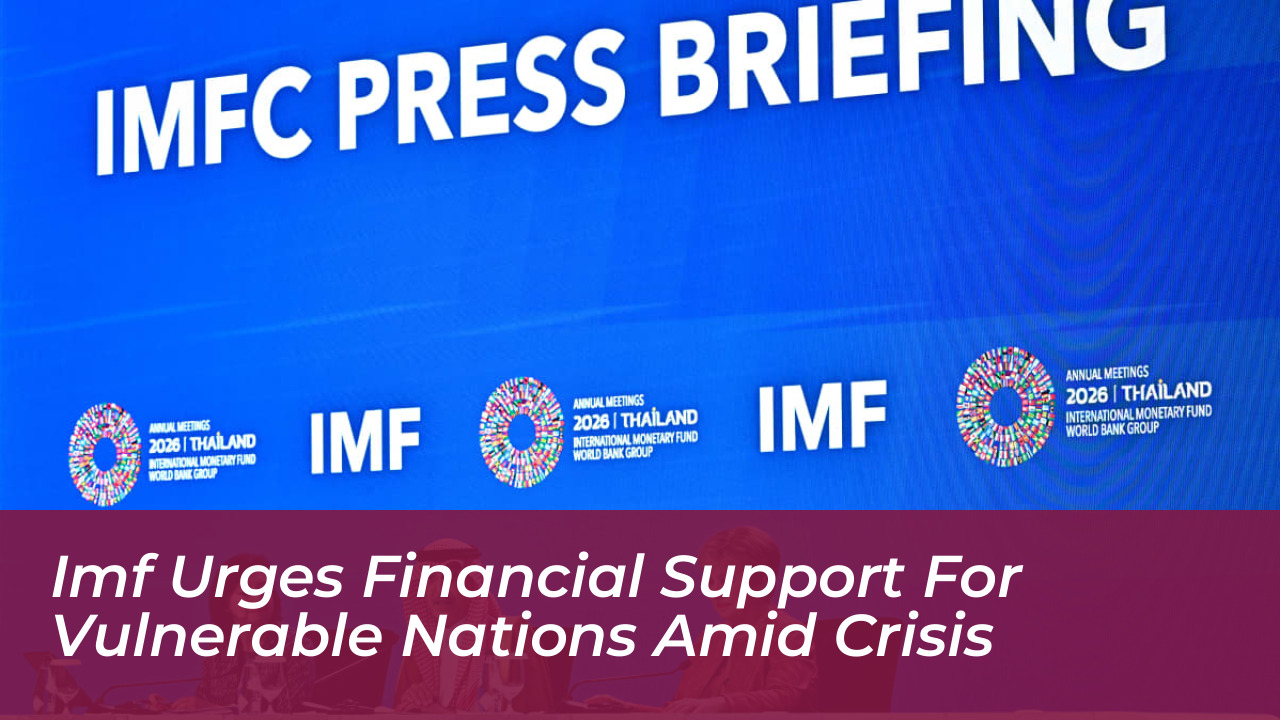

As war-related disruptions, persistent inflation, and mounting debt costs threaten vulnerable economies, the International Monetary Fund (IMF) has urged greater financial assistance for countries facing short-term funding difficulties. The call concluded the joint IMF and World Bank annual meetings in Bangkok on October 17, 2026, as officials warned that global economic risks remain heavily tilted to the downside.
The International Monetary and Financial Committee (IMFC), the IMF’s principal advisory body, stated that escalating conflicts and trade tensions could worsen pressure on energy and commodity markets. These factors threaten to disrupt critical trade routes and undermine global food security. Saudi Arabian Finance Minister Mohammed al-Jadaan, who chairs the committee, issued the formal statement following intensive discussions among member economies.
Vulnerable Economies Bear the Brunt of Global Shocks
Speaking as the annual meetings wrapped up, IMF Managing Director Kristalina Georgieva described a global landscape defined by a mix of resilience and deep anxiety. While advanced economies benefit from growth drivers like artificial intelligence investments, low-income nations are largely left out while battling severe fiscal pressures.
According to the IMF, higher global interest rates and tight financial conditions mean low-income countries now spend between 8 percent and 14 percent of their government revenue strictly on debt repayments. Georgieva emphasized the heavy social toll of these macroeconomic strains on developing regions.
“I can tell you that people everywhere, but especially in poorer countries, don’t like inflation. Inflation is like a tax on the poor,” said IMF Managing Director Kristalina Georgieva.
Low-income, oil-importing countries have taken the hardest hit from surging global energy costs. Prices have escalated significantly following geopolitical conflicts in the Middle East, leading to retaliatory strikes and heavily disrupted oil and gas flows across international shipping lanes.
Geopolitical Risks and Financial Stresses
The IMFC advisory statement highlighted multiple layers of risk threatening global stability:
- Escalating regional conflicts disrupting critical trade routes and supply chains.
- Commodity price pressures affecting refined energy products and staple foods.
- Uncertainty surrounding advanced intelligence technologies creating digital divides.
- Rising bond yields in major advanced economies triggering capital flight.
Geopolitical instability continues to intensify existing financial vulnerabilities, particularly in developing states already burdened by expensive borrowing terms. The committee stressed that coordinated international action remains essential to prevent widespread sovereign debt distress.
Targeted Debt Relief and Regional Support Programs
To counteract these challenges, the IMF reiterated its commitment to helping countries restructure unsustainable debt burdens. Georgieva noted that the organization maintains a relentless pursuit of more resources for low-income countries to assist with domestic resource mobilization and attract private investment.
During the Bangkok meetings, leadership also addressed specific regional assistance frameworks:
- Iraq: The IMF confirmed plans to back Iraq firmly with a requested loan program, delivering both capital and structural policy support.
- Lebanon: Discussions with Lebanese authorities are reportedly making significant progress toward a formal financial rescue package, though technical work remains ongoing.
Financial authorities agree that targeted spending priorities focusing on growth and protecting marginalized populations will remain critical as developing nations navigate a volatile global economic environment.