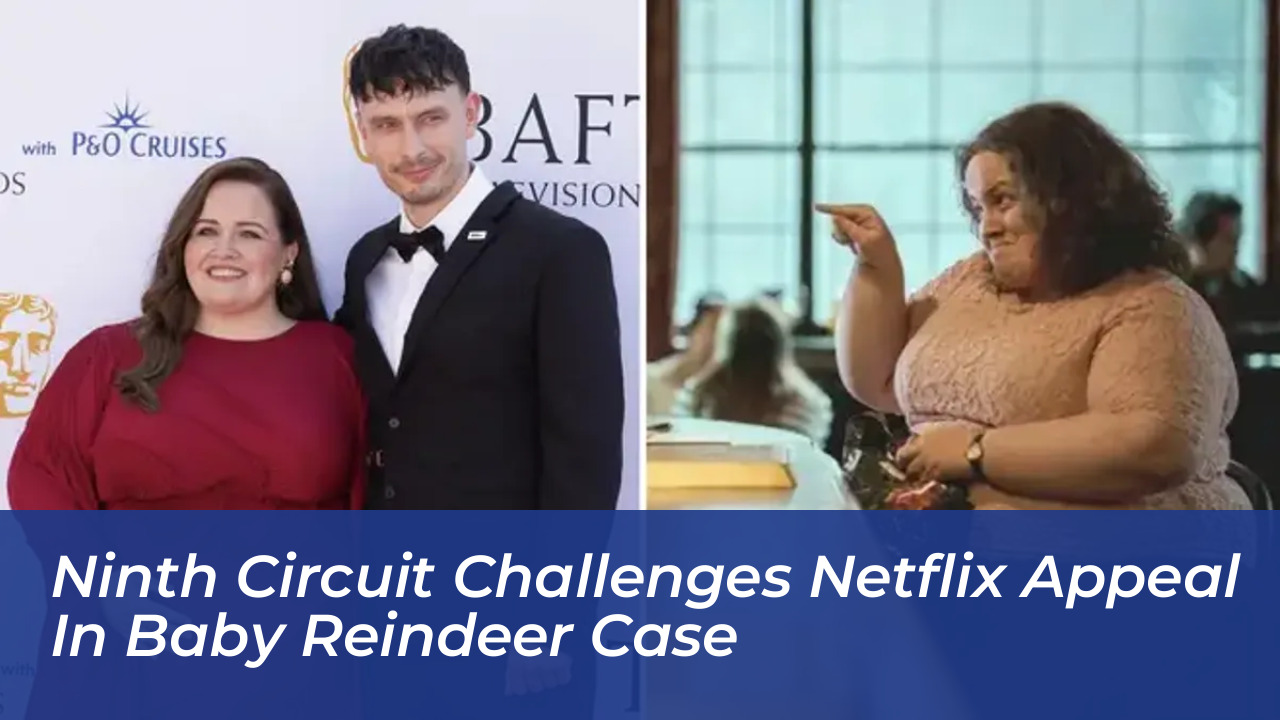

Netflix faces a fresh legal hurdle in the high-profile defamation lawsuit brought by Fiona Harvey over the hit streaming series Baby Reindeer. The U.S. Court of Appeals for the Ninth Circuit has questioned whether it possesses the legal jurisdiction necessary to consider the company’s ongoing appeal. This development could return the high-stakes dispute to a federal district court in Los Angeles and bring Harvey’s $170 million claim a step closer to trial.
According to court filings, the appeals court issued an order giving Netflix a 14-day window to voluntarily withdraw its appeal or formally explain why the court has the legal authority to hear it. Simultaneously, the court suspended the appeal’s briefing schedule while this fundamental question of jurisdiction remains unresolved.
Origins of the $170 Million Defamation Lawsuit
Fiona Harvey, a former lawyer from Scotland, filed her lawsuit against Netflix in June 2024. In her complaint, Harvey alleged that viewers quickly identified her as the real-life inspiration for Martha, a central character portrayed by actress Jessica Gunning in the dark comedy-drama created by and starring Richard Gadd.
Harvey maintains that the series falsely depicted her as a twice-convicted stalker who s*xually assaulted Gadd and spent years behind bars. She has denied these representations, arguing that Netflix damaged her reputation by presenting the fictionalized show under the banner of a true story.
The Anti-SLAPP Motion and District Court Ruling
The current appellate dispute originates from a September 2024 ruling by U.S. District Judge R. Gary Klausner. Judge Klausner rejected Netflix’s special motion to strike Harvey’s core defamation claim under California’s anti-SLAPP law, which is designed to quickly dismiss lawsuits targeting protected speech.
In his decision, Klausner emphasized a distinction between dramatizing real-life events and presenting fabricated details as absolute fact. Each episode of Baby Reindeer opens with the statement, “This is a true story,” which the judge noted could invite viewers to interpret the dramatic depictions as factual occurrences.
, Klausner pointed out gaps between what Gadd alleged Harvey did in reality and what Martha executes in the streaming series. While Harvey received a police harassment warning in 2016 and was never criminally prosecuted or imprisoned, the fictional Martha is depicted as a convicted criminal sentenced to prison time.
Shifting Legal Precedent and Ninth Circuit Scrutiny
Following Judge Klausner’s rejection of the anti-SLAPP motion, Netflix filed an appeal in October 2024. That filing paused the district court proceedings and delayed a trial that was initially scheduled for May 2025.
However, the legal landscape shifted while that appeal remained pending. In October 2025, the full Ninth Circuit ruled in an unrelated case, Gopher Media LLC v. Melone, determining that federal appellate courts generally cannot immediately review the denial of a California anti-SLAPP motion prior to a final judgment in the case. This precedent-setting ruling overturned earlier court rules that allowed defendants to bring such interlocutory appeals.
Citing the Gopher Media standard, the appeals court indicated it may lack jurisdiction over Netflix’s challenge in the Baby Reindeer matter. Netflix now has a strict deadline to justify why its appeal should proceed. If the company fails to establish jurisdiction or chooses to withdraw, the case will return to the federal district court in Los Angeles to resume preparations for trial.