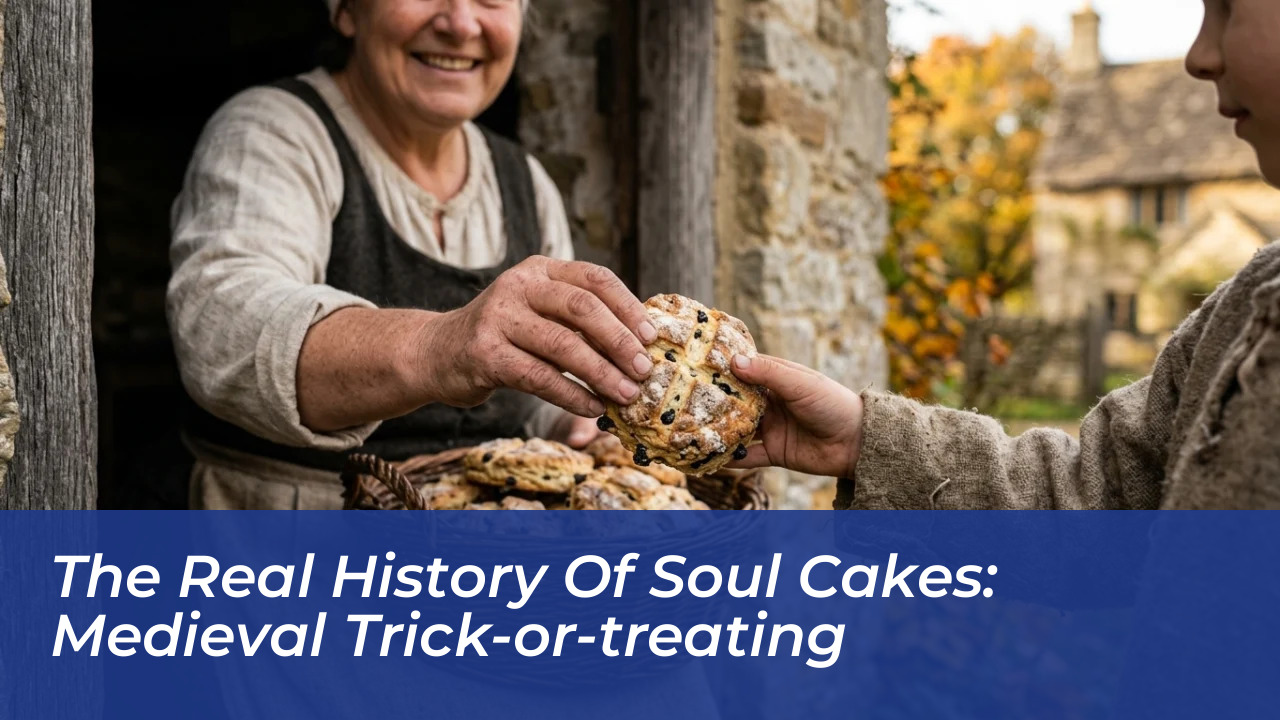

Centuries before plastic buckets and manufactured sweets took over late October, medieval households across Britain distributed small s**ced baked goods known as soul cakes in exchange for prayers for the deceased. These round, aromatic bakes formed the direct ancestor of modern trick-or-treating, anchoring a solemn religious exchange that marked the transition into winter during the ancient triduum of All Hallows’ Eve.
Modern commercial holidays often look like the deliberate inventions of twentieth-century retail marketing, but the tradition of going door to door for food predates modern confections by hundreds of years. The ritual practice emerged from a complex fusion of seasonal shifts, communal solidarity, and ecclesiastical reforms across the British Isles and western Europe.
The Medieval Roots of All Hallows’ Eve and All Souls’ Day
The origins of late autumn observances sit firmly in Samhain, a pastoral festival marked roughly 2,000 years ago across Britain, Ireland, and northern France. Held between sunset on 31 October and 1 November, it represented the agricultural threshold between the light half of the year and the dark half, coinciding with the slaughter of surplus livestock and the storage of provisions for winter. During this turning point, communities held that the boundary separating the physical world from the dead grew unusually thin.
The Christian calendar systematically incorporated this seasonal threshold over several generations. During the eighth century, Pope Gregory III moved the feast of All Saints’ Day from May to 1 November, dedicating an oratory in St Peter’s Basilica to all Christian saints. His successor, Pope Gregory IV, later extended the observance across the Western Church. The evening prior became known as All Hallows’ Eve-from “hallow”, an older English word for a holy person or saint-which eventually contracted into the name Halloween.
When the Western Church subsequently assigned 2 November as All Souls’ Day to pray for departed souls, the three-day cycle collectively became Allhallowtide. Parishes throughout Britain marked the liturgical season by tolling church bells, lighting candles, and holding solemn processions. Historical records show autumn door-to-door traditions evolved directly from liturgical charity and agricultural transitions rather than modern consumer novelties.
The Ritual of Souling and the Exchange for Prayers
Out of this three-day observance grew the British custom known as “souling”. Impoverished residents, and later mostly children, visited the homes of wealthier neighbours to sing traditional verses and collect baked soul cakes. In return, the recipients promised to pray for the souls of the household’s deceased relatives.
Unlike modern trick-or-treating, which relies on a playful threat of mischief, souling operated on a strict, solemn social contract. Each cake eaten was believed to ease the passage of a deceased soul through the afterlife, combining Christian intercession with essential community charity during the lean onset of winter.
From British Bakehouses to Modern Doorsteps
Across regional Britain, traditional recipes for soul cakes varied. Most took the form of small, round shortbread-like bakes or bready buns. They were typically laced with warming autumn s**ces, sweetened dried fruits, and marked with a cross on top before entering the oven to signify their sacred purpose.
Over the centuries, the custom evolved across different regions:
- Regional variations: Scottish and northern English children developed customs of dressing in disguise-known as “guising”-performing songs, poems, or jokes before receiving coins, oatcakes, or seasonal treats.
- The Atlantic crossing: During the nineteenth century, mass migration from Ireland and Britain carried these autumn folk customs to North America, where native pumpkins replaced traditional carved turnips.
- Post-war transformation: Following the Second World War, consumer manufacturers reorganised these community rituals around individually wrapped confectionery, turning medieval souling into contemporary trick-or-treating.
Contrasting Ancient Traditions with Modern Practice
Examining the structural evolution of autumn customs dispels persistent modern myths about their original purposes. The shift from substantive s**ced bakes to commercial confectionery stripped away the intercessory meaning of the exchange, leaving behind the secular social framework seen today on British high streets every autumn.
| Historical Tradition | Modern Practice |
|---|---|
| Baked s**ced soul cakes given to the poor in exchange for prayers for the dead. | Manufactured sweets and chocolate distributed to costumed children. |
| Turnips and root vegetables hollowed out as protective lanterns across Britain and Ireland. | Commercially cultivated pumpkins carved into decorative jack-o’-lanterns. |
| Costumes fashioned from animal skins to confuse wandering seasonal spirits. | Mass-produced disguises worn purely for communal entertainment and social gatherings. |
What family traditions do you keep when marking autumn evenings? Have you ever tried baking traditional s**ced soul cakes at home instead of buying supermarket sweets? Leave your thoughts in the comments below and share your favourite seasonal recipes with us.