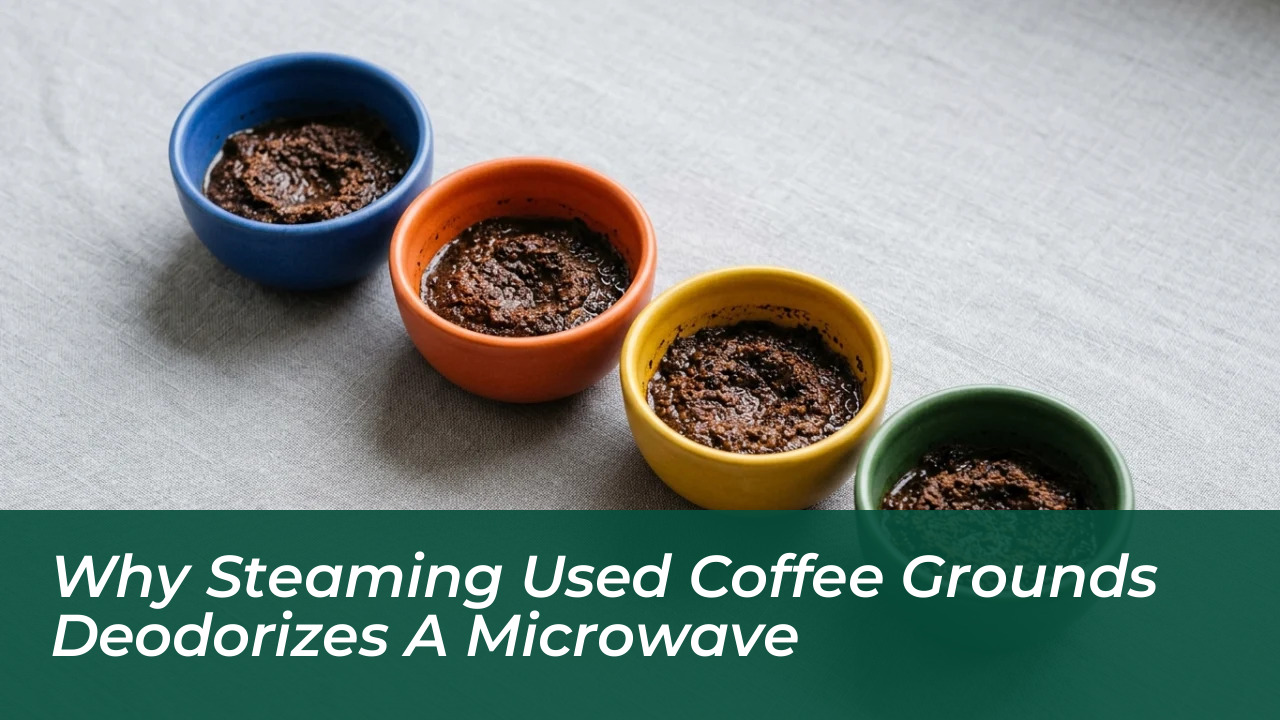

Heating a simple mixture of two tablespoons of used coffee grounds and a half-cup of water directly in your microwave can break down pungent, lingering food smells within minutes. Instead of reaching for synthetic chemical cleaners or masking unpleasant aromas with heavy artificial fragrances, this quick kitchen method utilizes the natural chemical structure of leftover morning brew to reset your appliance. Microwave interiors easily trap volatile aromas because of their compact, sealed layout, where leftover splatters clinging to the ceiling or turntable continuously cook and vaporize each time the unit runs.
The Science Behind Trapping Kitchen Odors
Smells originate from volatile organic compounds (VOCs) drifting through the air and settling onto surfaces inside closed kitchen appliances. Many people assume coffee merely overpowers bad smells with a stronger aroma, but scientific testing demonstrates that spent grounds actually behave as a functional adsorbent. Research published in the Journal of UOEH evaluated how spent coffee grounds interact with 14 distinct VOCs, finding that used grounds actively adsorbed every compound tested to varying degrees.
The porous cellular structure of the material creates microscopic surface area where airborne molecules physically adhere, trapping odor particles rather than letting them circulate freely. While laboratory findings evaluated airborne industrial VOCs rather than everyday burnt salmon or reheated fish, the exact same physical principle applies inside the small, sealed chamber of a microwave.
How to Steam-Clean Your Appliance in Four Steps
Before introducing the coffee mixture, wipe out any large, visible chunks of food, as fresh steam cannot penetrate solid debris hanging from the roof of the unit. Once you clear the heavy surface debris, follow this simple sequence:
- Add two tablespoons of spent coffee grounds to a microwave-safe bowl.
- Pour in one-half cup of plain tap water and gently stir the mixture.
- Microwave the bowl on high power for a few minutes until dense steam fills the entire cavity.
- Keep the microwave door closed for several minutes to let the steam penetrate stuck-on residues, then carefully remove the hot bowl and wipe the walls, turntable, and ceiling clean.
This straightforward approach combines mechanical moisture with organic adsorption, delivering a clean interior without requiring abrasive scouring pads or harsh chemical sprays.
The Overnight Dry-Grounds Technique
For appliances that retain stale food odors even after a thorough wipe-down, an unheated, dry approach provides prolonged odor control. Because moisture left in spent grounds can encourage mold growth, the coffee must be properly prepared before sitting for an extended period. Spread freshly brewed grounds across a shallow plate or baking sheet and allow them to dry completely.
Place roughly one cup of these dry grounds into an open container, set it inside the microwave, and close the door overnight while the appliance remains completely powered off. By morning, the highly porous grounds will have drawn the remaining airborne aromas out of the small cavity.
Comparing the Steam and Overnight Methods
| Methodology | Best Use Case | Primary Mechanism |
|---|---|---|
| Steam Method | Fast cleaning of stuck-on grease and immediate odor neutralization. | Moisture loosening + VOC thermal adsorption |
| Overnight Method | Passive deodorization for stubborn, lingering smells without heat. | Passive dry porous surface trapping |
When Kitchen Grounds Are Not Enough
If persistent odors remain after trying both the steaming and dry methods, your appliance may have an underlying hardware issue rather than a surface cleanliness problem. Over-the-range microwave models typically include integrated charcoal ventilation filters engineered to trap smoke, grease, and cooking exhaust. These carbon filters become saturated over time and lose their absorption capacity entirely. Replacing an old charcoal filter will resolve heavy, deep-seated odors that originate behind the cooking cavity rather than inside the interior chamber.
Frequently Asked Questions
Can coffee grounds ever completely remove strong fish or burnt popcorn smells?
Yes, heating spent grounds creates steam that releases organic compounds capable of adsorbing VOCs. However, extremely heavy grease or burnt food residues must be wiped away first for the treatment to succeed.
Why do coffee grounds sometimes leave a stale smell in the microwave?
If the grounds sit too long in a humid, unventilated microwave without drying properly, they can trap excessive moisture, foster mold, and leave behind an over-extracted coffee aroma.
How long should I microwave the water and coffee mixture?
Microwave the mixture on high for about two to three minutes until it produces a heavy, rolling steam. Always watch the bowl closely to prevent boiling over.
Are there alternative natural deodorizers if I do not drink coffee?
Yes, you can substitute coffee with a 1:1 mixture of white vinegar and water, fresh lemon slices boiled in water, or an open container of baking soda left overnight.
How often should microwave charcoal filters be replaced?
For over-the-range microwaves, you should generally inspect and replace integrated charcoal filters every 6 to 12 months to maintain proper odor and smoke absorption.