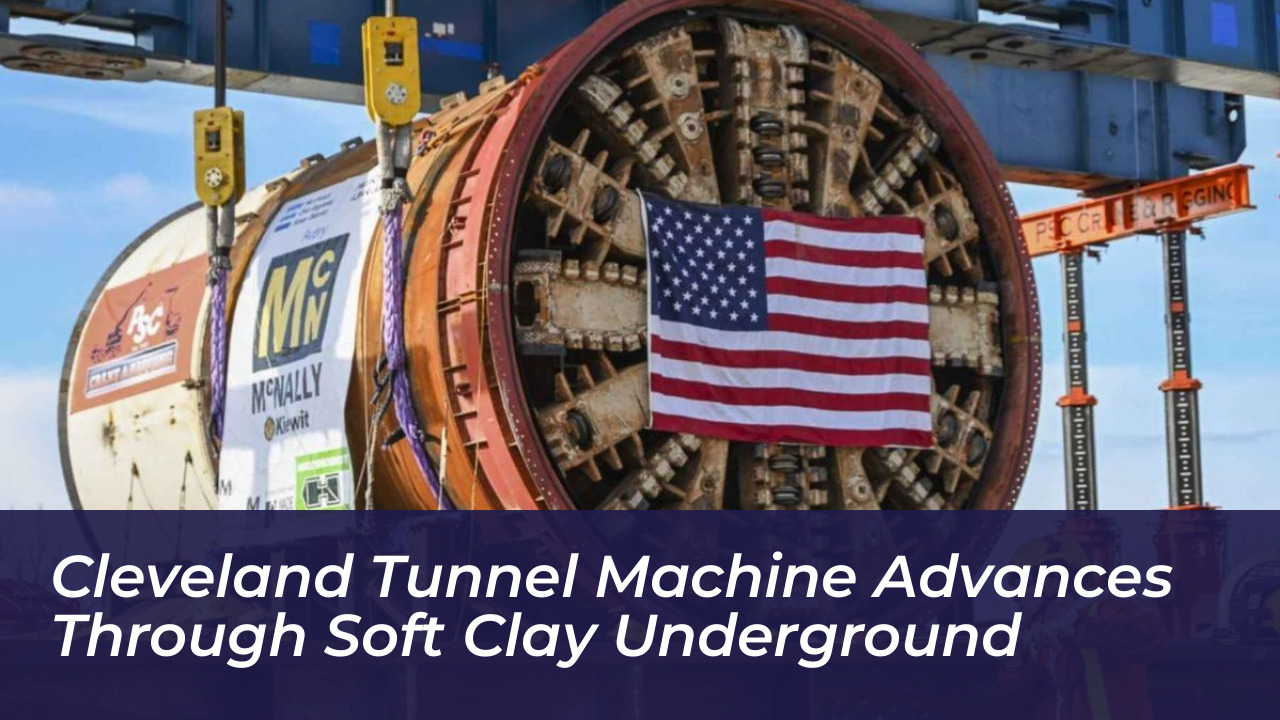

An 800-ton tunnel boring machine operates around the clock deep beneath Cleveland, Ohio. It has recently passed the halfway mark of a 3.4-mile underground sewer tunnel. Crews manage difficult geotechnical conditions to prevent soft clay from closing tightly around the heavy equipment as it cuts through the subterranean landscape.
Named Avery, the massive excavation machine is boring the Southerly Tunnel. This project is the sixth of seven major storage tunnels scheduled under the Northeast Ohio Regional Sewer District’s extensive infrastructure framework. According to district officials, this broader initiative involves an investment of approximately $3 billion deployed over nearly 15 years to overhaul regional wastewater management.
The Engineering Behind Project Clean Lake
The tunnels serve as critical underground holding vessels for stormwater and combined sewage during heavy wet-weather events. This happens when flows exceed the operational capacity of local treatment plants. By temporarily storing excess wastewater until facilities can process it, the system prevents untreated sewage from spilling directly into Cleveland’s local waterways and Lake Erie.
Project Clean Lake functions as a 24-year program launched under a 2011 federal consent decree. Its objective is reducing combined sewer discharges from a historical baseline of 4.5 billion gallons annually down to just over 200 million gallons by 2035. Program milestones achieved thus far have already eliminated approximately 2 billion gallons of annual combined sewer overflows.
Key Project Details and Scope
- Machine Name: Avery
- Machine Weight: 800 tons
- Tunnel Length: 3.4 miles (Southerly Tunnel)
- Program Owner: Northeast Ohio Regional Sewer District (NEORSD)
- Overall Program Investment: Approximately $3 billion
- Target Reduction: Substantially curtail combined sewer overflows into waterways
Overcoming Subterranean Challenges
Excavating through Cleveland’s complex underground strata requires continuous monitoring and around-the-clock shift work. Soft clay and mixed-face geology present distinct engineering hurdles that require specialized tunneling technology to stabilize the bore path safely. The continuous operation of machine Avery ensures that surrounding earth pressures are managed, avoiding ground settlement and equipment entrapment.
As the regional sewer district moves closer to fulfilling the mandates of Project Clean Lake, the completion of major deep-rock and soft-ground storage tunnels continues to reshape civil engineering efforts across Northeast Ohio. With multiple tunnels already online and subsequent projects like the Big Creek Tunnel advancing through procurement and construction stages, Cleveland’s long-term environmental protection framework continues to hit critical milestones.