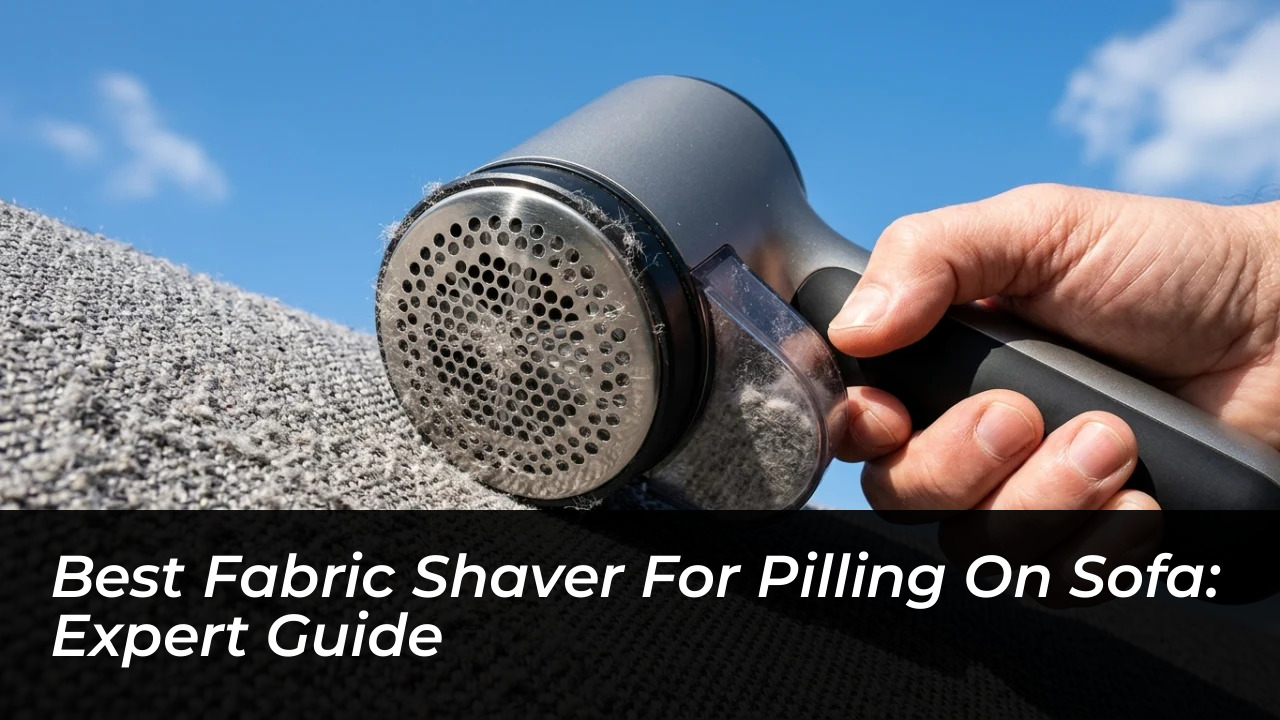

That favorite living room sofa you love can quickly look tired and aged when friction turns loose threads into dense little balls of fuzz. Pilling, often called bobbling in British households, is a natural surface condition caused by everyday sitting and wear. Smooth natural linens resist this effect, but common furniture blends combining polyester, acrylic, and cotton are particularly susceptible to surface balling. Selecting the best fabric shaver for sofa pilling requires looking past standard garment defuzzers and focusing on heavy-duty mechanical specifications capable of tackling tough synthetic fibres across wide surface areas.
Key Features That Separate Furniture Shavers From Garment Models
Cushion covers present far greater resistance than cashmere jumpers, rapidly stalling underpowered motors. Specific mechanical features make the difference between an effortless clean and a damaged seat cushion.
Battery Longevity and Power Source
Standard double-A battery models often lose torque within ten minutes, leaving blades chewing rather than cleanly slicing dense bobbles. Look for mains-powered units or high-capacity lithium-ion rechargeable models that maintain maximum blade rotations per minute until the chamber fills.
Adjustable Depth Guards
An adjustable distance ring is crucial on upholstery. Running flush blades directly against a textured weave can sever tensioned threads and create unrepairable holes. Multi-tier depth guards let you test clearing large bobbles safely before stepping down to a closer crop.
Shaving Head Diameter
Handheld units with cutting heads under four centimetres require hours of tedious circular passes over a standard three-seater sofa. Commercial-grade defuzzers sporting heads between five and seven centimetres cover broad cushions quickly, capturing varied pill sizes through honeycomb mesh screens engineered with multi-sized apertures.
Upholstery De-Bobbler Specifications Benchmark
- Power Source: Mains corded or USB-C rechargeable lithium-ion battery
- Shaving Head Diameter: Minimum 50 mm to 65 mm for broad coverage
- Height Adjustment: Multi-tier guard (minimum 3 depth settings)
- Blade Composition: Stainless steel triple or six-leaf rotary blades
- Lint Trap Capacity: Detachable transparent bin with magnetic latch
- Motor Performance: Consistent high RPM without drop under load
Busting the Manual Razor Myth
Social media frequently suggests sweeping ordinary disposable safety razors across tired armchairs to strip away fuzz on a budget. Independent product testers and upholstery specialists routinely caution against this method due to the structural risks it introduces.
Disposable razors lack depth limiters and safety grilles. While they may shear off soft surface fluff initially, an accidental tilt catches the warp or weft of the fabric, instantly slashing structural threads. Manual friction combs also pull and stretch fibres rather than slicing them cleanly, which accelerates future bobbling by loosening fresh filaments from the weave. Motorised fabric shavers pass sharp, spinning blades behind a protective metal plate, ensuring fibres pass through perforations and meet high-speed blades cleanly sheared at the root.
Step-by-Step Method for Safe Sofa De-Pilling
Proper technique ensures even results while preserving delicate upholstery backings. Rushing the process or pressing down forcefully remains the primary reason furniture owners accidentally snip structural threads.
- Vacuum the upholstery thoroughly: Remove grit, crumbs, and pet hair that could jam the spinning rotary blades or dent the delicate foil mesh.
- Pull the fabric taut: Secure the cushion cover tightly over the foam, or smooth flat any slack fabric on fixed seats using your free hand.
- Set the guard height: Begin on the highest spacer setting to test clearing large bobbles before stepping down to a closer crop.
- Apply featherlight pressure: Glide the unit in gentle, overlapping circles across the affected panels without pushing down into the cushion.
- Empty the waste container frequently: Overfilled collection bins choke the motor fan, slowing blade rotation and pulling on fibres instead of slicing.
Always test your fabric shaver on a hidden patch-such as the rear lower skirt or underside of a cushion-to guarantee the mesh screen does not snag bespoke weaves or textured bouclés before treating visible seating areas.
Frequently Asked Questions About Sofa Fabric Shavers
Will a fabric shaver damage my couch?
When used correctly, a quality fabric shaver should not damage your couch. The protective mesh guard sits between the sharp blades and your fabric, allowing pills to be cut without the blades touching the base material. Always start with a hidden test patch and avoid pressing down forcefully.
How often should I de-pill my couch?
Frequency depends entirely on household traffic and fabric composition. A busy family room sofa might require attention every few months, while a formal sitting room couch may only need de-bobbling once a year. Regular light vacuuming helps minimize pilling between shavings.
Can I use a clothing lint shaver on my furniture?
Yes, most electric fabric shavers are engineered for both clothing and furniture. Just ensure the device features a large enough lint bin and sufficient battery life to handle broad upholstery surfaces efficiently without overheating.
What is the difference between a lint remover and a fabric shaver?
A lint remover (like a sticky roller or rubber brush) lifts surface dust, hair, and loose fuzz. A fabric shaver (or depiller) features a rotary blade behind a metal mesh that actively cuts the tiny knotted balls of fibre woven directly into the textile.
Should I choose a rechargeable or corded model for upholstery?
Rechargeable lithium-ion models offer cord-free mobility around large sectionals, provided they offer at least 45 to 60 minutes of continuous runtime. Corded models deliver unwavering power without charging anxiety, making them ideal for heavy-duty marathon sessions.