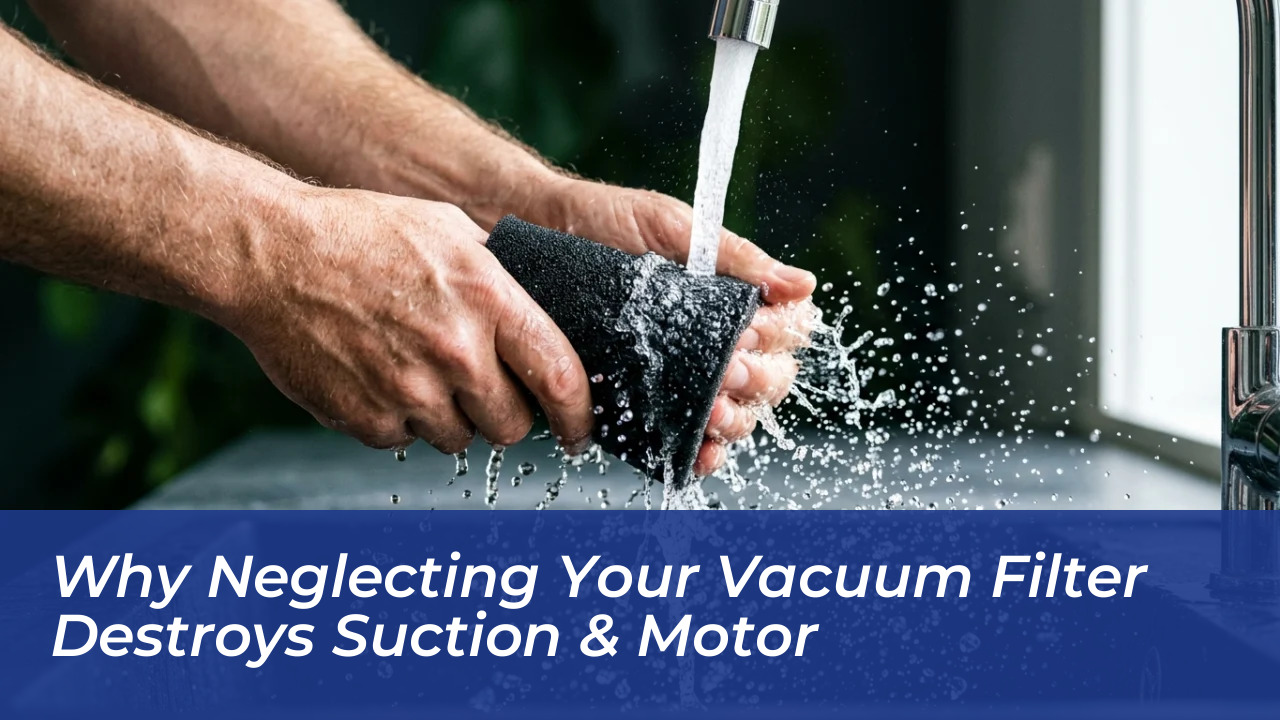

Rinsing your cordless vacuum filtration unit under a gentle stream of cold tap water until the runoff turns crystal clear is the single most critical maintenance task needed to protect its motor from sudden failure. Overlooking this simple chore causes microscopic debris to choke air circulation, forcing the battery to drain rapidly while straining the internal turbine. When you discover how to wash shark vacuum filters cordless designs depend on, you instantly restore original cleaning performance without spending a penny on replacement parts.
Cordless vacuum cleaners demand far more filtration vigilance than traditional mains-powered uprights. Because their compact motors spin at exceptionally high speeds within tightly enclosed chassis, restricted airflow causes instant thermal buildup. Consumer testing bodies routinely point out that blocked air channels degrade cleaning effectiveness long before an appliance reaches the end of its natural lifespan. Dust particles bypass choked pre-motor sponges, migrating straight into mechanical chambers where friction and heat cause irreversible burnout.
The Hidden Architecture Behind Cordless Filtration
Cordless machines separate airborne dust through a sequential multi-stage system designed to trap varying sizes of particulate matter. Before wetting any component, locating and understanding each specific layer prevents expensive structural errors. Most modern cordless sticks house two distinct filtration zones:
- Pre-motor foam and felt filters: Nestled directly beneath the dust canister, these catch coarse dirt, pet dander, and household dust before air reaches the power unit.
- Post-motor HEPA exhaust filters: Positioned near the handle or exhaust vents, these capture ultra-fine allergens and micro-particles before expelling clean air back into your living room.
Unclip the main dust canister while the machine rests securely on a flat surface, ensuring the battery pack is disconnected to prevent accidental activation. Extract the foam sleeve and the thin felt disc tucked beneath it, setting both aside on a clean, dry surface.
Step-by-Step: The Zero-Detergent Tap Rinse Routine
The golden rule of cleaning appliance sponges is absolute simplicity: never use washing-up liquids, enzymatic soaps, or bleach. Chemical surfactants break down porous foam structures, leaving gummy residues that attract dirt like a magnet once completely dry. Take the foam and felt elements directly to the sink and hold them under a steady stream of cold or lukewarm running water.
Gently squeeze the foam repeatedly between your fingers, allowing clean water to flush out embedded silt until the runoff runs completely transparent. Never wring or twist the delicate felt disc; instead, pat it flat under the water flow to preserve its structural integrity.
Post-Motor HEPA Handling: Fragile Fibres Require Caution
Exhaust HEPA filters require far more delicate treatment than pliable foam sponges. Their densely folded pleated paper fibres capture microscopic debris down to 0.3 microns, making them prone to tearing under excessive water pressure.
Turn the HEPA unit upside down under a very gentle trickle of cold tap water, letting gravity wash trapped dust outwards rather than pushing it deeper into the accordion folds. Do not scrub the delicate pleated paper with brushes or abrasive tools, as a single micro-tear completely compromises your machine’s ability to trap household allergens.
The Critical 24-Hour Drying Trap
The single greatest operational hazard occurs after the cleaning process finishes. Snapping damp or cool filtration elements back inside your machine creates an immediate, catastrophic risk to electrical components. Moisture drawn into high-rpm motors causes electrical short circuits, oxidises copper wiring, and seeds noxious black mould inside enclosed ducting. Professional appliance repair technicians frequently cite damp filters as the leading cause of musty odours and premature motor seizure.
Follow these essential precautions before reassembly:
- Air-dry naturally: Place all components flat on an absorbent cotton tea towel in a well-ventilated, warm room for a minimum of 24 full hours.
- Avoid direct heat: Never place wet foam or HEPA plastics on boiling central heating radiators, inside tumble dryers, or under intense hair dryers, as extreme heat warps synthetic seals.
- Perform the tissue test: Press a dry paper towel firmly against the thickest section of the foam; if any hint of moisture transfers to the paper, allow another 12 hours of air-drying.
Reassemble the dry components in reverse order, clicking the felt base back into place first, topping it with the foam sleeve, and locking the filter chamber securely into the chassis. Establishing a rigid monthly maintenance cycle ensures your cordless stick maintains pristine suction power and extends battery endurance through years of hard domestic service.
Have you checked your vacuum filters recently, or noticed a drop in suction across your carpets? Share your experience in the comments below.