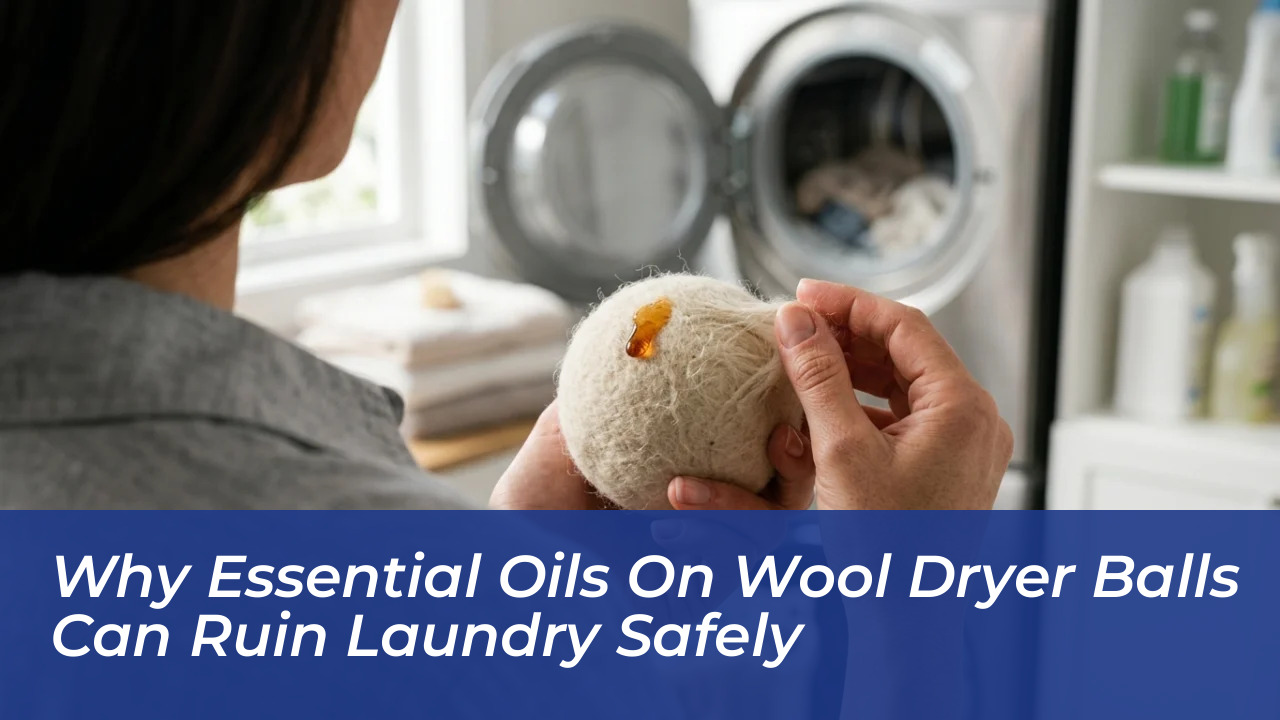

Using wool dryer balls infused with pure botanical oils can soften laundry naturally and eliminate single-use synthetic sheets. However, applying concentrated drops directly before a high-temperature cycle risks fabric oil spots and rapidly vaporises delicate fragrances before clothes even dry. To achieve fresh, static-free garments without fire hazards or ruined linens, households must follow strict absorption guidelines and temperature thresholds.
Tumble dryers operate by circulating heated air through tumbling fabrics, relying on consistent kinetic movement to disperse moisture. Solid felted wool spheres enhance this mechanical process by physically wedging between wet towels, denim, and bedding. As these dense spheres bounce through the drum, they prevent heavy textiles from bunching into damp, tangled knots. This physical separation dramatically improves airflow, allowing warm air to reach the interior folds of fabrics that typically stay damp the longest. In regular household practice, introducing three to six dense wool spheres into a standard drum load accelerates the overall evaporation process, reducing total machine running time and preserving the structural elasticity of natural cotton weaves.
The Hidden Chemical Risk: Flash Points and Thermal Evaporation
While the mechanical benefits of wool spheres are undisputed, pairing them with concentrated botanicals introduces chemical variables that many homeowners overlook. Pure essential oils are highly concentrated, volatile organic compounds extracted from flowers, bark, and peel. Unlike commercial laundry perfumes engineered with synthetic fixatives, natural plant extracts possess relatively low flash points-the lowest temperature at which an organic vapour can ignite in the presence of an ignition source.
Citrus-derived oils such as sweet orange, lemon, and bergamot carry flash points that sit uncomfortably close to the operating internal temperatures reached during aggressive cotton drying cycles. When wet fabrics are subjected to maximum heat settings alongside volatile hydrocarbons, the intense thermal energy does not gently diffuse the aroma; instead, it rapidly burns off top notes within five minutes, leaving garments with a faint, scorched undertone.
A frequent oversight in domestic laundry routines is dropping raw plant oils directly onto felted wool seconds before engaging a maximum-heat drying cycle, which exhausts the botanical scent immediately while creating unnecessary thermal risks. Beyond fragrance loss, unabsorbed oils pose a direct threat to light-coloured garments. Natural wool fibres naturally repel surface liquid initially due to residual lanolin and tight mechanical felting. A drop of oil resting on the surface of a spinning ball will transfer directly to the first dry piece of fabric it strikes, producing stubborn, translucent grease rings that are notoriously difficult to strip from cotton and linen fibres.
Myth vs. Reality: Botanical Oils in the Modern Tumble Dryer
Online home-care forums frequently advise treating felted balls like disposable fragrance sheets, suggesting an indiscriminate splash of oil before every cycle. Technical laundering practices tell a far more nuanced story.
The Evaporation Paradox
The core misconception is that laundry fragrance survives prolonged heat exposure. High-heat settings designed for heavy bath sheets strip moisture through intense thermal convection, which forcefully expels light scent molecules through the appliance exhaust ducting. If the botanical compound remains in the drum during the primary moisture-stripping phase, virtually none of that fragrance remains anchored to the dried fabric.
Laundering Standards and Application Metrics
- Optimal Oil Volume: 2 to 4 drops dispersed across multiple spheres
- Resting Absorption Time: 15 to 20 minutes prior to drum entry
- Recommended Drum Cycle: Low-heat fluff cycle or final 10-minute cool-down phase
- Preferred Botanical Types: Clear distillates such as lavender, eucalyptus, or cedarwood
- Direct Fabric Transfer Risk: High when spheres are introduced with wet surface oil
To retain true aroma without risking fabric staining, the application method requires a fundamental shift in timing. Rather than treating fragrance as a component of the wet drying phase, seasoned laundry specialists treat it as a dry finishing touch.
Step-by-Step: The Safe Infusion Method for Tumble Dryers
Executing this technique correctly ensures that clothing absorbs subtle, natural scents while preventing oil spotting and keeping machine internals completely clean.
- Select clear, residue-free oils: Choose steam-distilled, uncoloured botanicals like pure lavender, pine, or tea tree. Avoid heavy, naturally tinted resins such as patchouli, vetiver, or cold-pressed citrus, which contain plant pigments capable of staining pale garments.
- Dose sparingly across separate spheres: Place two to three drops maximum on the core of two individual wool spheres. Spreading four drops across two balls produces a much softer, more even diffusion than drenching a single sphere.
- Allow deep structural absorption: Set the scented spheres aside on a clean surface for at least 15 to 20 minutes before use. The botanical oil must penetrate beyond the outer felt crust into the inner wool density, ensuring no liquid residue remains on the exterior surface.
- Add only during the final cool-down: Run your primary drying cycle with unscented balls to achieve moisture evaporation. Once the load is 95% dry, pause the machine, toss in the pre-absorbed aromatic spheres, and engage an unheated “air fluff” or delicate low-temperature cycle for the final ten minutes.
This temperature-controlled approach prevents the thermal breakdown of the botanical components and guarantees that the fragrance clings directly to dry fibres as they cool down inside the drum. Check your appliance manual to confirm minimum cycle temperatures before introducing any concentrated organic compounds into your machine drum. Inspect your wool spheres monthly for fabric pilling or surface glazing, which signals that fibres are becoming compacted and need a brief warm wash to restore absorption.
Share your favourite laundry scents in the comments below and tell us which botanical blends have worked best for your home routine.