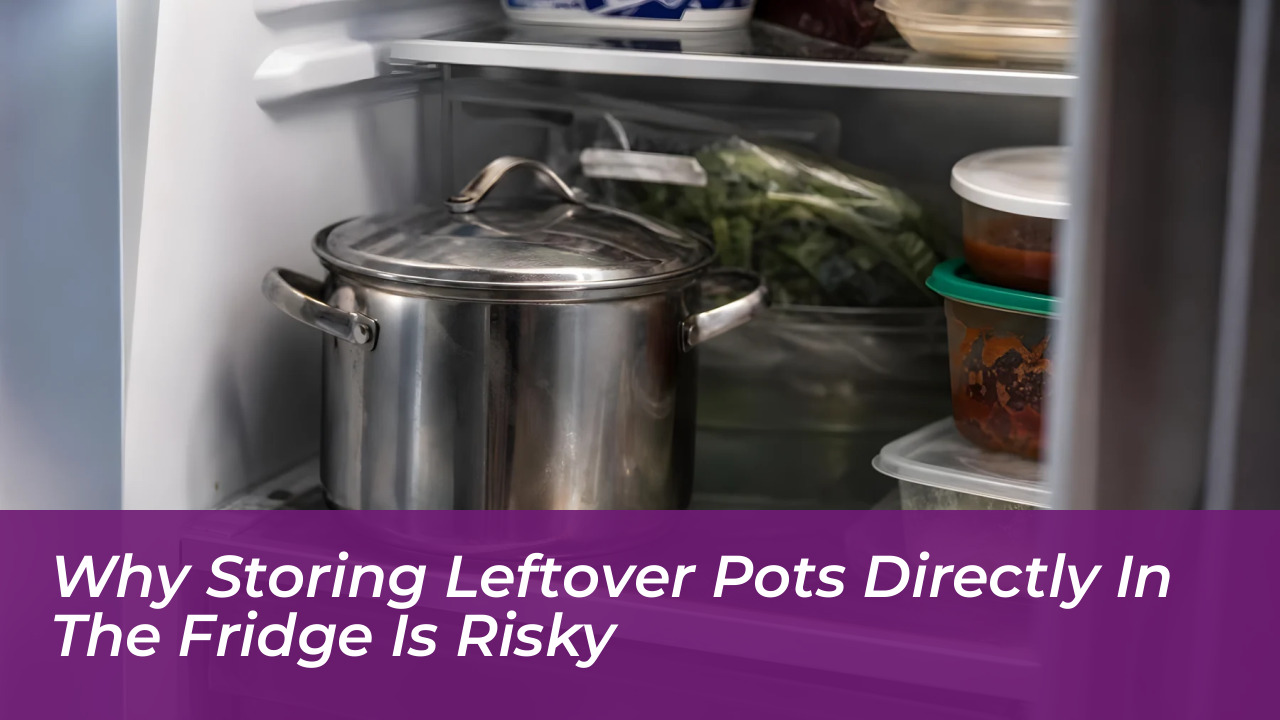
Stashing an entire cooking pot of leftovers directly in the refrigerator creates an unseen bacterial danger zone, degrades food texture, and forces your cooling appliance into overdrive. While sliding a lidded Dutch oven or stockpot onto a fridge shelf seems like an effortless kitchen shortcut, the dense core of warm food can take hours to cool properly. This exposes high-risk ingredients like rice, meat, and rich sauces to rapid microbial growth. Modern kitchen standards emphasize rapid thermal reduction over convenience, ensuring meals remain safe to eat for two to four days without risking food poisoning.
Due to high traffic on this story, please verify you are not a bot to instantly unlock the remaining content. Takes only 5 seconds!
Verify & Continue ReadingThe Hidden Danger of Slow Cooling
When a large batch of stew, broth, or chili sits in a heavy pot, its thermal mass works directly against food safety. The exterior metal or ceramic may feel chilled to the touch within an hour, but the center retains heat for a prolonged period, lingering directly in the temperature danger zone where harmful bacteria thrive best. A pot is engineered for cooking food, not for storing it.
This slow-cooling trap is particularly hazardous for sensitive ingredients. Starchy bases like cooked rice and dairy-heavy cream sauces provide an optimal environment for spore-forming organisms that survive initial cooking. Because traditional cookware lids retain trapped ambient heat, the interior remains warm long enough for pathogens to multiply unchecked. , placing a warm, heavy vessel into a closed refrigerator raises the internal ambient temperature of the entire compartment, threatening nearby perishables like sliced deli meats and soft cheeses.
Uneven Heat Retention in Dense Cookware
Cookware materials such as cast iron, heavy-gauge stainless steel, and enameled ceramics are purposely engineered to retain heat during the cooking process. However, that identical thermal property becomes a major liability inside the refrigerator. Because these dense materials discharge heat very slowly, they create a sustained microclimate inside the appliance. The refrigerator’s compressor must work continuously to compensate, consuming extra electricity while cold air struggles to circulate around bulky cookware.
Metallic Reactions and Soggy Textures
Cookware serves a specific culinary purpose: high-heat transformation. Storing food in bare pots for multiple days degrades both the container and the recipe:
- Acidic Corrosion: Tomato sauces, citrus marinades, and wine-braised meats interact poorly with bare metals over extended rest periods, imparting an unpleasant metallic aftertaste.
- Condensation and Moisture: Trapped steam hits the underside of a standard pot lid, condenses, and rains back into the dish. This turns firm pasta mushy and dilutes concentrated aromatics.
- Odor Absorption: Standard cookware lids lack hermetic silicone seals, allowing volatile food aromas to escape into the fridge cavity while your leftovers quietly absorb odors from surrounding items.
The 5-Step Routine for Safe Food Storage
Adopting a professional food storage method requires minimal effort while maximizing food safety and keeping textures intact. Follow this five-step routine during your evening cleanup:
- Divide into shallow containers: Pour leftovers into low-profile glass or BPA-free plastic containers, keeping the food layer no deeper than a couple of inches to accelerate core cooling.
- Release immediate steam: Place containers on an open wire rack, leaving lids slightly vented for a few minutes so intense moisture escapes without raising overall fridge humidity.
- Use an ice bath: If dealing with a deep pot of boiling chili or stock, nest the base of the pot in a cold water or ice bath in your sink before portioning to strip out intense heat fast.
- Seal and label: Snap airtight lids firmly into place, mark the container with the preparation date, and maintain cold storage below 40 degrees Fahrenheit.
- Reheat thoroughly: When serving, bring the portion to a rapid, steaming heat throughout rather than warming it only lukewarm.
Kitchen Excuses vs. Cold Facts
Many home cooks default to keeping food in the cooking pot out of pure habit. Comparing common assumptions against verified kitchen physics highlights why switching containers is essential:
- Assumption: Leaving leftovers in the pot saves precious dishwashing time.
Fact: Trapped moisture softens ingredients and ruins flavor while multiplying microbial risks. - Assumption: A large pot fits easily on the middle refrigerator shelf.
Fact: Bulky cookware blocks essential airflow, slowing down cooling across the entire appliance. - Assumption: Liquid soups cool down quickly on their own.
Fact: Dense liquids hold core heat for hours unless dispersed into flat, shallow layers.
The Two-Minute Habit That Elevates Leftovers
Transitioning from hot pots to shallow storage dishes takes less than two minutes during evening cleanup. In return, you protect delicate dairy and meat from spoilage, prevent off-flavors from metal contact, and keep your refrigerator operating at peak efficiency. Food cooked with care deserves proper preservation, ensuring yesterday’s dinner tastes just as vibrant and structured when reheated days later.