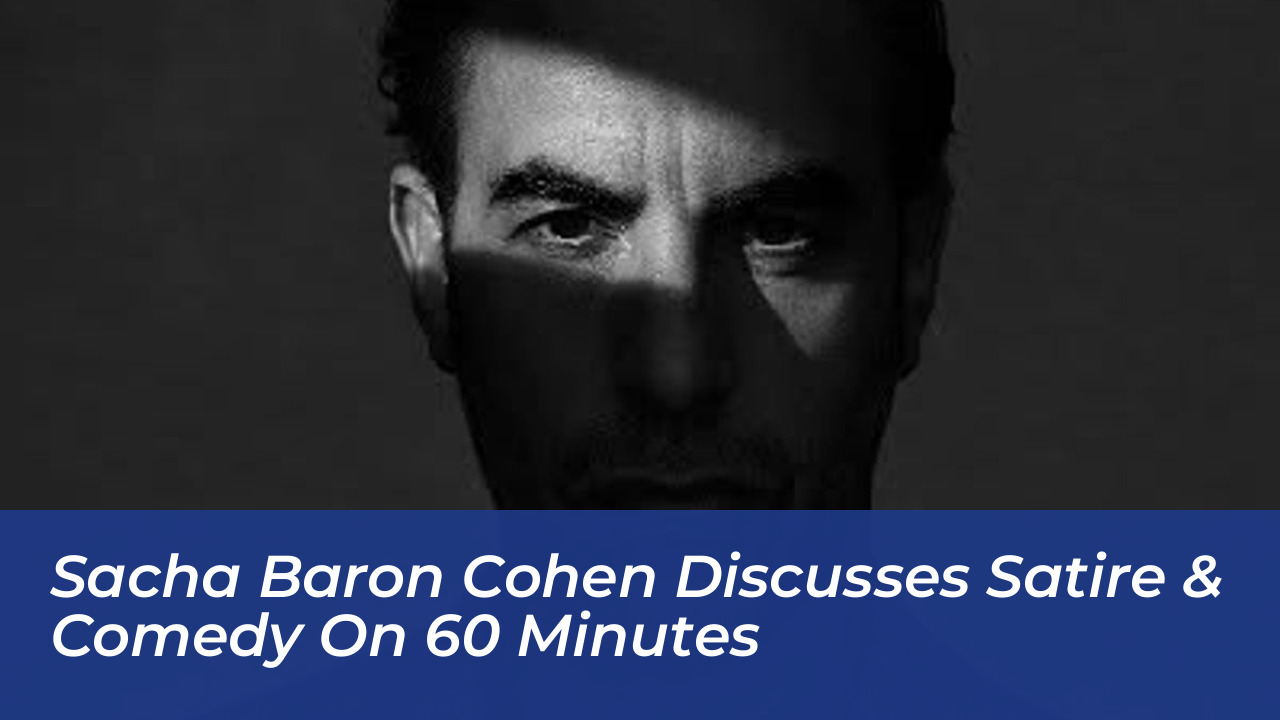

The methods behind Sacha Baron Cohen’s provocative comedy took center stage during a 60 Minutes broadcast. Correspondent Ariel Levy met the actor in London to discuss his performance techniques, the philosophy behind his satire, and his upcoming film projects.
The conversation examined how Baron Cohen prepares for undercover performances. It focused on how he deploys fictional characters to engage with unsuspecting members of the public. The interview gave the comedian a platform to unpack the creative processes behind iconic figures from his body of work, including Borat, Brüno, and Ali G.
During the program, Baron Cohen discussed the link between his unconventional methods and the broader purpose of his humor. He reflected on studying history at Cambridge University, his early comedy aspirations, and his training under French master clown Philippe Gaulier, whom he credits as a crucial mentor.
Recalling his career’s evolution, Baron Cohen discussed early experiments with character prototypes on British television and the risks of orchestrating real-world interactions. Over a career spanning more than half his life, the complexity, moral stakes, and physical danger of his deceptions have steadily escalated.
The interview also touched upon his feature film work. It examined how real-world interactions drive his plots forward while exposing societal attitudes, bigotry, and kindness. While his satirical projects often place him in volatile situations-such as a hostile cage match during the filming of Brüno-Baron Cohen maintains that his primary objective is to create laugh-out-loud comedy backed by thoughtful social commentary.
The segment highlighted his stylistic influences, citing legendary comedian Peter Sellers as a primary inspiration for his complete character immersion and physical comedy. Concluding the discussion, Baron Cohen expressed gratitude for his career trajectory, emphasizing his ongoing dedication to pushing the boundaries of satire and performance art.
Produced by Michael Karzis, Aaron Weisz, and Ian Flickinger, with associate producer Katie Kerbstat, the 60 Minutes segment offered audiences a rare, behind-the-scenes look at the mechanics of one of modern comedy’s most distinct practitioners.