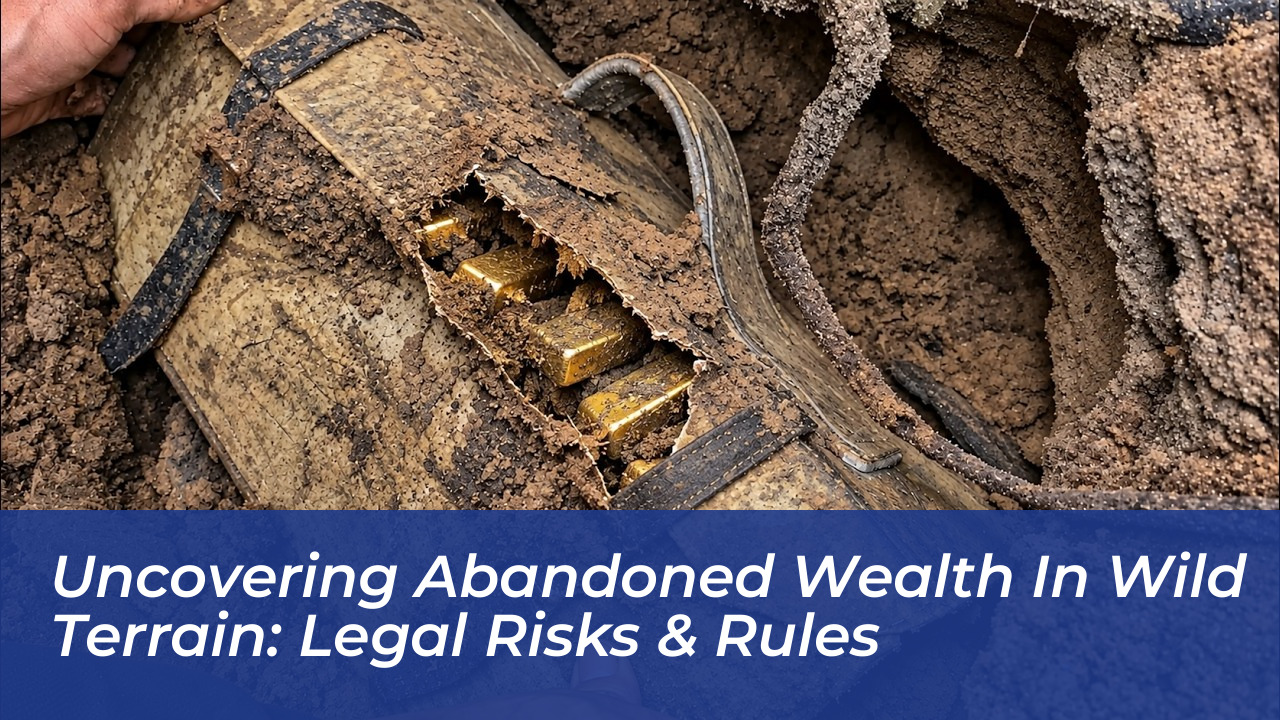

Stumbling across an abandoned case packed with gold or high-value items in a remote swamp or marshland may sound like an impossible windfall. However, uncovering concealed wealth immediately triggers rigorous legal responsibilities and severe criminal risks. Under British law, finding valuable goods discarded in wild terrain does not grant automatic ownership to the finder, regardless of how isolated the location appears.
From hazardous intertidal mudflats to dense mangrove estuaries, retrieving sus**ciously abandoned containers carries immense physical peril alongside profound legal scrutiny. Modern forensic protocols and statutory salvage frameworks dictate that every unexpected discovery in nature must be handled with extreme caution and strict adherence to the law.
The Reality of Sus**cious Finds in Remote Wetlands
Wetland habitats, muddy marshes, and coastal estuaries frequently become dumping grounds for illicit items due to difficult access and fast-shifting tides. When sealed luggage or weighted packages turn up submerged in mud, they are rarely simple accidental losses.
Criminal networks routinely abandon illicit assets or stolen contraband in low-traffic natural zones when under immediate threat of interception. Anyone who opens or moves these containers risks contaminating crucial forensic evidence, disrupting an active crime scene, or unintentionally becoming entangled in complex money laundering investigations.
Physical safety presents an equally urgent hazard. Mudflats and tidal wetlands feature notorious sink traps and rapid incoming tides. Carrying heavy retrieved luggage in these areas can prove instantly fatal for an unsuspecting explorer.
The Legal Framework: Who Actually Owns Found Valuables?
Finding unattended valuables does not establish a right to keep them. In the United Kingdom, common law and statutory legislation establish clear boundaries between legitimate historical discovery and theft by finding. If you encounter an abandoned gold discovery or sus**cious containers carrying valuables, specific statutes dictate immediate protocol:
- The Theft Act 1968: Keeping property when you believe the true owner can be identified by taking reasonable steps constitutes criminal theft by finding.
- The Treasure Act 1996: Any historical items, objects containing a substantial proportion of gold or silver, or coin hoards over two hundred years old must be reported to the local coroner within fourteen days.
- Landowner Rights: Under English civil law, items buried in or resting upon private land generally belong to the landowner rather than the finder, unless distinct mineral rights apply.
- Police Property Regulations: Modern items of unknown provenance must be handed over to local law enforcement authorities to allow thorough provenance checks and statutory waiting periods.
The Difference Between Historic Treasure and Concealed Contraband
A crucial distinction exists between ancient hoards discovered through responsible, permitted metal detecting and modern valuables sealed inside luggage or contemporary containers. Modern cases of gold bars, processed bullion, or unrecorded currency almost certainly originate from organized financial crime, smuggling operations, or deliberate concealment to avoid taxation and asset recovery teams.
Attempting to transport or trade uncertified gold bullion without transparent chain-of-custody documentation breaches stringent anti-money laundering regulations enforced by the Financial Conduct Authority (FCA). Reputable bullion dealers and assay offices reject undocumented material immediately, reporting sus**cious attempts directly to the National Crime Agency (NCA).
Essential Safety Protocols for Remote Discoveries
Whether navigating local British estuaries or witnessing remote global discoveries, proper conduct protects both personal safety and statutory compliance.
- Never Touch or Disturb Sus**cious Cargo: Sealed cases may contain hazardous chemicals, unstable components, or sharp items alongside personal assets.
- Record Precise GPS Coordinates: Use mapping applications or OS grid references to pinpoint the exact location without displacing the object.
- Photograph from a Safe Distance: Capture the surrounding terrain and the condition of the container to assist police investigators.
- Alert the Proper Authorities Instantly: Dial local police or contact HM Coastguard if the find sits below the high-water mark or in an active tidal zone.
Navigating wilderness terrain requires balancing curiosity with strict procedural discipline. Always verify land access rights and check statutory reporting guidelines before embarking on any coastal or rural survey. Responsible reporting protects natural habitats, upholds the law, and ensures legitimate discoveries receive the correct historical and official evaluation.