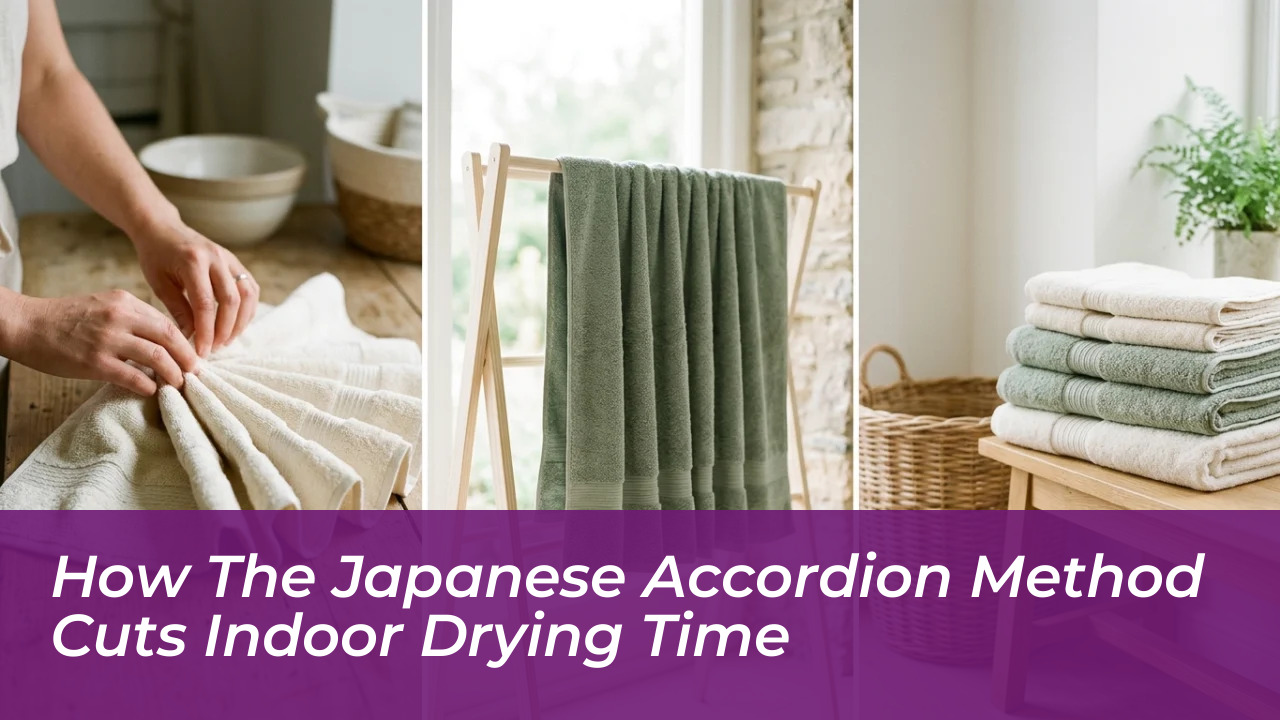

Folding wet laundry into an accordion pleat before hanging it can cut indoor drying time by half for heavy fabrics like bath towels, bedsheets, and thick cottons. By swapping the conventional flat-draped approach for loose, fan-like folds, you create hollow vertical air channels. These channels let trapped moisture evaporate rapidly without running an energy-draining tumble dryer. Born out of necessity in space-constrained Japanese apartments where outdoor line-drying is limited by rainy weather and high humidity, this laundry method relies entirely on simple thermal physics.
Instead of pinning broad panels of damp cloth against each other, this technique sculpts the fabric to ensure moving air touches multiple surfaces at once. Understanding these airflow mechanics helps households optimize their indoor drying routines during damp seasons without driving up utility bills.
The Physics of Airflow: Why Flat Hanging Traps Moisture
The standard way of air-drying clothes involves draping a wet garment flat over a rack or pinning it straight along a clothesline. While intuitive, hanging a damp piece flat exposes only its outer two surfaces to the ambient room air. The dense moisture locked inside the weave must travel outward before it can evaporate. This creates a stagnant barrier layer of cool, wet air around the textile.
When you fold a garment like a handheld fan before suspending it, you radically alter its geometry. The folds create natural ventilation chimneys between adjacent layers of fabric. Ambient room currents circulate freely through these interior spaces rather than merely brushing past the exterior perimeter.
- Air Circulation: Air movement between fabric layers matters far more than total exposed surface area.
- Evaporation Speed: Increased interior airflow speeds up moisture release for dense items.
- Target Fabrics: Heavy bath towels and fleece loungewear demonstrate the most dramatic reduction in drying time.
Myth vs. Reality: Air-Drying Efficiency
Many households assume that spreading laundry as wide and flat as possible is the fastest way to get it dry. That assumption overlooks how air behaves in still indoor rooms.
- The Myth: Clothes must be stretched completely flat to maximize direct air exposure and dry quickly.
- The Reality: Flat-draped heavy textiles trap stagnant air beneath their underside, while accordion folds draw air through vertical open channels, halving the overall drying duration.
- The Myth: Gathering fabric into folds keeps it damp longer and causes musty mildew odors.
- The Reality: Folding fabric loosely maintains continuous internal airflow, evaporating moisture far faster than compact hanging and preventing sour laundry smells.
Step-by-Step Guide to the Japanese Accordion Technique
Mastering this hanging technique requires no specialized clips or expensive laundry accessories. It relies entirely on how you handle the garment straight out of the washing machine.
- Maximize the spin cycle: Ensure your washing machine executes an efficient spin cycle to extract excess water before hanging begins.
- Create loose pleats: Take a damp towel or blanket and fold it back and forth lengthwise in alternating folds, exactly like a paper fan, keeping the pleats generous and loose.
- Hang from one end: Secure the pleated textile by one end onto a drying rack, hanger, or clothesline, allowing the pleats to fall open naturally beneath the bar.
- Preserve the air gaps: Ensure the hanging pleats do not collapse against one another or rest flat against nearby wet garments.
- Target air movement: Position your rack in a naturally ventilated area, such as near a slightly open window, an interior doorway draft, or a room fan.
Adapting the Fold for Delicates and Knits
While towels and cotton linens benefit immensely from hanging accordion folds, heavy knit sweaters require caution. Suspending wet wool or loose knits vertically by one end can stretch delicate shoulder seams out of shape.
For woolens, lay the garment flat on a horizontal drying rack and use smaller, shallow undulating ripples rather than deep vertical pleats to encourage airflow beneath the torso without distorting the weave.
Comparison of Indoor Drying Approaches
| Drying Approach | Evaporation Mechanism & Results |
|---|---|
| Traditional Flat Hanging | Exposes outer sides only; slow core moisture migration; longer indoor drying cycles. |
| Japanese Accordion Method | Forms interior air channels; multiplies surface contact; cuts drying time by up to 50%. |
Common Mistakes That Slow Down Indoor Drying
The single most frequent mistake when attempting the Japanese laundry method is creasing the pleats too tightly. Compacting wet fabric together presses the damp fibers flat, cutting off internal airflow and achieving the opposite of the intended result. A loose, open, imperfect fold performs significantly better than a neat, tightly pressed crease.
Room placement is equally critical. Setting a drying rack in a dead corner of a windowless room traps evaporating moisture in the immediate microclimate, stalling the process regardless of technique. In poorly ventilated rooms during damp seasons, running a small dehumidifier or oscillating fan transforms indoor drying efficiency.
Try this folding adjustment on your next batch of heavy bath towels to see the difference. Paying attention to internal airflow keeps indoor air fresher and cuts down on utility bills. Have you tested the accordion method on your drying rack? Share your experiences with us in the comments below!