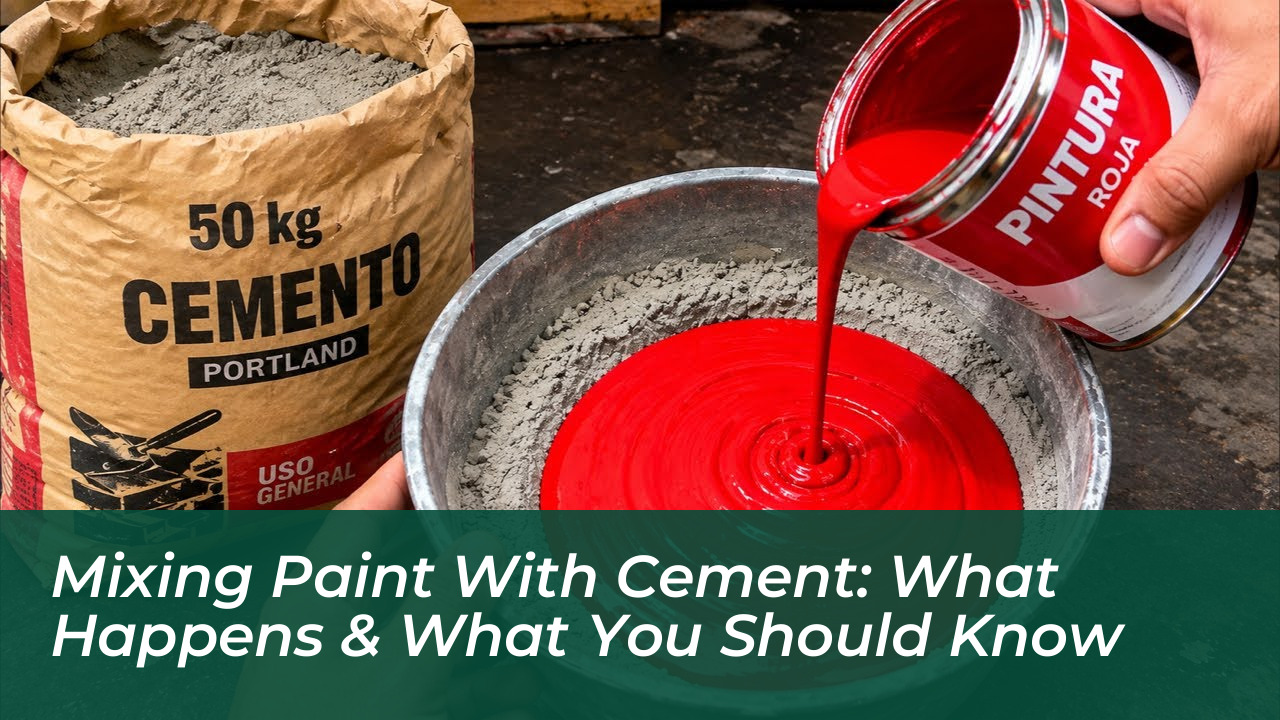

Blending liquid paint directly into wet mortar produces an immediate, vibrant paste. However, this practice fundamentally compromises the chemical hydration of the concrete. Doing this incorrectly leads to surface flaking and structural brittleness. While builders across the UK often seek rapid ways to tint renders or garden masonry, dumping standard household emulsion into a cement mixer creates an unpredictable hybrid material. This material behaves neither like durable stone nor like a flexible coating.
The immediate visual payoff tempts countless DIY enthusiasts. They want to bypass the separate painting stage on garden borders, planters, or small masonry repairs. Understanding the exact chemical conflict between polymer water-based paints and ordinary Portland cement reveals why this shortcut often fails. It frequently leads to premature cracking once British rain and freeze-thaw cycles set in.
The Chemistry of Blending Paint with Cement
Ordinary Portland cement does not simply dry out. It cures through a complex mineral reaction known as hydration. When water touches dry cement powder, calcium silicate hydrates form an interlocking crystalline matrix. This matrix gives cured concrete its immense compressive strength. Introducing standard household paint disrupts this delicate crystallisation process immediately.
Standard retail emulsion or acrylic paint contains synthetic polymers, biocides, stabilisers, and thickeners alongside suspended colour pigments. When added to fresh mortar, the synthetic resins encapsulate the individual cement grains. This blocks water molecules from reacting with unhydrated cement particles. Instead of creating an evenly dyed, heavy-duty building material, the result is often a chalky, under-cured compound. It may look solid on the surface while remaining powdery and porous beneath.
How Different Paint Formulations React
The final outcome of combining paint with cement depends heavily on the chemical base of the coating being introduced:
- Water-based acrylic paint: Disperses smoothly into the water content of the mortar. It produces a workable coloured sludge, yet noticeably softens the hardened mortar once fully cured.
- Vinyl silk or matt emulsion: Contains fillers and surfactants that foam slightly during agitation. This produces microscopic air voids that slash load-bearing capacity and accelerate frost damage.
- Oil-based or alkyd paints: Suffer rapid saponification when exposed to the high alkalinity of fresh cement. They break down into a sticky, greasy emulsion that may never cure completely.
Why Liquid Pigments Outperform Wet Paint Additions
Trade professionals working under British Standards for mortar and rendering never rely on leftover paint cans to colour their mixes. The primary reason comes down to moisture ratios and the preservation of mechanical strength. Even small shifts in the water-to-cement ratio drastically reduce the ultimate compressive load a structure can support.
Adding liquid paint introduces unquantified volumes of water, glycols, and synthetic resins, throwing structural calculations into chaos. For decorative garden craft projects-such as stepping stones, small cast pots, or non-structural ornamental pedestals-the mixture often cures sufficiently to hold a shape. However, applying this mixture as an outdoor render or mortar bed on a UK property risks severe water penetration and surface spalling during winter.
Safe and Proven Ways to Colour Wet Mortar
Achieving permanent, weather-resistant colour in masonry without sacrificing physical integrity requires materials specifically formulated to withstand the hostile alkaline environment of wet cement:
- Powdered synthetic iron oxides: Pure dry mineral pigments designed to disperse evenly through the sand and cement before adding gauging water. They offer maximum UV stability without altering strength.
- Specialist polymer-modified admixtures: Certified mortar dyes and acrylic bonding liquids specifically engineered not to r****d crystalline hydration.
- Post-cure breathable masonry paint: Allowing a standard 1:4 sand and cement render to fully cure over 28 days before applying a micro-porous exterior coating ensures total durability and zero moisture entrapment.
Attempting to save time by combining the tinting and pouring phases into a single step rarely pays off on load-bearing or weather-exposed work. For artistic garden crafts, blending small amounts of acrylic into rapid-set cement can yield fascinating textured patinas, provided the finished piece remains purely decorative and protected from severe frost.
If you are planning domestic brickwork, pointing, or structural rendering, stick exclusively to British Standard pigment powders mixed during the dry batch stage to guarantee permanent colour and sound structural integrity.