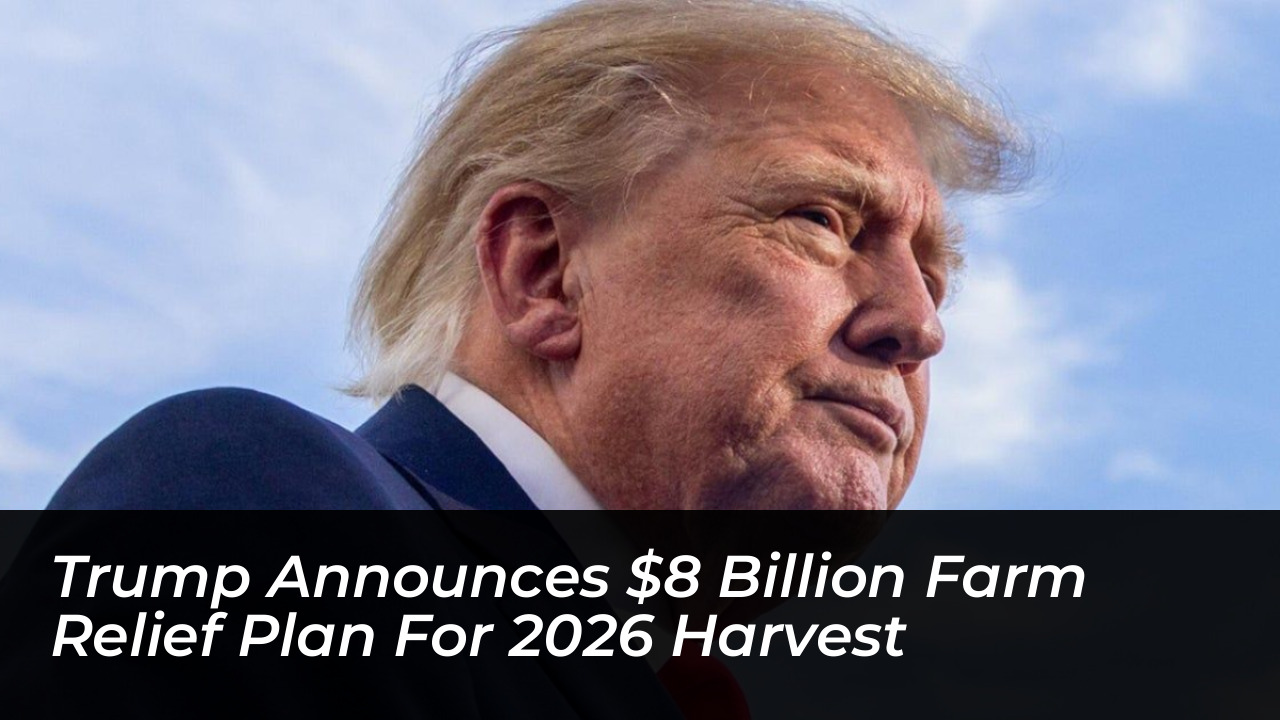

The Trump administration announced an $8 billion relief program on October 19, 2026. This program helps American farmers manage high fuel expenses and production costs during the active harvest season. President Donald J. Trump and Agriculture Secretary Brooke L. Rollins introduced the Harvest Fuel Relief program during a campaign appearance in Kansas. They confirmed that payments will cover a portion of estimated financial losses for the 2026 crop year.
The U.S. Department of Agriculture (USDA) will manage and administer the one-time direct payments through its Farm Service Agency (FSA). Funding for this initiative is authorized under the Commodity Credit Corporation Charter Act. According to USDA guidelines, the program will distribute financial assistance using a standardized formula. This formula factors in planted acreage, estimated production costs, regional crop yields, and prevailing market prices.
Details on USDA Implementation and Payouts
Agricultural producers looking for immediate figures must wait for exact calculations. The USDA announced that specific payment rates for major commodity crops will be officially released in November. Eligibility criteria and detailed payment schedules for alternative commodities will follow in subsequent updates. The administration confirmed that crop insurance participation is not mandatory for farmers to receive relief funds.
This initiative arrives as the broader economy, including critical agricultural and transportation sectors, deals with heavy energy input costs. National diesel prices hovered near $6.31 per gallon after hitting a record peak in September. Ongoing geopolitical conflicts in the Middle East and Ukraine, alongside constrained global refining capacity, drove these high prices.
Context and Previous Agricultural Aid Programs
President Trump credited Republican Senator Roger Marshall of Kansas for helping advance the push for the diesel inflation bailout. During his announcement, Trump compared the new funding to previous aid efforts. He noted the $12 billion Farmer Bridge Assistance (FBA) program delivered earlier in the year, as well as the $28 billion distributed to agricultural producers during his first presidential term.
Alongside direct relief funding, the administration recently enacted an executive order. This order waives the off-road requirement for red-dyed diesel. This temporary measure allows farmers and commercial truckers to use the tax-free fuel in standard highway vehicles to further reduce transportation burdens.
"President Trump is the most pro-farmer president of my lifetime, and he is continuing to put farmers first every day," Agriculture Secretary Brooke L. Rollins stated following the announcement. "This $8 billion dollar investment will help bring certainty to our farmers during this harvest so they can continue to feed our nation."
Frequently Asked Questions About the 2026 Farm Relief Plan
What is the total value of the Harvest Fuel Relief program?
The Harvest Fuel Relief program provides a total of $8 billion in federal support. This aims to offset rising diesel and production costs for U.S. farmers during the 2026 harvest season.
Who is administering the $8 billion agricultural aid package?
The program is administered by the U.S. Department of Agriculture (USDA) through its Farm Service Agency (FSA).
How will individual farmer payment amounts be calculated?
Payments will be distributed using a standardized formula developed by the USDA. This formula accounts for planted acreage, estimated production costs, local crop yields, and current market prices.
Is crop insurance required to qualify for the Harvest Fuel Relief funds?
No, holding active crop insurance is not a requirement for agricultural producers to participate in or receive funds from the Harvest Fuel Relief program.
When will farmers receive their payment details and rates?
The USDA announced plans to release official payment rates for major commodity crops in November. Subsequent updates will provide information for other commodities and exact disbursement dates.