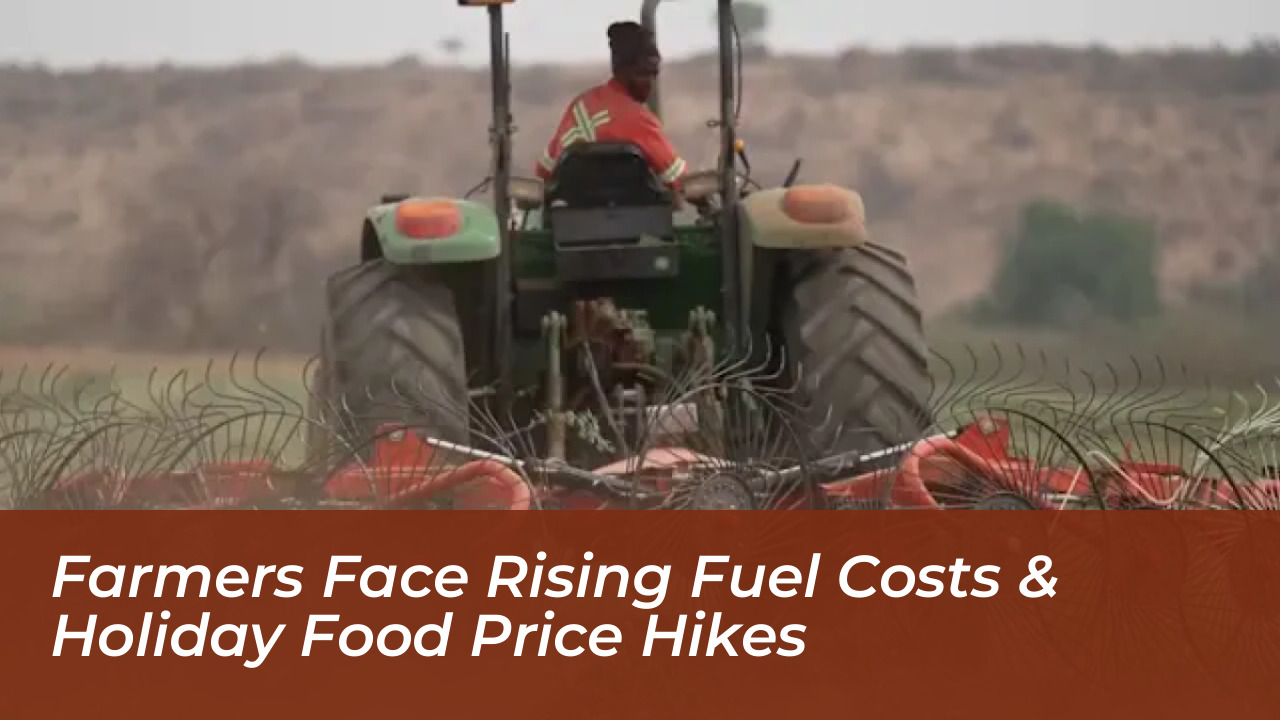

American consumers face continued pressure on grocery budgets as soaring diesel prices, higher agricultural expenses, and climate-related disruptions increase the cost of producing and transporting food. Reports published in October 2026 describe mounting financial challenges for farmers and warn that prices for meat, fruits, and vegetables could remain elevated through the holiday season, particularly if ongoing geopolitical conflicts continue to constrain global energy supplies.
The national average price of diesel reached $6.32 per gallon, according to AAA, representing an increase of $2.69 from a year earlier. This represents a rise of more than 74% year over year, placing severe financial pressure on farmers during the peak harvest season and significantly increasing transportation expenses for the trucks, trains, and cargo ships that move essential food items to retail grocery stores.
Direct Impacts on Crop Production and Harvest Costs
Farmers rely heavily on diesel fuel to power tractors, combines, irrigation equipment, and utility trucks. According to a detailed analysis by the American Farm Bureau Federation, a $2.60-per-gallon increase in diesel prices adds substantial financial burdens across various agricultural sectors:
- Corn: Average farms using roughly 3.07 gallons per acre face an additional $2,227 in harvest fuel expenses, translating to about $7.98 per acre.
- Cotton: Operational costs rise by approximately $2,861 per farm, or $5.28 per acre.
- Rice: Highly fuel-intensive rice farms spanning nearly 600 acres face an eye-popping $8,337 increase in seasonal diesel expenses, averaging $14 per acre.
- Specialty Crops: Specialty crop producers face even sharper spikes, with estimated harvest cost increases reaching $18.23 per acre for potatoes, $18.67 for almonds, and $57.59 per acre for apple growers.
Rick Telesz, who farms 700 acres of corn, soybeans, and dairy cows in western Pennsylvania, notes that his combine burns through 150 gallons of fuel a day alone. "It’s a cost that a farmer can’t pass on," Telesz explains. "You take your trucking industry, it’s just added to the freight charge. But a farmer, it’s just an added cost he just has to absorb. It’s real. It’s painful."
Relief Efforts and State Responses
To help alleviate the crisis, President Donald Trump announced that the U.S. Department of Agriculture would make $8 billion available in one-time payments to American farmers affected by market disruptions. Additionally, the federal government issued executive orders allowing off-road, red-dye diesel-which is exempt from certain federal highway taxes-to be used temporarily on public roadways without penalties for agricultural and timber operations.
Numerous state governors have also stepped in to ease burdens on local producers:
- Indiana: Governor Mike Braun extended the state’s gas tax suspension and lifted restrictions on dyed diesel for any farm-related activities.
- Louisiana, Alabama, and Texas: State authorities temporarily suspended highway penalties for farm vehicles utilizing dyed diesel and requested federal penalty relief from the IRS.
- Arkansas, Georgia, Missouri, Montana, Nebraska, and Ohio: Similar emergency executive actions were enacted to grant agricultural transport fleets greater operational flexibility during the autumn harvest.
Supply Chain Pressures and Consumer Outlook
Agricultural economists warn that these localized tax reliefs, while helpful for immediate cash flow, do not solve the underlying structural issues in the energy and refining sectors. Major oil refiners have posted billions in profits while refinery margins doubled over the year, prompting farm advocacy groups like Farm Action to call for federal investigations into market consolidation and corporate price gouging.
With row crop producers facing projected net losses for the fourth consecutive year, agricultural representatives caution that prolonged high input costs will inevitably trickle down to retail grocery shelves. Families shopping for holiday meals should expect elevated prices for staples, fresh produce, and protein sources as long as diesel prices remain near historic highs.
Frequently Asked Questions
Why are diesel prices so high for farmers in 2026?
Diesel prices have surged due to ongoing geopolitical conflicts, such as the war with Iran, which disrupted global fuel supplies, coupled with domestic refinery consolidation and tight refining capacities.
What is “farm diesel” or dyed diesel?
Farm diesel, or red-dye diesel, is fuel intended for off-road agricultural equipment like tractors and combines. It is typically exempt from federal and state highway excise taxes to reduce operational costs for producers.
How much financial assistance is the USDA providing?
President Trump announced that the USDA will make $8 billion available in one-time payments to American farmers affected by ongoing market disruptions and extreme operating costs.
Will these fuel cost increases affect holiday grocery prices?
Yes. Because diesel powers the farm machinery used to harvest crops and the trucks and shipping vessels that transport food to grocery stores, higher fuel expenses directly drive up retail food prices.