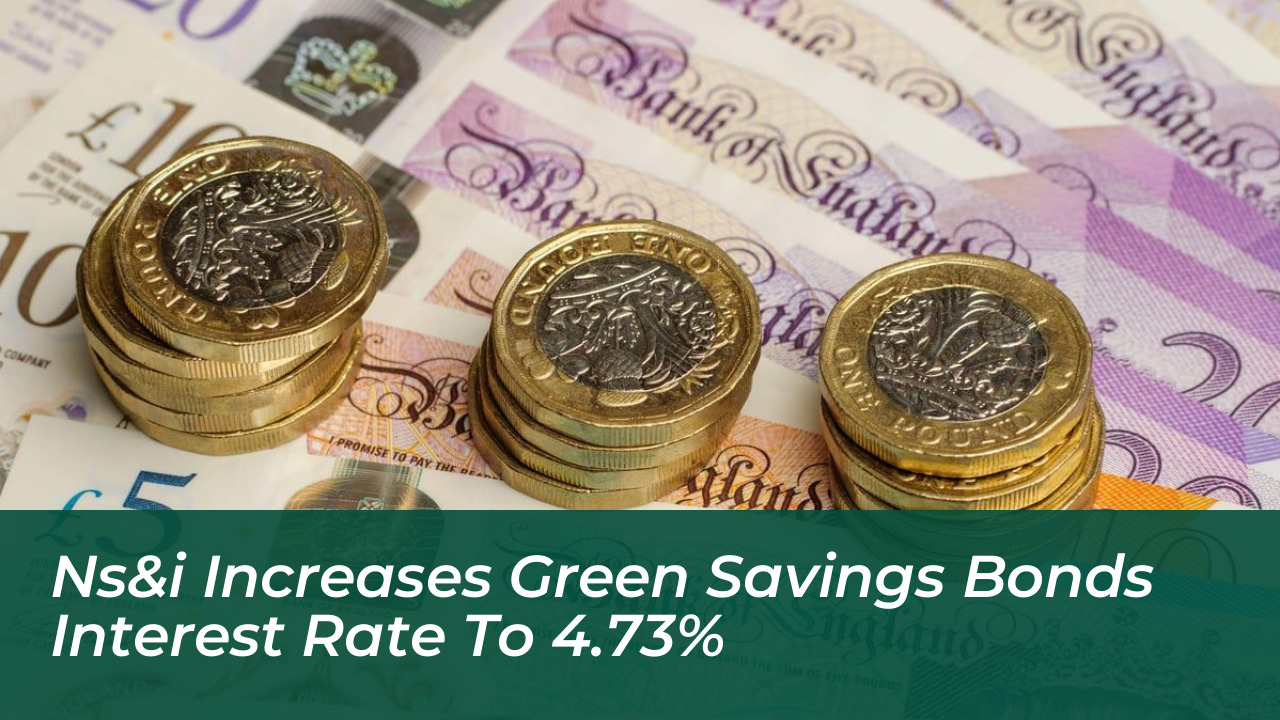

The UK government-backed savings provider, NS&I, has officially increased the interest rate on its latest issue of Green Savings Bonds. Savers can now benefit from an annual equivalent rate (AER) of 4.73% on a three-year fixed-term investment. This marks an increase of 0.28 percentage points from the previous 4.45% offer.
The Green Savings Bonds Offer
The Green Savings Bonds are a fixed-term product. Investors must commit their capital for a full three-year period. During this term, funds cannot be withdrawn. This provides a locked-in rate guaranteed by HM Treasury. Introduced in 2021, the product allows individual investors to contribute between £100 and £100,000 per issue.
Investment Purpose and Security
These bonds serve a specific purpose within the UK Government Green Financing Framework. The capital raised supports environmental projects across the United Kingdom. Updated in November 2025, this framework now includes nuclear energy projects alongside other green initiatives. Because HM Treasury backs the bonds, they offer 100% capital security. This makes them popular for cautious savers who prioritize the safety of their principal investment.
Key Features for Savers
- Interest Rate: 4.73% AER fixed for the three-year duration.
- Eligibility: Open to UK residents aged 16 and over.
- Investment Limits: Minimum deposit of £100; maximum of £100,000 per person per issue.
- Accessibility: Funds are locked for the full three-year term with no early withdrawal options.
- Taxation: Interest is taxable at maturity and may count toward an individual’s Personal Savings Allowance.
Market Context and Comparisons
The 4.73% rate provides a competitive return for a government-backed product. However, financial analysts encourage savers to compare these bonds against broader market offerings. Green Savings Bonds are separate from NS&I’s annual Net Financing target. They are managed to align with government green funding requirements rather than to compete directly with private sector savings accounts.
Savers considering this product should evaluate their liquidity needs. The inability to access funds for three years is a key factor when compared to flexible savings accounts or high-yield bonds offered by private banks.