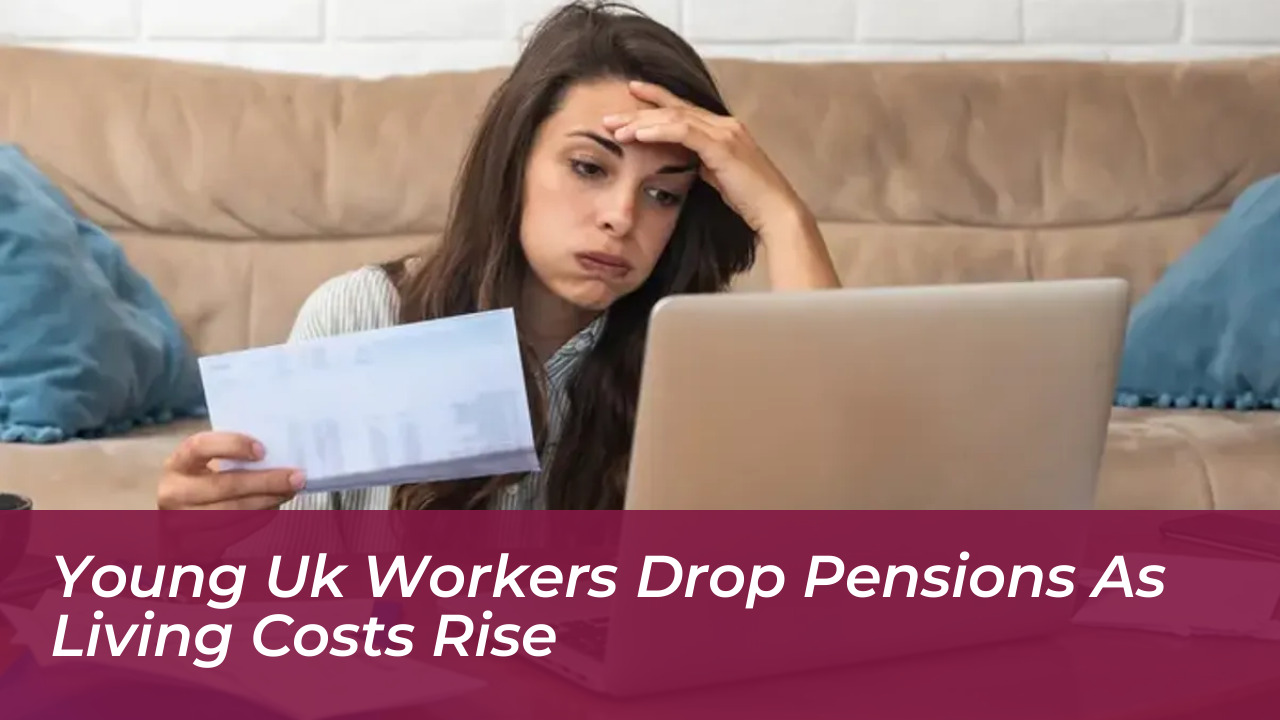


Rising living costs are pushing young workers across the UK to leave workplace pension schemes. Officials and pension experts warn that this decision could reduce retirement incomes as workers prioritize rent, family costs, housing, and other immediate bills. According to the Department for Work and Pensions (DWP), about 22.6 million people-representing 90% of those eligible for automatic enrolment pensions-are paying into a workplace scheme, while about 2.5 million are not.
The trend is particularly visible among National Health Service (NHS) staff. Figures obtained by financial advisory firm Quilter showed 82,212 NHS Pension Scheme opt-outs last year, up from 75,061 the previous year. Out of those recent figures, 44,256 opt-outs, or 54%, involved staff under the age of 35. This highlights how acute financial pressures are hitting younger professionals at the start of their careers.
The Immediate Cash Crunch for Gen Z Workers
For many younger employees, the pressure to cover daily expenses outweighs the theoretical long-term benefits of compound investment growth. Until early September, 26-year-old Dr. Hassan Nassar was saving around £430 every month into his NHS workplace pension. However, the trainee GP working in the West Midlands found himself deeply cash-strapped and decided to halt contributions for six to 12 months.
Nassar needed the freed-up funds to support a sick family member, cover rising rent, pay off student loan repayments, and save for a deposit on his first home. While he estimates the break could cost him between £5,000 and £10,000 in future retirement income due to missing decades of compound interest, he emphasizes that immediate survival comes first.
"People will say, you're silly, look at what you'll be missing out in the future," Nassar told reporters. "But I need to look at what I'd be losing now if I didn't opt out."
Under UK rules, employees are automatically enrolled in a workplace pension if they are aged 22 or above and earn over £10,000 annually. Employees typically contribute around 5% of their qualifying earnings, bolstered by tax relief and mandatory employer contributions. While Nassar was paying 10.7% of his gross earnings into the NHS scheme-which provides a substantial employer contribution on top-the rigidity of the NHS scheme prevents staff from temporarily reducing their contributions instead of fully opting out.
Similarly, 22-year-old Evie from Cornwall opted out of the workplace pension at the London events company where she is employed. A recent drama school graduate, she noted that her £800 monthly rent, alongside food and travel costs, left little room for long-term savings.
"How can I save for a house, how can I save for a car and afford my outgoings?" she said. "I don't want to just work day in, day out to live, I want to work to have a life."
Government Warnings and Long-Term Financial Risks
Government officials have expressed growing concern over the shift. Pensions Minister Torsten Bell warned that a rising number of young workers are failing to save, putting tomorrow’s retirees on track for lower private pension incomes than previous generations. Although the state pension provides a baseline income, it only covers a minimum standard of living, leaving retirees heavily reliant on private and workplace pension supplementation.
Financial experts stress that pausing or opting out carries severe hidden costs. Beyond losing personal contributions, workers forfeit valuable employer contributions and the power of compound interest. Standard Life analysis indicates that a 25-year-old earning £25,000 could lose out on £5,014 in today’s money at retirement after pausing pension contributions for just one year, assuming minimum auto-enrolment levels and standard investment growth assumptions. A five-year pause could reduce a projected retirement fund by over £24,000.
April Leeson, a specialist at chartered financial advice firm The Private Office, advises workers to avoid stopping contributions entirely if possible. She notes that many employers permit staff to reduce contribution rates temporarily rather than completely opting out, which preserves employer matching funds and ongoing investment growth.
Broader Demographic Impact
The financial squeeze is not limited strictly to Gen Z. Older workers are also feeling the strain of prolonged economic tightening. Kharlee, a 47-year-old teacher from South East London, stopped contributing to her workplace pension twice over a five-year period due to financial hardship, missing out on an estimated £5,000 in retirement savings. Now self-employed and outside a formal workplace scheme, she worries about her long-term financial security.
As policymakers and employers grapple with these trends, the challenge remains balancing short-term cost-of-living relief with the critical necessity of securing long-term financial stability for the UK workforce.