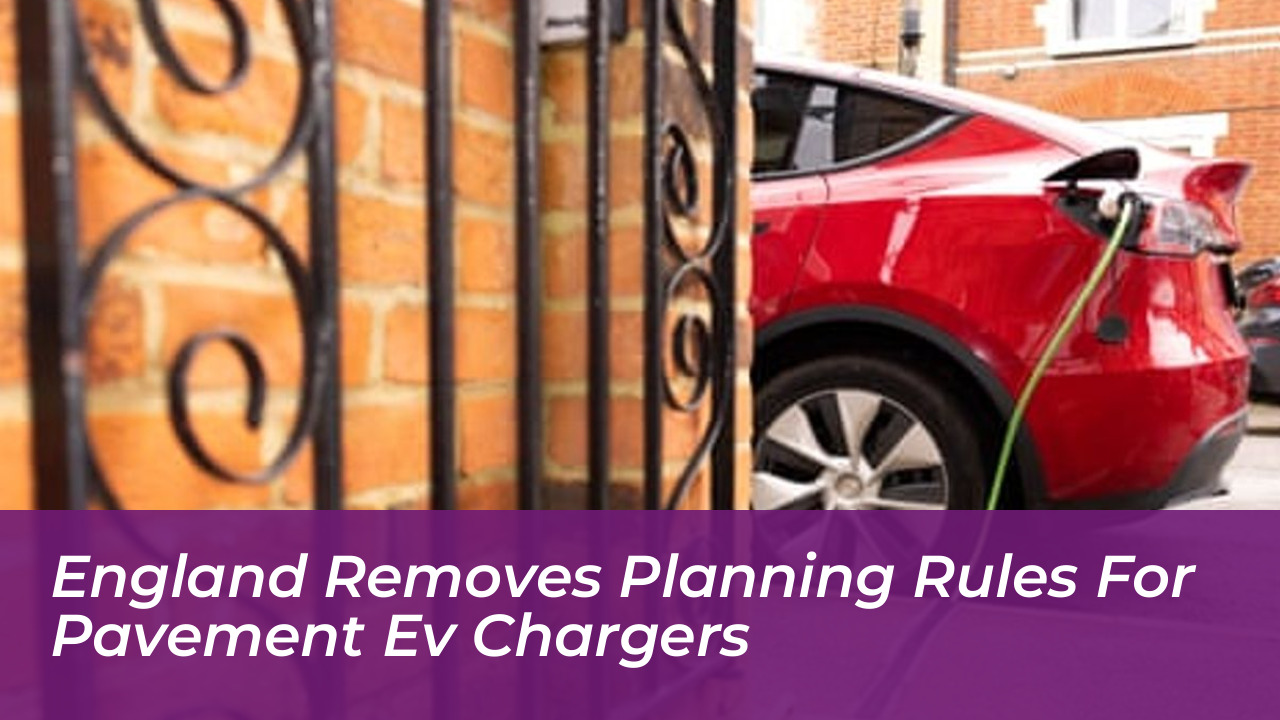

Electric vehicle drivers in England without private driveways can now install qualifying cross-pavement charging connections without seeking separate planning permission. The government rule change, which came into force on October 21, 2026, aims to reduce installation costs and expand household access to cheaper home electricity tariffs.
According to the Department for Transport (DfT), removing the planning requirement could save motorists up to £300 in administrative and application expenses. By routing charging cables safely across pavements using embedded gullies, households can avoid the trip hazards associated with loose wires while tapping into domestic electricity rates.
The New Pavement EV Charging Rules
The regulatory update is enacted through The Town and Country Planning (General Permitted Development) (England) (Amendment) (No. 2) Order 2026. Under the new Class F permitted development rights, homeowners and residents parking on-street no longer need to submit a formal planning application for approved cross-pavement channels and their associated domestic chargepoints.
The policy addresses the UK’s growing “charging divide.” Government estimates indicate that roughly 32% of English households-about 8 million homes-do not have off-street parking. Historically, these residents have relied heavily on public charging networks, where energy costs run significantly higher than standard domestic electricity.
Key Conditions and Limitations
While the planning hurdle is removed, the government and motoring organisations stress that the policy has strict boundaries:
- No DIY Installation: Residents cannot cut grooves into public footways themselves. All channels must be installed by, on behalf of, or with the explicit authorisation of the local highway authority.
- Local Council Control: Councils retain ultimate authority over the highway. They can refuse installations based on pavement width, underground utilities, tree roots, or local parking restrictions.
- No Reserved Parking: Installing a cross-pavement channel does not guarantee ownership or priority parking over the bay outside a property. If another vehicle occupies the space, charging is not possible.
- Protected Areas: The permitted development rights do not apply within conservation areas, the grounds of listed buildings, or scheduled monuments.
Financial Incentives and Cost Savings
Proponents of the scheme argue that unlocking home charging changes the economics of switching to an electric vehicle. Domestic charging can cost as little as 2 pence per mile, offering potential running-cost savings of up to £1,750 annually compared to frequent public rapid charging.
To assist with upfront expenses, eligible households with on-street parking can apply for the government’s Electric Vehicle Chargepoint Grant. The scheme covers up to 75% of the eligible purchase and installation costs for a home chargepoint, up to a maximum of £500, for applicants pairing the device with a permanent cross-pavement solution. This grant program is scheduled to run until March 31, 2027.
Varying Local Authority Adoption
Despite the national rule change, practical access depends heavily on local council policies. Freedom of information research cited by motoring groups indicates that while a growing number of local authorities are exploring or trialling cross-pavement channels-such as Kirklees Council’s proposed £1.5m West Yorkshire pilot scheme-many local authorities have yet to implement official application frameworks.
Drivers are advised to check directly with their local highway authority before purchasing an electric vehicle or committing to installation equipment to confirm whether an approved cross-pavement scheme is supported in their specific area.