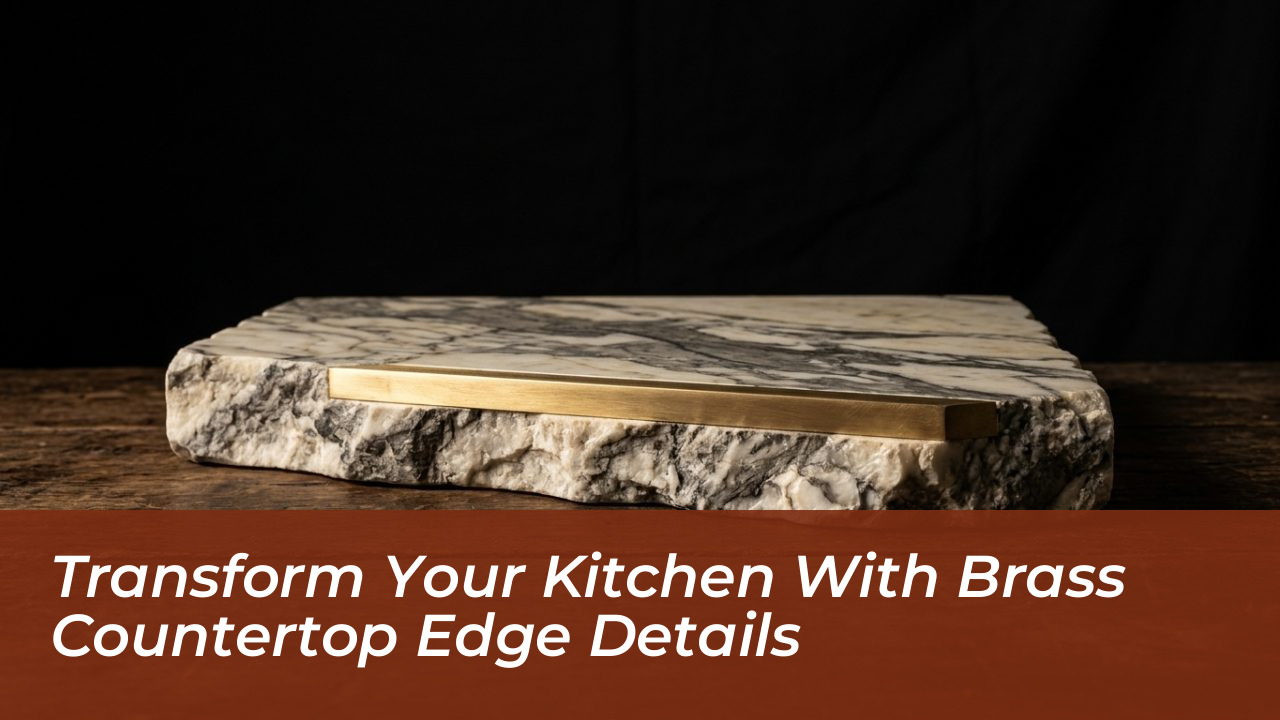

Introducing a subtle touch of cast metal or an authentic slab to your cooking space instantly shifts the entire room away from sterile builder-grade finishes. Top residential designers are seeing homeowners move away from uniform, engineered surfaces in favor of character-rich natural materials, custom architectural profiles, and sleek flush-mounted technology. Rather than defaulting to uniform white quartz, current countertop trends focus heavily on distinct texture, individuality, and hands-on fabrication details.
Quality worktops frequently survive multiple remodel cycles, making the choice of material and edge treatment a long-term investment. Leading architects and interior specialists emphasize that authentic elements are dethroning mass-manufactured options as homeowners seek spaces that feel tailored and permanent.
The Return to Authentic Natural Stone
For years, engineered quartz dominated kitchen renovations due to its uniform patterns and low maintenance. However, North Carolina designer Catherine Balding, co-owner of Balding Design Build in Wilmington, points out that authentic rock is firmly regaining top status across high-end homes. “Homeowners are leaning away from things that look cookie-cutter, too perfect, or overtly manufactured. There is a natural beauty in something authentic and one-of-a-kind that makes the space feel genuinely yours.”
Instead of hyper-repetitive artificial veins, clients want genuine geologic individuality. While quartz offered predictability, natural slabs bring organic warmth that factory printing cannot replicate. This sets up a deeper collaborative relationship between buyers and stone yards.
Direct Homeowner Involvement at the Fabrication Yard
Selecting a slab is no longer treated as a passive catalog order. Architect Chris Lyon, owner of Lyon Architecture in Washington, D.C., observes that clients increasingly want hands-on control over how their raw materials are cut and positioned. Modern renovators visit stone yards personally to examine full slabs and take an active role alongside fabricators.
By deciding precisely where focal veining aligns with cooktops, sinks, and waterfalls, owners turn the stone layout into an intentional architectural feature. Taking the extra step to map the surface before cutting ensures the natural movement highlights the room’s best angles. This intentional alignment naturally leads designers to pay closer attention to how the stone terminates at the perimeter.
Architectural Profiles: Moving Beyond the Eased Edge
The standard slightly eased edge-long favored for minimalist, clean lines-is making room for expressive contours. Balding notes that perimeter treatments are emerging as a primary way to reinforce a property’s overall structural language. Choosing an edge treatment like a brass accent or custom cut is an easy way to establish historic character or modern solidity without altering the footprint of the island or perimeter runs.
Matching the edge cut or metallic band to the specific architecture creates immediate visual cohesion throughout the room. These nuanced perimeter choices highlight the stone’s substance, preparing the kitchen for unexpected textural pairings across secondary preparation zones.
Layering Metals, Zinc, and Cast Glass Surfaces
Rather than committing every horizontal worktop to a single material, designers are embracing deliberate contrast. Atlanta and New York architect Jeffrey Bruce Baker highlights that mixing dissimilar elements prevents modern kitchens from feeling one-dimensional.
Unconventional Materials Entering Modern Layouts
- Cast glass: Brings luminous depth and sleek reflection to raised bars and low-traffic accents.
- Brass and zinc: Deliver living finishes that age naturally with use, introducing warm patina into utilitarian zones and counter edges.
- Natural dark stone: Grounds high-wear perimeter counters while complementary metals highlight specific zones.
“We are seeing a greater mix of countertop materials within a space. Layering materials enriches our spaces and keeps them from looking commercial or sterile,” notes Jeffrey Bruce Baker.
This deliberate layering creates an engaging kitchen environment, but clean visual execution requires eliminating messy wall clutter.
Concealed Outlets and Moodier Stone Palettes
Intricate stone backsplashes lose their architectural impact when interrupted by rows of plastic electrical faceplates. Lyon notes that high-end remodels now favor integrated, flush-mounted electrical outlets placed directly into the countertop surface or discreetly concealed within millwork.
Achieving this seamless aesthetic demands tight coordination between the electrician, fabricator, and stone installer to preserve code compliance while keeping visual lines completely unbroken. At the same time, color preferences are taking a dramatic shift. Baker points out that while bold stone choices remain popular, clients are moving away from loud, high-contrast veining. Instead, the focus has pivoted toward deep, moody, saturated backgrounds with delicate, subdued undertones that lend drama without overwhelming the room.
Which surface material would you choose for your next kitchen update? Are you leaning toward classic natural stone or textured mixed metals like brass? Share your experiences and design ideas in the comments below.