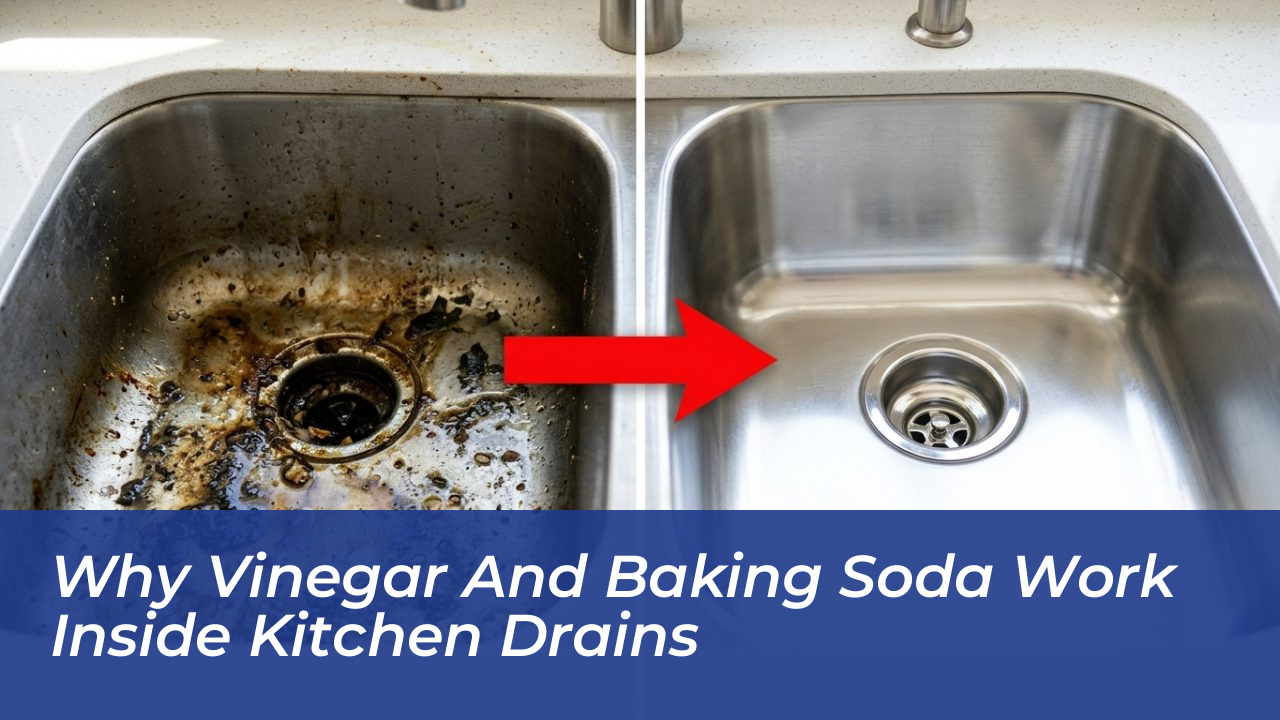

Pouring a simple mixture of white vinegar, baking soda, and hot water down your sink remains one of the most effective chemical-free methods to refresh pipes and break down everyday buildup. Endorsed in practical guidance from the Cornell University Cooperative Extension, this common pantry combination relies on a specific chemical reaction to dislodge grease, eliminate persistent food odors, and loosen clinging grime without relying on harsh industrial cleaners.
Food remnants, fats, and grease continually accumulate inside kitchen pipes over weeks of regular cooking. While store-bought drain cleaners are often harsh on household plumbing, standard household items can handle everyday maintenance when used in the correct sequence.
The Chemistry of Vinegar, Baking Soda, and Hot Water
Each ingredient in this cleaning method performs a distinct function when introduced to the drain line. White vinegar provides acetic , a mild agent capable of dissolving alkaline mineral deposits, breaking through soap scum, and neutralizing stubborn odors that rise from decaying food matter. In contrast, baking soda serves as a mild alkaline abrasive and deodorizer.
When the acidic vinegar contacts the alkaline base, it triggers a rapid effervescent reaction that generates carbon dioxide gas. This physical fizzing action helps loosen debris adhering to the inner walls of the plumbing. Hot water acts as the final transport mechanism. It melts residual grease layers and flushes the displaced debris completely through the trap and out into the main line. Boiling water should never be poured into pipes without verifying plumbing durability, as extreme temperatures can soften or compromise certain pipe joints and materials.
The Limits: Myths vs. Reality
A widespread belief suggests that mixing vinegar and baking soda produces a heavy-duty chemical solvent strong enough to dissolve solid blockages like tree roots or dense clogs. In reality, the two substances largely neutralize each other into saltwater and carbon dioxide gas. The actual cleaning power comes from the mechanical agitation of the bubbling reaction combined with the grease-cutting rinse of hot water. It serves as an exceptional preventative upkeep tool, but it will not replace mechanical augers for severe, completely blocked pipes.
How to Clean a Kitchen Drain Step-by-Step
Executing this maintenance routine properly ensures optimal results while protecting your kitchen plumbing from unnecessary heat stress. Follow the proportion guidelines recommended by home cleaning resources to maintain your sink:
- Remove visible debris: Clear away any leftover food particles, vegetable peelings, or standing scraps resting in the sink strainer.
- Add the baking soda: Pour exactly one cup of dry baking soda straight down into the drain opening.
- Pour the warm vinegar: Heat one cup of white vinegar and pour it directly over the baking soda to initiate the bubbling reaction.
- Allow the mixture to rest: Let the fizzing solution sit undisturbed in the pipes for five minutes.
- Flush the line: Rinse the drain thoroughly using two quarts (approximately 1.9 liters) of hot tap water.
Component Roles and Plumbing Safety
Understanding what each substance contributes makes it easier to keep your drainage running smoothly without damaging your fixtures.
| Component | Primary Function |
|---|---|
| Baking Soda (1 cup) | Provides an alkaline base and abrasive texture to absorb trapped odors. |
| Heated White Vinegar (1 cup) | Supplies acetic that reacts with the base to generate scouring bubbles. |
| Hot Water (2 quarts) | Liquefies softened grease layers and flushes loosened debris down the line. |
A critical safety consideration involves existing chemical products. If you have recently poured a commercial drain opener down the pipe, never follow it with vinegar or homemade solutions. Combining household acids with commercial chemical cleaners can release dangerous fumes or trigger unpredictable, caustic splash-backs. Always stick strictly to the container instructions when commercial products are already in the system.
Maintaining a clean kitchen drain prevents odor buildup before it requires expensive intervention. Simple pantry staples offer a practical way to keep everyday sink lines clean and clear.