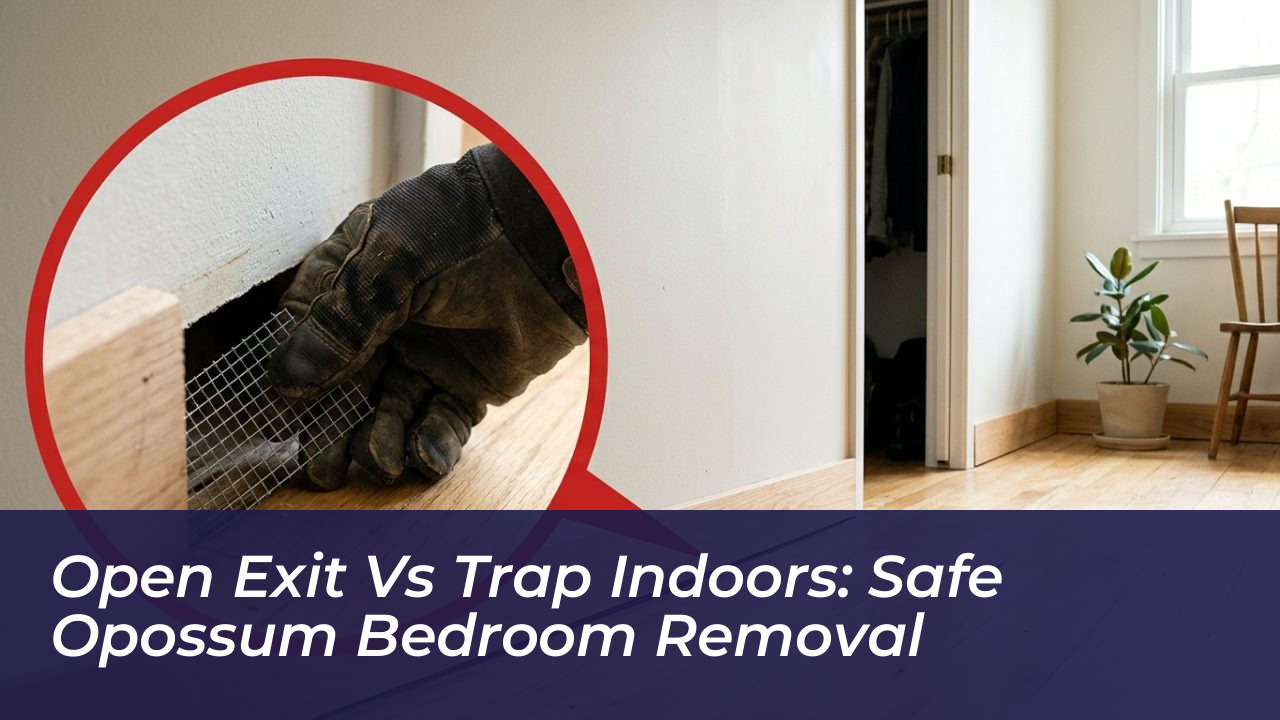

Opening an exterior exit and giving an animal a quiet, dark escape route is far safer and more effective than cornering it indoors. When an uninvited opossum in bedroom quarters disrupts your family, rushing in with makeshift traps often backfires, as cornered wildlife will bite in self-defense. Understanding why these creatures slip indoors and how to handle them without injury protects both your home and the animal.
That exact scenario unfolded in Ohio when two young girls spent several nights telling their parents that a creature was moving along their bedroom wall in the dark. Their mother, Caitlin Burch, initially dismissed the claims as an overactive imagination or a simple bad dream. The reports proved entirely accurate when the parents discovered a live wild animal that had been nesting inside the children’s bedroom closet for three full days.
The family waited until the creature crawled into a storage tote inside the closet. The father secured the container by pinning down the lid, placing a cookie sheet over it, and transporting the animal outside for release. While the ordeal ended safely, the incident highlights how easily nocturnal wildlife enters domestic spaces unnoticed.
How an Opossum Slips Into Living Spaces
Fall conditions serve as the primary catalyst for these indoor encounters. As night temperatures drop, these animals search for warm, quiet, and dry environments to build temporary nests. According to the Michigan Department of Natural Resources, these critters frequently target attics, chimneys, window wells, crawl spaces, and residential sheds.
Common household entry points include:
- Unlatched or swinging pet doors left accessible after dark.
- Visible gaps running underneath poorly sealed garage doors.
- Unscreened foundation vents and crawl space openings.
- Uncapped chimneys offering direct access from the roof.
Marsupial Biology and Temperament
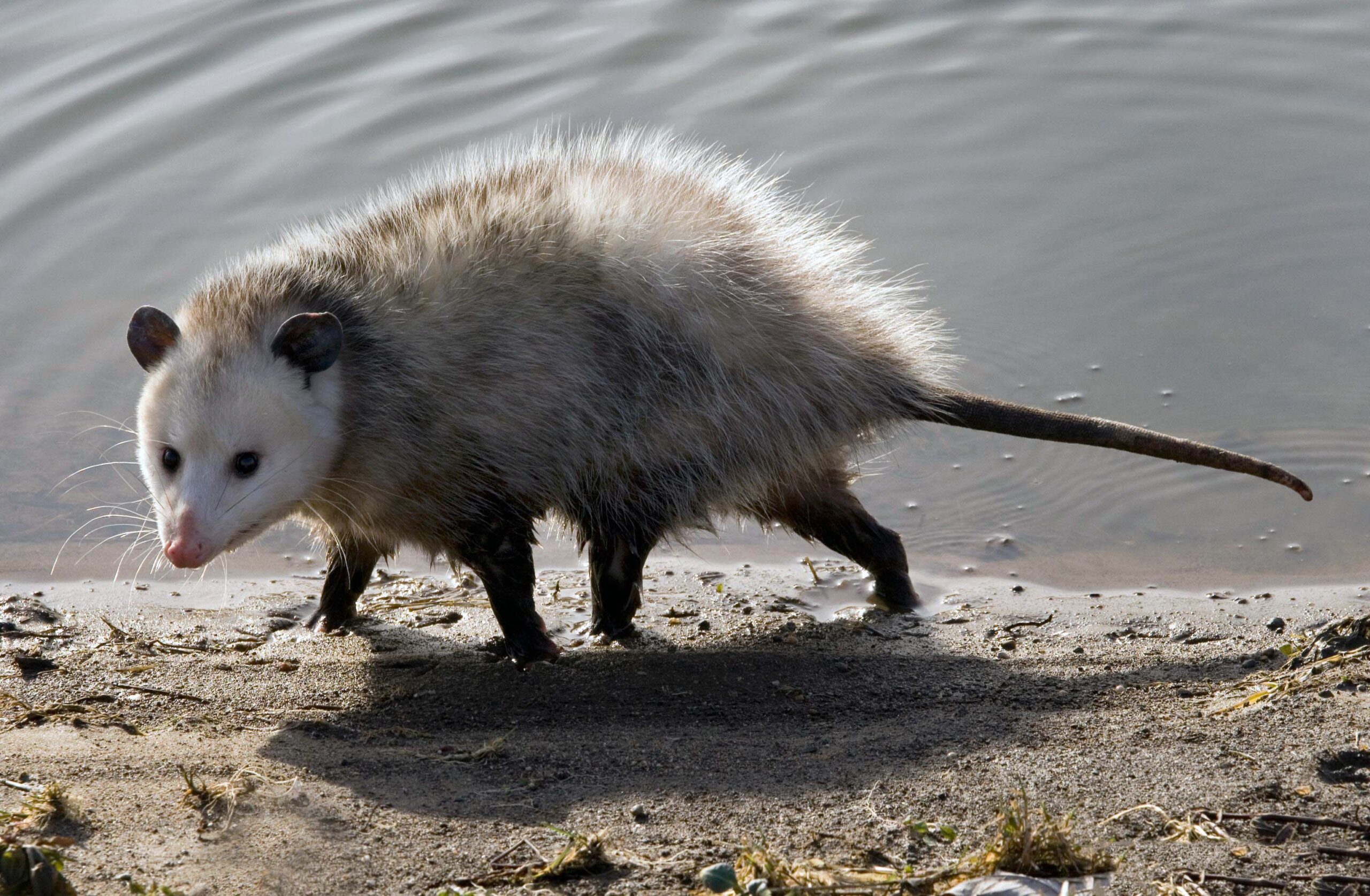
As North America’s only native marsupial, this creature is typically docile and prefers playing dead over fighting when confronted. However, it remains a wild animal equipped with sharp teeth that will bite if cornered. Handling wild animals presents health hazards, as they carry external parasites and transmit illnesses. A cornered wild animal will abandon its passive defense mechanisms if it feels physically threatened or trapped.
A common misconception is that these nocturnal visitors are aggressive invaders looking for a fight. In reality, they are transient scavengers that rarely cause deliberate physical damage, provided homeowners do not escalate the encounter through physical handling.
Action Guide: Open Exit vs. Trap Indoors
When dealing with an intruder inside domestic spaces, choosing the proper response prevents injuries and property damage. The following table outlines recommended actions based on the scenario:
| Scenario | Recommended Action |
|---|---|
| Animal trapped in a room | Close interior doors, open an exterior exit, and dim lights. |
| Animal is injured or with young | Contact animal control or a licensed wildlife rehabilitator. |
| Animal has exited premises | Locate and permanently seal points of entry with metal flashing. |
Steps to Remove and Exclude Wild Visitors
If you encounter an unwanted critter inside your home, avoiding physical confrontation prevents bites and panic. Follow these established practical guidelines to resolve the intrusion safely:
- Isolate the immediate area: Remove all children and family pets from the room immediately, then close the interior hallway doors.
- Create an escape path: Open any exterior doors or ground-level windows within that room, switch off the interior lights, and maintain complete quiet so the animal exits on its own after dark.
- Avoid bare-hand handling: Never attempt to seize or grab the animal by hand. If it is trapped, injured, or carrying babies, immediately contact your municipal animal control or a licensed wildlife rehabilitator.
- Inspect structural perimeters: Once the room is clear, search the walls, closets, and baseboards to identify and patch the initial entry hole.
Long-term prevention requires removing outdoor attractants. The DNR recommends eliminating easy food sources by bringing pet bowls inside at dusk, locking trash receptacles, and securing bird feeders and open compost piles. Trimming tree branches away from your roofline and securing vents with durable hardware cloth will keep future intruders out.
Frequently Asked Questions
Are opossums aggressive when trapped in a bedroom?
No, they are typically docile and will hiss, display teeth, or play dead rather than attack. However, if physically cornered or handled, they will bite in self-defense.
Should I use a DIY cage trap inside my house?
Using makeshift or DIY traps indoors often backfires by panicking the animal. Giving it a dark, quiet path to an exterior door is far safer and more effective.
How do opossums get into bedrooms?
They usually enter through open pet doors, poorly sealed garage entries, or gaps in foundation vents, and wander indoors while foraging for warm shelter during chilly weather.
What should I do if the opossum refuses to leave?
If the animal is injured, trapped, or refuses to leave the room after you have opened an exterior exit, contact local animal control or a licensed wildlife rehabilitator immediately.
How can I prevent future wildlife intrusions?
Seal all foundational gaps, cover vents with hardware cloth, cap chimneys, bring pet food indoors at night, and trim low-hanging tree branches near your roofline.