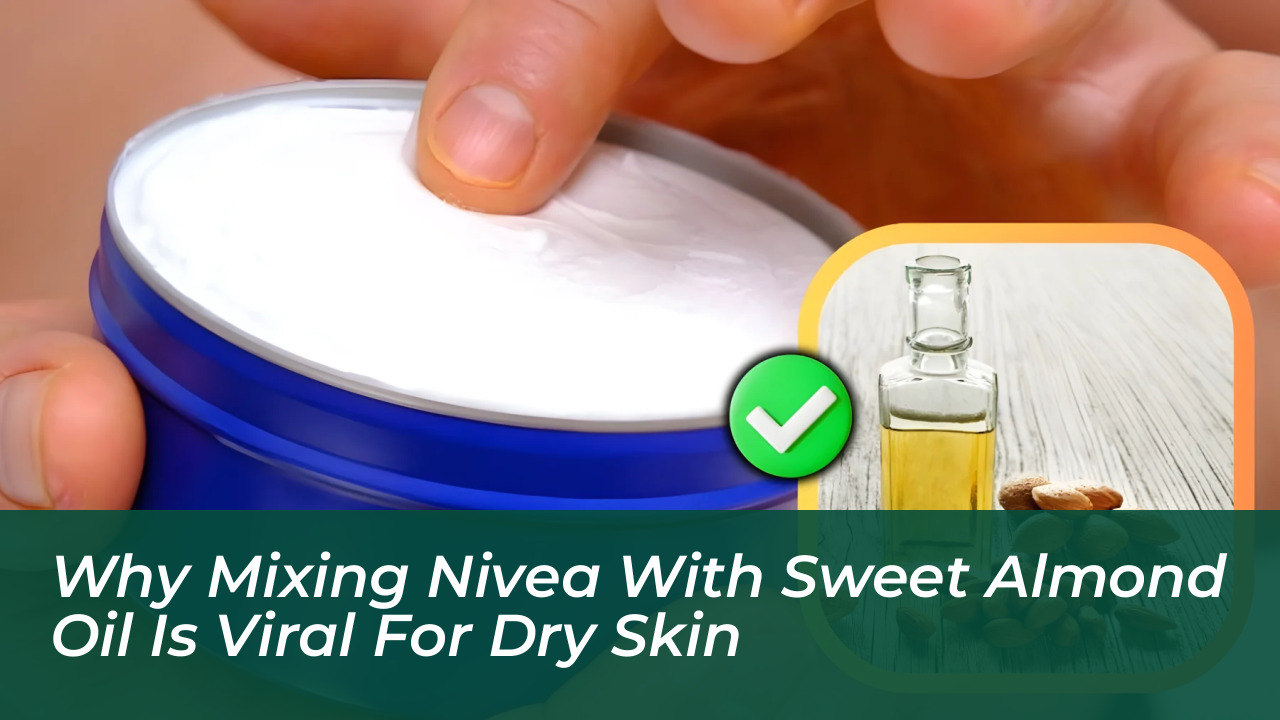
Combining classic Nivea cream with a few drops of sweet almond oil creates an ultra-rich emollient layer. This mixture relieves stubborn skin dryness, softens rough elbows and hands, and slows surface water loss. This simple combination delivers heavy-duty barrier protection by blending a water-trapping base with fatty acid-rich plant lipids. While beauty enthusiasts frequently share this hack across social channels, getting real dermatological benefits requires understanding exactly what this mixture can and cannot do for your skin.
The science behind the pairing lies in dual-action hydration. Classic cream formulations supply ingredients that seal in existing moisture. Sweet almond oil acts as an emollient lipid that fills microscopic cracks in the outer skin layer. Body areas prone to severe roughness-such as knees, heels, elbows, and forearms-benefit most from this concentrated barrier reset.
Why the Combination Restores Compromised, Dry Skin
Sweet almond oil is dense with essential fatty acids and has a longstanding history in dry skin therapies due to its lubricating texture. When mixed into a dense cream, the oil thins out the heavy consistency slightly. This creates a silken balm that spreads evenly while boosting hydration retention.
Dermatologist Dr. Mona Gohara, an associate clinical professor of dermatology at Yale, has consistently emphasized the importance of maintaining an intact skin barrier and preserving baseline hydration when skin becomes dry. Adding targeted lipids helps support this protective exterior. Similarly, guidance from the American Academy of Dermatology (AAD) highlights that applying moisturizers directly onto slightly damp skin helps trap water beneath the surface before it evaporates.
Routine topical use delivers several noticeable benefits to parched body areas:
- Targeted softening: High concentrations of fatty lipids soothe calloused, rough textures immediately upon application.
- Reduced water loss: The semi-occlusive layer acts as a physical shield against dry indoor heating and cold air.
- Enhanced skin suppleness: Well-lubricated skin layers bend and flex naturally, preventing tight, uncomfortable sensations.
- Natural surface radiance: Nourishing emollients smooth light-reflecting surface cells, delivering an instantaneous, healthy sheen.
Component Comparison Table
| Component | Primary Skincare Function |
|---|---|
| Classic Nivea Cream | Forms an occlusive protective shield that seals ambient moisture into the outer skin layers. |
| Sweet Almond Oil | Supplies fatty acids to lubricate intercellular spaces, softening rough patches and boosting elasticity. |
How to Mix Nivea With Sweet Almond Oil Safely
The single biggest mistake users make with this viral recipe is mixing large batches inside a jar. Commercial cosmetic formulas rely on carefully balanced preservative systems designed for specific water-to-oil ratios. Introducing raw plant oils into an entire tub destabilizes the emulsion and risks bacterial or fungal contamination over time.
To safely prep and apply the blend, prepare only single-use portions on demand:
- Dispense a dime-sized dollop of Nivea cream directly into the palm of your clean hand.
- Add two to three drops of pure, cold-pressed sweet almond oil on top of the cream.
- Rub your palms together for several seconds to blend the ingredients and warm the mixture using your body heat.
- Smooth the emulsified balm directly over damp areas of the body immediately after showering to lock in moisture.
Busting Common Myths: What This Mixture Cannot Do
Viral online videos often make exaggerated claims about DIY moisturizing recipes, labeling them as miracle anti-aging cures. Distinguishing clinical reality from social media exaggeration protects your skin from unnecessary breakouts and irritation. A richer moisturizer can temporarily plump surface cells, but cosmetic hydration cannot replace targeted active compounds like retinoids or sun protection.
Keep these clinical boundaries in mind before updating your daily regimen:
- Myth: This mix removes wrinkles and fades dark spots.
Fact: Neither product contains active cell-communicating ingredients or pigment inhibitors. Plumping the skin with hydration reduces the visual prominence of fine dehydration lines, but it does not remodel structural collagen or reverse sun damage. - Myth: It works as an all-over facial night cream.
Fact: The dense blend of heavy petrolatum-based creams and nut oils carries a high risk of clogging pores. Applying this mixture to acne-prone or naturally oily facial areas can cause severe breakouts. - Myth: It heals open or broken skin instantly.
Fact: Applying heavy, unsterile mixtures to cracked or inflamed skin can trap bacteria and worsen irritation. The skin barrier must close before you apply heavy occlusives.
Always run a 24-hour patch test by applying a small dab to your inner forearm first to ensure your skin tolerates topical almond oil without an allergic reaction. Managing stubborn dry skin requires simple, steady habits rather than expensive, over-engineered cosmetic solutions.
Frequently Asked Questions About Nivea and Sweet Almond Oil
Can I use sweet almond oil straight from the kitchen for this recipe?
It is best to use pure, cold-pressed cosmetic or topical-grade sweet almond oil. Food-grade oils may contain additives or lack the refined consistency needed for optimal skin tolerance.
Is this mixture safe for oily or acne-prone skin types?
No. Because classic Nivea cream uses a heavy petrolatum and mineral oil base, adding sweet almond oil creates a highly occlusive barrier that can easily clog pores on acne-prone facial skin.
How often should I apply this DIY body treatment?
You can apply this spot treatment two to three times a week, or immediately after showering on damp skin, to maintain moisture on severely dry zones like elbows, knees, and heels.
Does this mixture offer any sun protection?
No. Neither Nivea cream nor sweet almond oil contains SPF filters. Always apply a broad-spectrum sunscreen over exposed areas during daytime routines.
Why shouldn’t I mix a large batch in a container?
Adding raw, preservative-free plant oil into an entire commercial cream container disrupts the water-to-oil preservation system. This significantly increases the risk of bacterial and fungal growth.