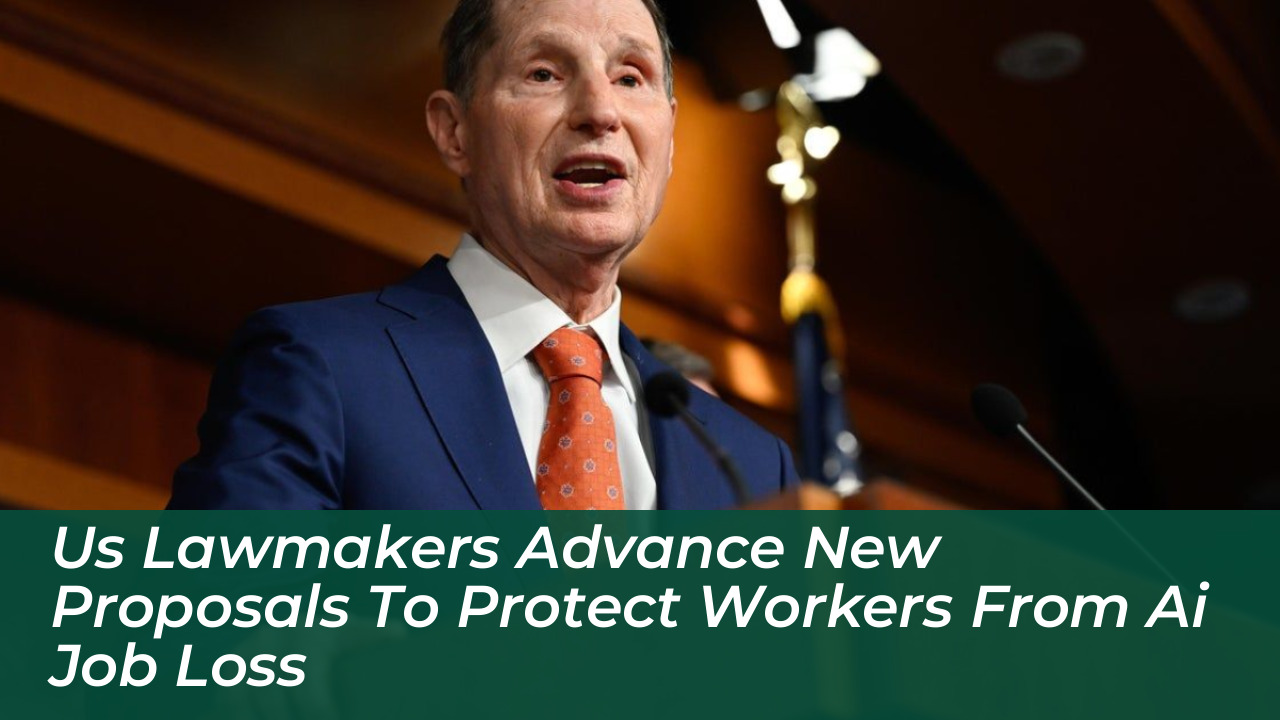

As artificial intelligence continues to reshape modern business operations, federal and state lawmakers are actively advancing legislative proposals to protect the American workforce from potential AI-driven job losses. While economists note that widespread, automated displacement has not yet fully materialized, a growing number of congressional and state-level initiatives are seeking to build a stronger safety net for employees facing an uncertain technological future.
The legislative push addresses mounting anxieties among American workers. An Associated Press-NORC Center for Public Affairs Research poll revealed that nearly 80% of Americans consider protecting workers in the artificial intelligence era to be extremely or very important. This public sentiment has spurred lawmakers to introduce various bills addressing automation, worker retraining, and corporate accountability.
Federal Proposals Focus on Unemployment Extensions and Industry Taxes
At the federal level, lawmakers have introduced targeted measures aimed at financial cushioning and retraining for displaced personnel. On October 23, 2026, Sen. Ron Wyden (D-OR) introduced the Stability and Opportunity for Workers Act. The bill proposes expanding standard unemployment benefits during periods of elevated joblessness, extending support from the current 26-week standard to 52 weeks if the national unemployment rate reaches 8.5%. Additionally, the legislation provides education and retraining grants to help displaced workers transition into higher-paying sectors.
Other congressional efforts target the financial structures of major technology companies to fund workforce transitions:
- Make AI Work for Americans Act: Introduced by Sen. Mark Kelly (D-AZ), this bill establishes excise taxes on the AI industry, including a 5% digital advertising tax, a general AI usage tax, and a 50% excess profits tax. Revenues would directly fund worker retraining programs.
- AI Tax and Work Protection Act: Sponsored by Democratic Reps. Greg Casar (TX), Valerie Foushee (NC), and Sara Jacobs (CA), this proposal taxes AI companies based on token usage-with rates scaling alongside rising unemployment-to fund newly created job opportunities.
- AI-Related Job Impacts Clarity Act: Introduced by Sens. Mark Warner (D-VA) and Josh Hawley (R-MO), this bipartisan measure enhances transparency by mandating that major corporations and federal agencies report AI-related layoffs to the Department of Labor for public tracking.
State-Level Precedents and Workplace Surveillance Bans
In the absence of comprehensive federal legislation, state governments are increasingly acting as frontline regulators. California recently approved a sweeping package of worker-protection laws designed to curb algorithmic abuses. Signed into law by Gov. Gavin Newsom, Senate Bill 947-commonly known as the “No Robo Bosses Act”-prohibits employers from firing or disciplining workers based solely on automated algorithmic decisions without human corroboration.
California’s regulatory framework also addresses invasive workplace practices, explicitly banning employers from using artificial intelligence to monitor worker emotional states through biometric data, collect neural data, or track employees inside restrooms. , companies must now provide written notice when mass layoffs are driven by automation.
Other states are pursuing parallel paths. Colorado and Connecticut have enacted laws requiring deployers of automated decision-making tools to notify job applicants, offer explanations for adverse screening outcomes, and provide opportunities for human reviews. Meanwhile, policy analysts and labor advocates continue to debate whether federal frameworks like the Worker Adjustment and Retraining Notification (WARN) Act should be modernized to mandate longer notice periods for AI-induced displacement.
Balancing Innovation and Economic Stability
While labor unions and worker advocacy groups champion these measures as vital guardrails against dehumanizing workplace surveillance and sudden mass layoffs, business organizations express caution. Industry representatives argue that excessive compliance mandates and rigid operational restrictions may increase legal uncertainty, add administrative overhead, and potentially push tech investments toward more permissive jurisdictions.
Despite these competing viewpoints, the legislative momentum around AI worker protections signals a fundamental shift in how policymakers view technological progress. As automation matures, the ongoing debate centers not on stopping innovation, but on ensuring that the economic gains generated by artificial intelligence do not come at the direct expense of workers and their communities.