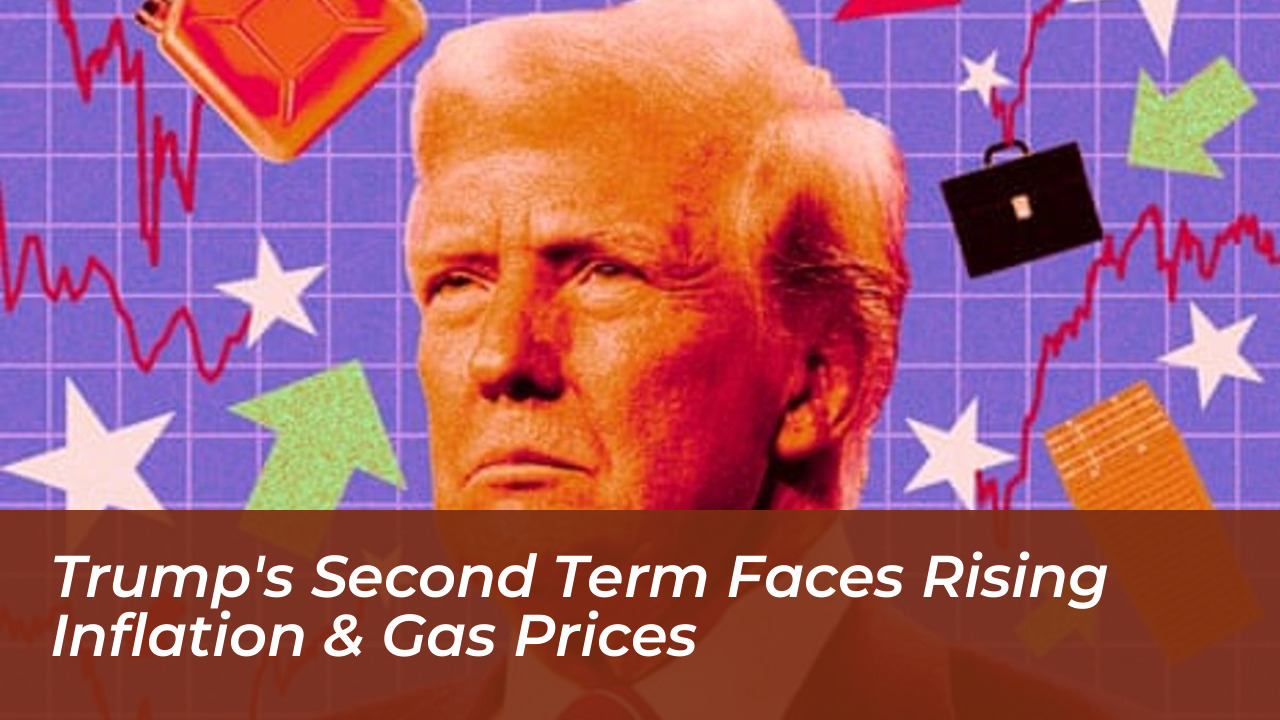

As the United States approaches the 2026 midterm elections, economic data highlights growing pressure on households during Donald Trump’s second presidential term. Despite administration assertions of a robust economy, persistent inflation, climbing gasoline prices, and sluggish employment growth have created a challenging financial climate for millions of Americans.

Public opinion surveys reflect widespread voter frustration. A Harris Poll conducted for The Guardian revealed that nearly two-thirds of respondents believe the country is currently experiencing a recession. , 83% of participants reported that high gasoline prices are actively damaging their personal finances, while one-third noted that a single unexpected bill could jeopardize their financial stability.
Inflation Trajectory and Economic Shocks
When Trump assumed office in January 2025, the Consumer Price Index (CPI) annual inflation rate stood at 3%, down significantly from its 40-year peak of 9.1% recorded in June 2022. By April 2025, inflation briefly cooled to 2.3%.
However, economic momentum shifted following the implementation of sweeping import tariffs. Price increases reaccelerated, pushing inflation back to 3% by September 2025. Although many tariffs were subsequently paused or struck down, renewed geopolitical instability-specifically the war with Iran and the resulting disruption of oil shipments through the Strait of Hormuz-drove inflation up to 4.2% by May 2026.
Federal Reserve officials have responded cautiously to these pressures. In September 2026, the Federal Reserve implemented its first interest rate hike since 2023, raising rates by a quarter point. Federal Reserve leadership cited persistent, elevated inflation as the primary driver behind the shift in monetary policy.
Gasoline Prices and Energy Pressures
Energy costs have emerged as a central political and economic flashpoint. According to data from the American Automobile Association (AAA), the national average price for regular gasoline reached $4.32 per gallon in mid-October 2026, marking an increase of approximately $1.30 per gallon compared to the previous year.
Regional disparities remain pronounced. Drivers in energy-producing states like Texas face averages around $3.81 per gallon, while motorists in states reliant on imported fuel, such as California, contend with prices exceeding $6.21 per gallon. In response to mounting public pressure, the administration has invoked emergency measures, including targeted support for refiners and agricultural diesel production, to help stabilize fuel markets ahead of the November balloting.
Labor Market and Employment Trends
The U.S. labor market has exhibited signs of stagnation during the opening 17 months of Trump’s second term. According to Bureau of Labor Statistics (BLS) reports, the economy added 716,000 total nonfarm jobs through June 2026, a pace considerably slower than the final months of the preceding administration. Much of this sluggishness is attributed to federal workforce reductions, stricter immigration enforcement, and cautious hiring practices among private employers.
The national unemployment rate ticked up slightly, reaching 4.2% in June 2026, up from 4.0% at the start of the term. Meanwhile, the labor force participation rate declined to 61.5%, reflecting broader demographic shifts and long-term retirement trends.
Corporate Profits and the K-Shaped Economy
While everyday consumers face tighter household budgets, corporate performance has reached record highs. Driven heavily by artificial intelligence infrastructure investments and technology sector growth, the S&P 500 climbed roughly 23.6% above its pre-inauguration baseline by mid-2026. After-tax corporate profits reached an annualized rate of $3.95 trillion in the first quarter of the year.
Economists characterize this divergence as a K-shaped economy, where wealthier segments of the population-benefiting from stock market gains-experience robust asset growth, while median-income households struggle with elevated living costs.
Voter Sentiment and the Midterm Outlook
Inflation and the cost of living remain defining issues for the electorate. Consumer sentiment indices, though showing minor monthly rebounds from record lows recorded in May 2026, remain depressed compared to pre-pandemic baselines. As early voting gets underway for the November 3 midterm elections, political analysts note that public evaluation of the national economy will likely serve as a decisive factor at the ballot box.
Key Economic Metrics at a Glance
- Inflation Rate: Hovering above 3.4% through mid-2026.
- Gasoline Average: Reached approximately $4.32 per gallon nationally in October 2026.
- Unemployment Rate: Stood at 4.2% as of mid-2026 data.
- GDP Growth: Real gross domestic product grew at an annualized rate of 2.1% in the first quarter of 2026.
- Federal Debt: Public debt increased by approximately 10.7% since the start of the presidential term.