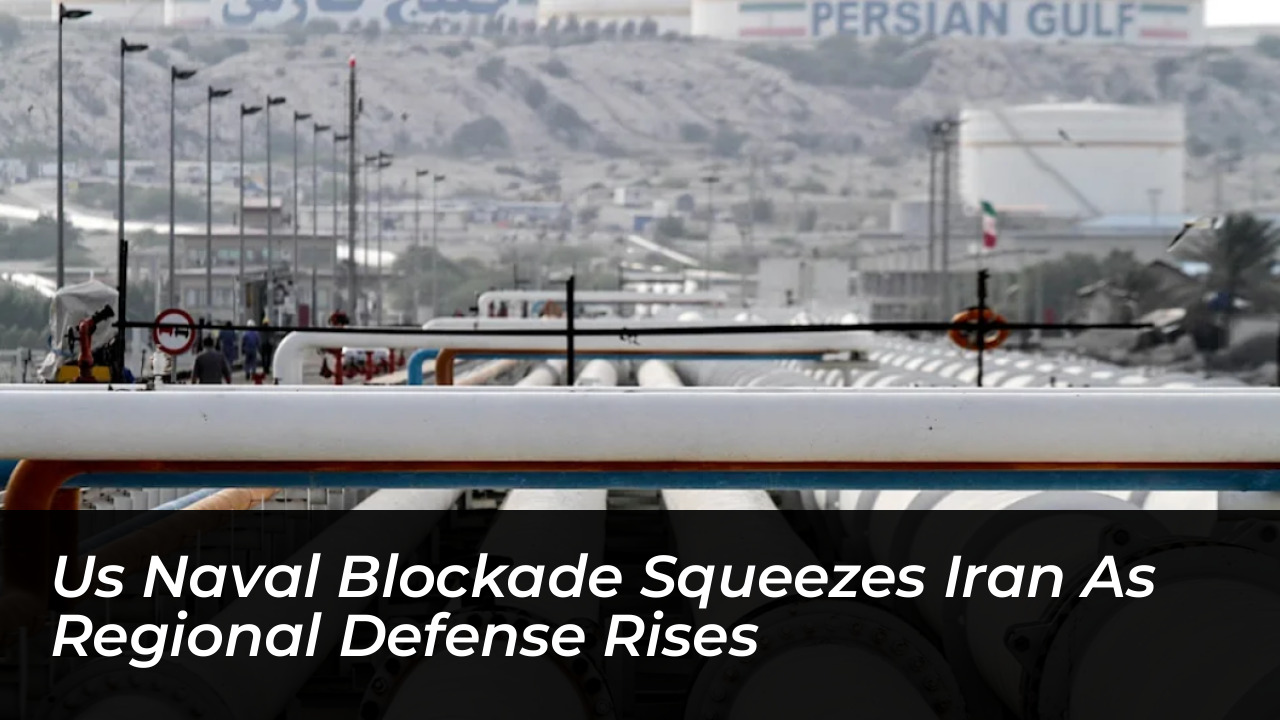

Iran faces severe financial pressure as an ongoing United States naval blockade disrupts crude oil exports, threatening a foundational source of government revenue. Energy intelligence data confirms that trackable floating crude inventory outside the blockaded zone has fallen to zero, severely impacting Tehran’s public finances and national economy.
According to assessments from United States Central Command, the maritime blockade has denied Tehran at least $25 billion in oil revenue. Before hostilities intensified in early 2026, Iran maintained approximately 135 million barrels of crude in floating storage to cushion against international trade restrictions. However, these reserves have been depleted, cutting off the primary financial stream used to fund imports and domestic operations.
Expanding Regional Defense Cooperation and Security Pacts
While economic constraints mount on Tehran, geopolitical alignments across the Middle East and Europe are shifting rapidly. Turkey, Saudi Arabia, Egypt, and Pakistan-frequently referenced as the R4 grouping-are forging deeper security coordination alongside Britain, France, and Germany. This multi-nation coalition aims to counter persistent threats to maritime shipping lanes and critical regional energy infrastructure, particularly attacks originating from Iran-backed Houthi forces.
The defensive architecture has gained formal traction through mechanisms like the Mecca defense pact, uniting Turkey, Saudi Arabia, and Pakistan under a mutual defense framework. Under current agreements, an external armed attack on any member state is treated as an assault on all three. Joint military committees have finalized provisions to make rapid-deployment forces available to safeguard Saudi infrastructure.
European Participation and Strategic Division of Labor
The inclusion of European powers such as Britain, France, and Germany marks a shift toward broader multilateral security engagement. Diplomats note that this coordination functions along a parallel track: while the United States and Israel sustain direct military pressure on Iran, regional partners and European allies focus on neutralizing proxy threats and stabilizing maritime trade routes in the Red Sea and Bab al-Mandab Strait.
This evolving division of labor helps reduce regional dependence on direct American military intervention while shielding critical commercial corridors. However, it also raises strategic stakes for Tehran, whose traditional leverage through regional proxy networks and geographical choke points faces containment.
Cryptocurrency Restrictions and Dwindling Import Capacity
As traditional oil revenues dry up, analysts point out that alternative financing mechanisms remain limited. Former US Treasury official Miad Maleki noted that cryptocurrency offers little utility for central bank transactions or large-scale national trade. Because blockchain records remain transparent and traceable, international authorities have frozen approximately $350 million in Iranian-linked digital assets.
With traditional crude sales choked off and digital alternatives monitored, Iran faces a test regarding its ability to finance essential land-borne imports. As previously paid-for goods and reserves exhaust, economic analysts warn that the true depth of the financial crisis will become more pronounced for the government in Tehran.