France, one of Europe’s most secularized nations, is experiencing an unexpected surge in young adults and teenagers requesting Catholic baptism. Official figures from the Catholic Church in France project over 21,400 adult and adolescent baptisms for 2026. This milestone marks a threefold increase over the last decade, defying decades of declining religious affiliation. This phenomenon represents a profound cultural recalibration, where a generation rejects hyper-secular nihilism and seeks structural stability, personal meaning, and community amid global uncertainty.
- The Statistical Reality of the French Catholic Revival
- Catalysts Driving Youth Toward the Baptismal Font
- The Digital Awakening and Cultural Shifts
- Vatican Response and Institutional Impact
- Challenges Facing the Post-Baptismal Church
- The Broad Sociological Implications of Rising Faith
- Frequently Asked Questions
- Why are young French adults returning to the Catholic Church?
- What percentage of adult converts are women in France?
- How has digital media influenced modern religious conversions?
- Conclusion
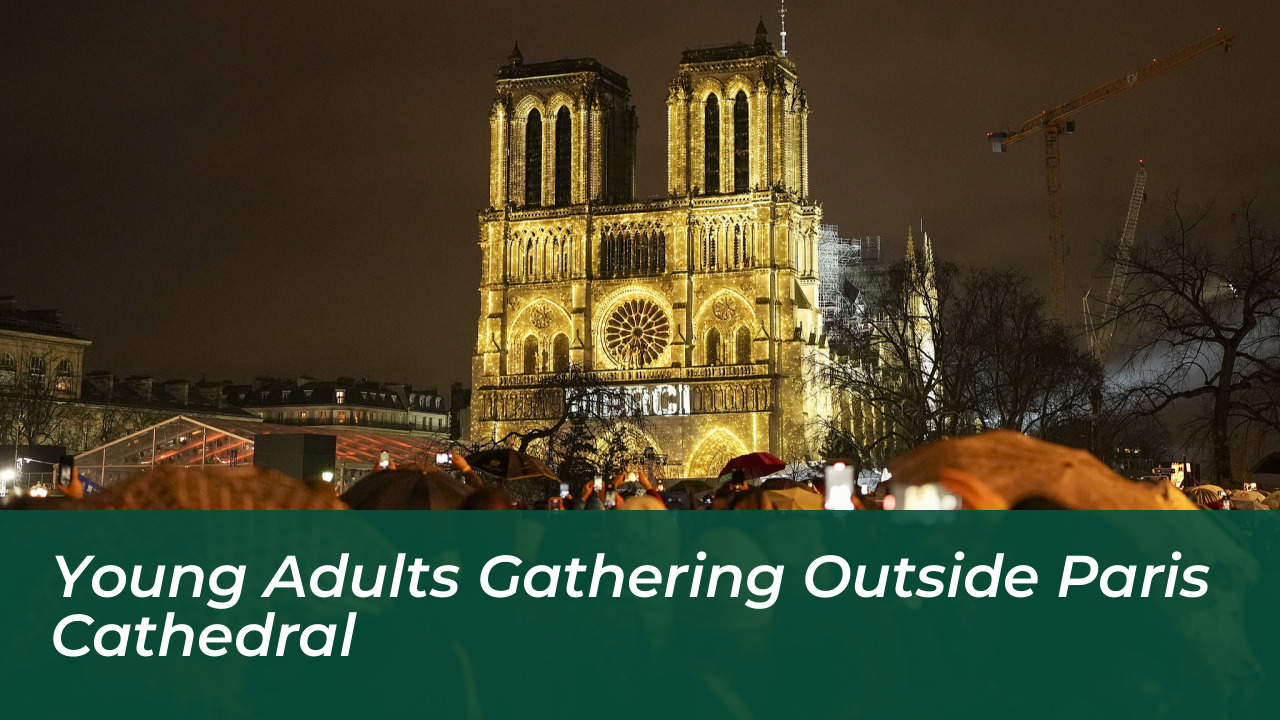
The Statistical Reality of the French Catholic Revival
Look at the broader historical context to understand the weight of this movement. During the 1960s, approximately 85 percent of the French population identified as Catholic. By recent surveys published in La Croix, that figure dropped to 46 percent. Infant baptism has plummeted, falling from more than 300,000 annually in 2000 to just 150,000 in recent years. Sociologists and historians emphasize that the current surge in adult catechumens does not mathematically reverse the long-term aging and contraction of the traditional church demographic.
However, the qualitative nature of this growth is entirely different. Historically, baptism was a passive cultural inheritance handed down by families automatically. Modern converts undergo a rigorous, two-year catechumenate process characterized by deep personal conviction. The French Bishops’ Conference reports that approximately 13,200 adults and 8,200 adolescents aged 11 to 17 will receive the sacrament. Adults alone account for a 28 percent year-on-year increase, while adolescent baptisms are up 10 percent.
Demographic breakdowns of the 2026 catechumens show distinct trends across the country. Women comprise 62 percent of adult catechumens entering the church. Urban centers and working-class backgrounds generate a surprisingly high concentration of new believers. The majority of adult converts fall strictly within the 18 to 30 age bracket, seeking foundational structure in an uncertain world.
Catalysts Driving Youth Toward the Baptismal Font
Investigators and church leaders point to several catalysts driving young French citizens toward the baptismal font. Charles Mercier, a historian and director at the Ecole Pratique des Hautes Etudes, notes that there is no singular trigger. Instead, a constellation of personal and systemic pressures pushes youth toward spiritual exploration. Approximately 40 percent of catechumens connect their conversion directly to a profound personal crisis, such as a severe illness, bereavement, the breakup of a relationship, or professional failure.
Young adults articulate a widespread generational sentiment regarding the weight of modern existence. Lucie De Almeida, a 24-year-old marketing student, describes the contemporary environment as heavy and anxious, noting that possessing a spiritual anchor makes survival in a chaotic society much more manageable. Unlike previous generations who anticipated steady economic and social progress, modern young adults grapple with bleak economic horizons and pervasive climate concerns.
Global instability, political polarization, and rapid technological disruption leave many feeling adrift. The structured framework of Catholic teachings offers an antidote to this fluidity, providing moral clarity and objective truth. When external institutions fail to provide security, spiritual frameworks step in to fill the existential vacuum.

The Digital Awakening and Cultural Shifts
Traditional outreach methods rarely reach secularized youth. Instead, digital platforms play an unexpected catalyst role in modern conversions. Nearly 20 percent of new catechumens credit religious social media influencers, including young priests and apologists posting on TikTok and Instagram, with sparking their curiosity. While American digital creators dominate short-form theological videos, French youth increasingly consume this content, prompting them to open the Bible and eventually cross the threshold of a physical parish church.
Another fascinating driver of this movement is France’s evolving multicultural landscape. Growing up alongside a vibrant, visibly devout Muslim population, many young French citizens from non-practicing Christian backgrounds are prompted to re-examine their own heritage. Religious observance among peers normalizes public expressions of faith, stripping away the cultural taboos that previously intimidated secularized youth.
Younger generations feel less encumbered by historical controversies, such as clerical abuse scandals, compared to older cohorts. Their turn toward religion is entirely individualistic. Religion is no longer an inherited social obligation; it is consciously chosen as an act of personal rebellion against hyper-secular nihilism.
Vatican Response and Institutional Impact
This unexpected influx has captured the highest levels of Vatican attention. Papal visits to France highlight the phenomenon, with tens of thousands of young people gathering to engage directly with church leadership. Authorities view these gatherings as powerful accelerators of spiritual fervor, though leaders issue consistent warnings against triumphalism.
Bishop Matthieu Rougé of the Diocese of Nanterre, which witnessed its adolescent and adult baptism numbers double in a single year, emphasizes that the influx remains fragile. Parishes must actively adapt to welcome these newcomers without alienating them. Institutional structures must shift from inward-looking maintenance models to outward-facing missionary postures.
Challenges Facing the Post-Baptismal Church
The enthusiasm of the catechumenate period eventually runs into the reality of everyday parish life. French dioceses currently grapple with structural vulnerabilities that threaten long-term retention:
| Challenge Area | Primary Obstacle | Proposed Church Strategy |
|---|---|---|
| Mentorship Shortages | Lack of trained catechists and spiritual directors to guide growing numbers. | Mobilizing broader lay communities for shared mentorship responsibilities. |
| Baptism Blues | Disillusionment experienced by new converts entering rigid, unwelcoming parishes. | Extending catechumenate small groups for at least one year post-baptism. |
| Political Appropriation | Risk of young, conservative converts weaponizing faith for identity-based politics. | Promoting theological education focused on universal peace and charity. |
To address these systemic hurdles, bishops across the Paris region convened a landmark Île-de-France Ecclesial Provincial Assembly. This assembly evaluates how parishes can transition from temporary shelters for seekers into enduring, inclusive spiritual homes.
The Broad Sociological Implications of Rising Faith
Sociologists analyze this movement as a symptom of a broader societal shift away from materialist optimism. When secular institutions struggle to provide existential meaning, young citizens look toward transcendent values. This trend extends beyond Catholicism, influencing other faith traditions across Western Europe. Scholars note that spiritual resilience is becoming a defining trait of the twenty-first-century youth demographic.
Local parishes are rewriting their community engagement strategies to accommodate this demographic shift. Pastors report longer inquiry sessions and more rigorous theological questioning from prospective converts. The intellectual depth of modern catechumens challenges clergy to elevate their preaching and catechetical instruction.
Frequently Asked Questions
Why are young French adults returning to the Catholic Church?
Young adults seek stability, community, and personal meaning amid global uncertainty and widespread digital fatigue. Structured religious frameworks offer moral clarity against secular nihilism.
What percentage of adult converts are women in France?
Women comprise approximately 62 percent of adult catechumens entering the Catholic Church in France during the current revival cycle.
How has digital media influenced modern religious conversions?
Religious influencers on platforms like TikTok and Instagram spark initial curiosity, leading nearly 20 percent of new catechumens to explore formal parish life.
Conclusion
The surge of young French adults seeking Catholic baptism is a complex sociological phenomenon. It does not reverse national secularization overnight, nor does it solve the acute shortage of clergy and aging congregations. Yet, it signals something deeper: a generational rejection of spiritual emptiness. By choosing faith in an era of uncertainty, these young adults are forging a new path through deliberate personal conviction.