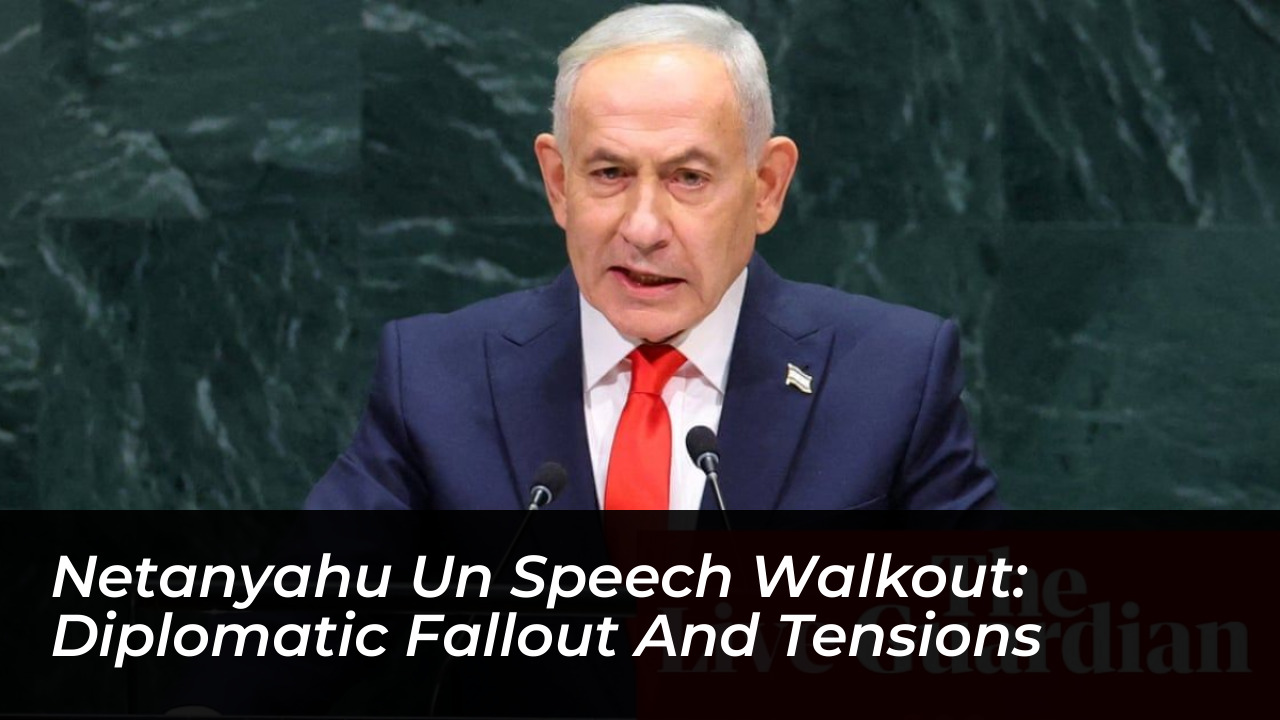
Dozens of diplomats walked out of the United Nations General Assembly hall in New York as Israeli Prime Minister Benjamin Netanyahu approached the podium. The sudden exodus exposed deep geopolitical fractures over ongoing military operations in Gaza and Lebanon. Empty seats multiplied across the chamber while remaining members of the Israeli delegation stood and cheered in loud support of their leader. The annual New York gathering serves as a global barometer for geopolitical alignment. This year, the proceedings fractured heavily along lines defined by the escalating Middle East conflict.
- The Mass Walkout at the General Assembly
- Empty Benches and Defiant Cheers
- Labeling Critics as Moral Cowards
- Growing International Condemnation and Isolation
- Global Leaders Condemn Military Tactics
- Dismissing Accusations as Absurdities
- The Rhetorical Clash Over Accountability and Security
- Defending Military Successes
- Addressing Domestic Friction and Protests
- Targeted Messaging and Border Broadcasts
- Psychological Warfare at the Border
- Bypassing Traditional Channels
- Shifting Alliances and the Washington Dynamic
- Post-Speech Diplomatic Shifting
- The Weakening Enforcement of Global Governance
- Frequently Asked Questions
- Why did delegates walk out during Netanyahu’s speech?
- What was Netanyahu’s response to the walkout?
- How was the speech broadcasted to audiences outside the UN?
- What were the main themes of Netanyahu’s address?
The Mass Walkout at the General Assembly
Empty Benches and Defiant Cheers
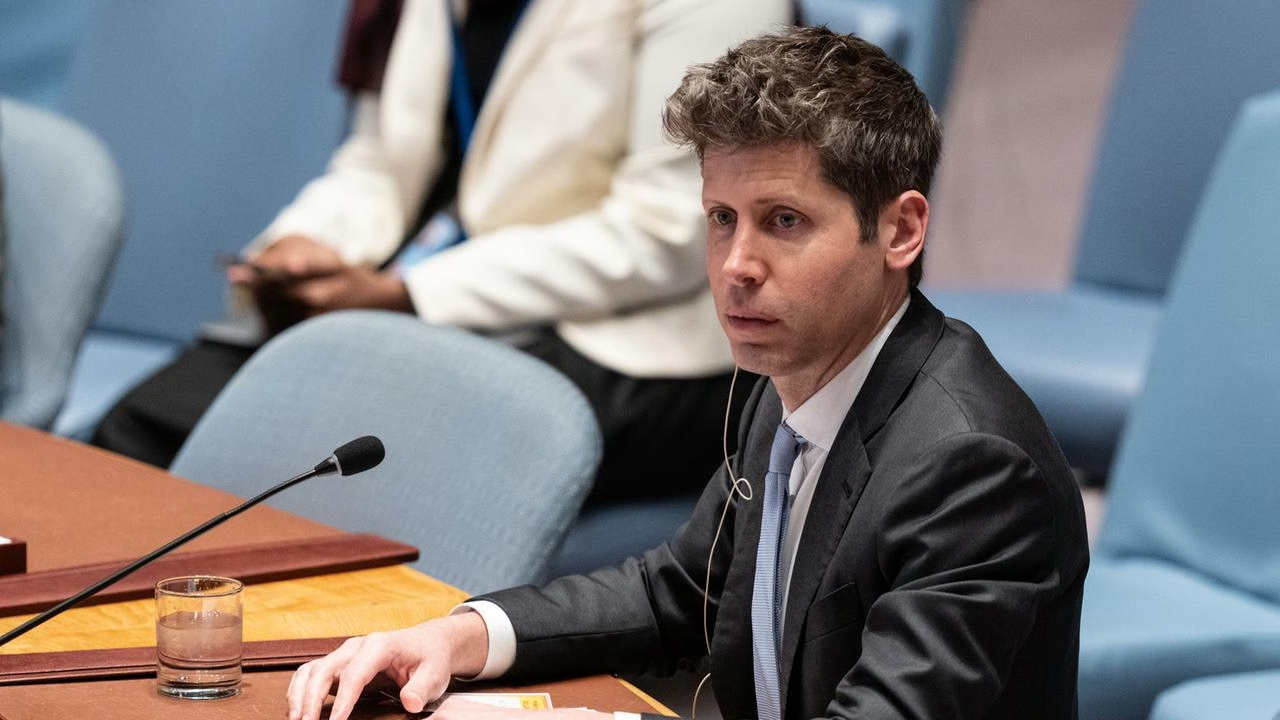
The mass walkout involved diplomats representing European, Middle Eastern, and developing nations. As Netanyahu walked toward the rostrum, a steady stream of officials stood up, collected their documents, and exited the hall. This orchestrated departure left large sections of the auditorium empty. The symbolic rejection of the address underscored the severe diplomatic isolation Israel faces regarding its current military strategy.
The remaining members of the Israeli delegation reacted instantly to the departure. They stood, applauded loudly, and chanted in support of the prime minister. This stark contrast inside the chamber highlighted the widening diplomatic chasm between Israel and a significant portion of the international community.
Labeling Critics as Moral Cowards
Netanyahu did not ignore the retreating diplomats. Taking the microphone, he immediately targeted the departing officials directly from the rostrum. He labeled them as moral cowards and challenged any remaining critics in the hall to follow suit. This rhetorical strategy escalated the tension in the room instantly.
By calling out his detractors directly, the prime minister sought to seize control of the narrative. He framed the walkout not as a legitimate protest against civilian casualties, but as a refusal to confront the harsh realities of terrorism. This combative approach set the tone for the rest of the address.
Growing International Condemnation and Isolation
Global Leaders Condemn Military Tactics
The dramatic walkout at the United Nations did not happen in a vacuum. In the days leading up to the address, numerous world leaders used the global podium to harshly criticize Israeli military tactics. Representatives from European and Middle Eastern nations, including France, Jordan, Qatar, and Turkey, condemned the high civilian death toll in Gaza and the widening operations in Lebanon.
World leaders pointed to mounting humanitarian crises, restricted aid access, and widespread infrastructure destruction as clear violations of international norms. Qatar’s leadership labeled the Israeli government a rogue entity, citing recent airstrikes and targeted assassinations. Meanwhile, French President Emmanuel Macron criticized military actions in the West Bank, arguing that daily incursions undermine the long-term viability of Palestinian statehood.
Dismissing Accusations as Absurdities
Standing before the global assembly, Netanyahu delivered a defiant address that directly rejected accusations of war crimes and genocide. He asserted that military actions prevented a far greater catastrophe rather than causing one. The prime minister maintained that military campaigns remain necessary for national survival following the October 7 attacks led by Hamas.
The official stance presented from the podium emphasized that Israel fights a multi-front war against proxy networks backed by external powers. By dismissing international criticisms as grotesque absurdities, the administration signaled that external pressure would not alter its operational timeline or strategic goals in the region.
The Rhetorical Clash Over Accountability and Security
Defending Military Successes
The address featured detailed claims regarding the dismantling of Hamas infrastructure in Gaza and the severe degradation of Hezbollah leadership and weapons arsenals in Lebanon. Netanyahu used visual aids and direct language to warn remaining regional adversaries that military pressure would not relent until stated security objectives were fully achieved.
The prime minister balanced battlefield updates with direct appeals to remaining hostages inside Gaza. This strategy attempted to project resolve to both domestic voters in Israel and foreign observers. He demanded the immediate surrender of remaining combatants and the unconditional release of all captives.
Addressing Domestic Friction and Protests
Netanyahu also addressed domestic and international friction by criticizing local officials, including New York City leadership, who opposed his visit. He rejected protests outside the United Nations headquarters, where family members of hostages and activist groups demanded immediate ceasefires and hostage release agreements.
The friction outside the building mirrored the polarization inside the hall. While international diplomats walked out and protesters filled the streets, the Israeli government insisted that domestic public opinion largely supports the hardline security measures required to neutralize ongoing existential threats.
Targeted Messaging and Border Broadcasts
Psychological Warfare at the Border
In an unusual communications strategy, the prime minister’s office confirmed that the speech was broadcast live via loudspeakers positioned along the Israeli border with Gaza. Additionally, digital streams targeted mobile devices inside the territory. This dual-audience approach aimed to bypass traditional diplomatic channels and deliver psychological messaging directly to the remaining population and militant leadership inside Gaza.
By broadcasting warnings directly to the conflict zone, the Israeli administration sought to reinforce its hardline stance. This tactical use of audio and digital infrastructure transforms standard diplomatic addresses into active psychological operations designed to influence adversary strongholds.
Bypassing Traditional Channels
Modern political speeches serve dual purposes on the global stage. Leaders increasingly utilize global media feeds and targeted digital infrastructure to influence domestic populations and adversary strongholds simultaneously. This method ensures that the intended audience hears the message regardless of whether traditional diplomatic channels remain open or cooperative.
The integration of border broadcasts with high-level international speeches highlights the evolving nature of political communication during active military engagements. Traditional diplomacy in New York now frequently intersects with direct tactical messaging on the ground.
Shifting Alliances and the Washington Dynamic
Post-Speech Diplomatic Shifting
Following his brief appearance in New York, Netanyahu scheduled meetings with regional leaders before returning to Israel for the Jewish holiday of Sukkot. Concurrently, diplomatic focus shifted toward Washington, where discussions with American leadership remained critical to Israel’s military and geopolitical strategy.
Although the United States maintains its core alliance with Israel, points of friction have emerged regarding postwar governance and potential territorial annexations in the West Bank. American officials have publicly opposed any unilateral annexation moves, setting up complex negotiations behind closed doors.
The Weakening Enforcement of Global Governance
The tension at the United Nations reflects a deeper structural challenge for multilateral institutions. When core member states reject international rulings, such as those issued by the International Court of Justice or arrest warrants from the International Criminal Court, the enforcement mechanism of global governance weakens significantly.
As bilateral meetings replace consensus-building in New York, the path toward a durable regional settlement remains obscured by entrenched hostility and competing security demands. The international community struggles to find effective enforcement tools when major players operate outside established multilateral frameworks.
Frequently Asked Questions
Why did delegates walk out during Netanyahu’s speech?
Dozens of diplomats left the General Assembly hall in protest of Israel’s ongoing military campaigns in Gaza and Lebanon, as well as mounting international criticism over civilian casualties and humanitarian conditions.
What was Netanyahu’s response to the walkout?
Netanyahu described the departing diplomats as moral cowards from the rostrum, while the remaining members of the Israeli delegation stood and cheered in support of their leader.
How was the speech broadcasted to audiences outside the UN?
The prime minister’s office arranged for the address to be streamed live on mobile devices and broadcast through loudspeakers positioned along the Israeli border aimed directly into Gaza.
What were the main themes of Netanyahu’s address?
The speech focused on defending Israel’s military actions against Hamas and Hezbollah, rejecting accusations of genocide, warning regional adversaries, and calling for the immediate release of all remaining hostages.