The National Football League issued a combined $89,556 in disciplinary fines to Cincinnati Bengals star wide receivers Ja’Marr Chase and Tee Higgins following their standout performances on the gridiron. The league penalized the offensive duo for a recurring touchdown and first-down celebration used throughout the early weeks of the season. This disciplinary action highlights the ongoing tension between professional football players who want to express creativity and league front office executives enforcing strict on-field behavioral guidelines.
- Introduction to the NFL Fines Against Bengals Receivers
- Breakdown of the Fines: The Numbers and Infractions
- Tee Higgins and Ja’Marr Chase Financial Penalties
- Escalation of Fines Across the Season
- The Origin of the Celebration: The People’s Elbow
- WWE Inspiration Versus League Interpretation
- Misinterpretation by Officiating and Disciplinary Officers
- Player Backlash and the Call for NFLPA Action
- Ja’Marr Chase Reacts to Financial Penalties
- Broader NFLPA Implications and Player Censorship
- Historical Context of Celebration Penalties in the NFL
- Impact on the Cincinnati Bengals Locker Room and Season
- Frequently Asked Questions
- Why were Ja’Marr Chase and Tee Higgins fined by the NFL?
- How much were the total fines issued to the Bengals receivers?
- What did Chase claim the celebration represented?
- Which other players were penalized for celebrations during the same week?
Both receivers defended the gesture as an original athletic expression, while league officials categorized the motion under rules prohibiting offensive demonstrations. As players face mounting financial penalties for harmless stadium routines, conversations surrounding the boundaries of player expression continue to dominate sports media headlines.
Introduction to the NFL Fines Against Bengals Receivers
The NFL disciplinary committee rarely hesitates to target player celebrations that step outside traditional parameters. When Ja’Marr Chase and Tee Higgins broke out a synchronized routine after making explosive plays, they likely expected crowd applause rather than a letter from the league office. Instead, the league levied heavy fines that quickly accumulated across multiple game weeks.
This situation underscores a broader cultural divide in professional football. Players use celebrations to connect with fans, showcase personality, and inject entertainment into a high-stakes environment. Meanwhile, league executives maintain a rigid stance to keep broadcasts family-friendly and avoid any perceived vulgarity. The resulting penalties create an adversarial relationship between the league office and the athletes who drive its massive television ratings.
Breakdown of the Fines: The Numbers and Infractions
Tee Higgins and Ja’Marr Chase Financial Penalties
The exact financial breakdown reveals a steep cost for on-field creativity. Tee Higgins received four separate fines totaling $59,704, while Ja’Marr Chase drew two fines totaling $29,852. The league applies a standard baseline fine of $14,926 per unsportsmanlike conduct infraction during the initial stages of the enforcement scale.
Because Higgins utilized the gesture across multiple scoring plays and explosive receptions, his total accumulated rapidly. Even for elite professional athletes earning substantial salaries, losing nearly $60,000 for a simple touchdown routine serves as an aggressive deterrent designed to eliminate the behavior immediately.
Escalation of Fines Across the Season
Repeat usage multiplies the financial impact on offensive duos who fail to heed early warnings from league officials. When the first warning letter does not arrive until after several weeks of execution, players have already repeated the motion multiple times. This lag in communication guarantees that athletes receive multiple fines simultaneously for the same underlying routine.
The cumulative effect catches players off guard and drains their game checks. As fines escalate with subsequent infractions, the financial pressure forces players to abandon signature routines before they can mount a proper defense through the appeals process.
The Origin of the Celebration: The People’s Elbow
WWE Inspiration Versus League Interpretation
The kinematics of the celebration involve a specific sequence where players bend their arm, create a fist, hold the elbow with the opposing hand, and drop the forearm while pointing forward. Ja’Marr Chase explained that the move honors the People’s Elbow, a signature wrestling finishing maneuver popularized by Dwayne The Rock Johnson.
Athletes frequently borrow inspiration from pop culture, movies, and professional wrestling to enhance their game-day personas. The physical movement was intended as a tribute to entertainment history rather than an attempt to push the boundaries of league decency.
Misinterpretation by Officiating and Disciplinary Officers
Social media commentators and NFL disciplinary officers viewed the physical kinematics through a different lens, associating the motion with graphic anatomical interpretations. This misinterpretation drove the league to classify the celebration under unsportsmanlike conduct rules, grouping it with enforcement actions targeting perceived obscene gestures.
When subjective human judgment dictates which movements cross the line, misunderstandings are inevitable. The league office relies on strict interpretations that often fail to account for the actual intent behind a player’s creative choreography.
Player Backlash and the Call for NFLPA Action
Ja’Marr Chase Reacts to Financial Penalties
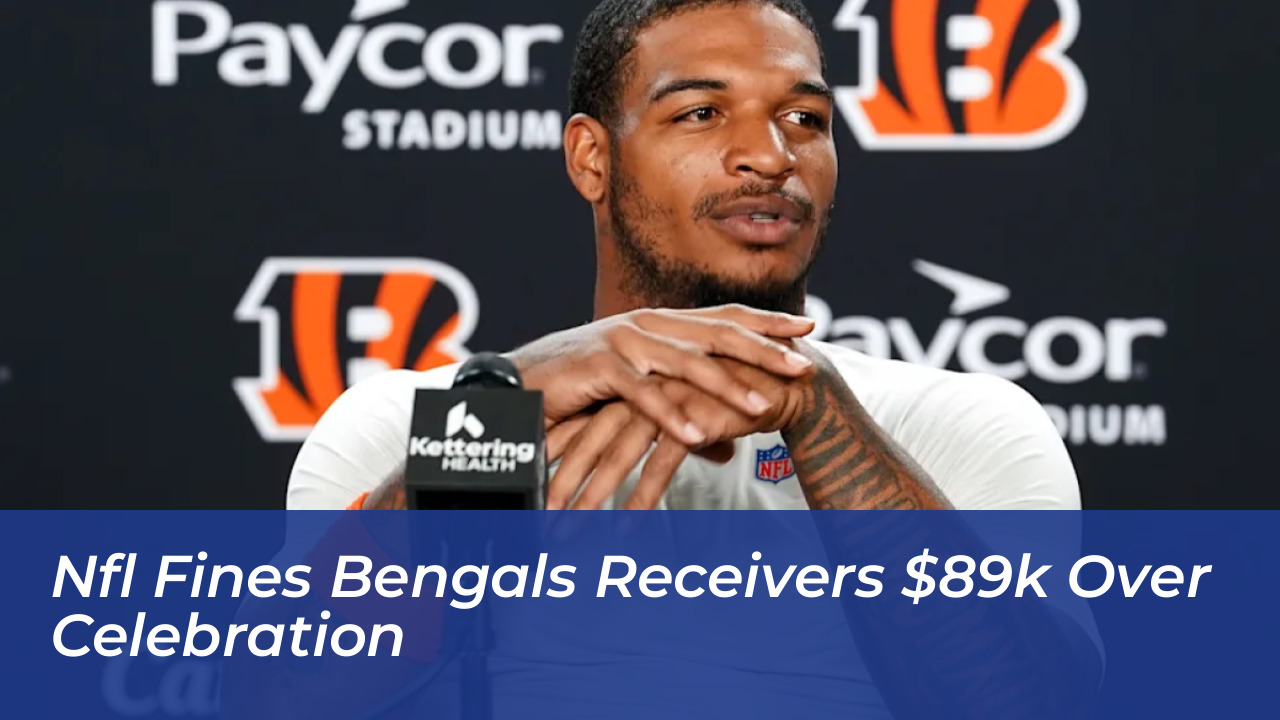
During his Thursday media session at Paycor Stadium, Ja’Marr Chase expressed clear frustration regarding the financial penalties and league restrictions. He confirmed his intent to appeal the fines despite noting that the league rarely overturns such rulings once officially filed.
Chase criticized the league for overpolicing innocuous player behavior while ignoring more pressing game-day issues. His willingness to speak openly demonstrates the growing fatigue among star athletes regarding subjective disciplinary oversight.
Broader NFLPA Implications and Player Censorship
Chase called for high-profile superstars to engage the National Football League Players Association to protect player earnings and reform fine guidelines. He pointed out the absurdity of being penalized for a wrestling homage when other players face similar discipline for innocuous actions across the league.
Similar disciplinary actions during the same week included penalties against San Francisco 49ers fullback Kyle Juszczyk, who was fined $14,926 for simulating the chugging of a beverage to honor his Juice nickname. Indianapolis Colts guard Matt Goncalves faced an $8,847 fine under the same strict offensive demonstration guidelines.
Historical Context of Celebration Penalties in the NFL
The National Football League maintains a long history of regulating player celebrations, transitioning from ultra-strict bans in the early 2000s to a slightly more relaxed approach regarding group dances and prop usage. However, officials retain rigid oversight regarding gestures deemed violent or sexually suggestive.
Players frequently test these invisible boundaries, leading to a constant tug-of-war over what constitutes acceptable expression. While some athletes successfully overturn penalties through the official appeal process, the burden of proof rests heavily on the player to convince league arbiters of their innocent intent.
Impact on the Cincinnati Bengals Locker Room and Season
Distractions surrounding league fines threaten to disrupt team preparation as the Cincinnati Bengals ready themselves for critical AFC North divisional matchups. Chase emphasized that the roster must channel its focus back toward the playbook as the franchise chases early-season momentum.
The ruling forces the receiving corps to abandon their signature celebration, raising questions about whether the duo will debut a modified gesture or drop coordinated routines altogether. Protecting team chemistry and maintaining offensive rhythm remains the primary objective for the coaching staff.
Frequently Asked Questions
Why were Ja’Marr Chase and Tee Higgins fined by the NFL?
The National Football League classified the touchdown and first-down celebration executed by the receivers as an offensive demonstration and unsportsmanlike conduct.
How much were the total fines issued to the Bengals receivers?
The league issued a combined $89,556 in penalties. Tee Higgins received four fines totaling $59,704, and Ja’Marr Chase received two fines totaling $29,852.
What did Chase claim the celebration represented?
Ja’Marr Chase stated that the gesture served as a tribute to the People’s Elbow, a famous wrestling finishing maneuver popularized by Dwayne The Rock Johnson.
Which other players were penalized for celebrations during the same week?
San Francisco 49ers fullback Kyle Juszczyk and Indianapolis Colts guard Matt Goncalves also received fines for celebrations that league officials accused of mimicking the consumption of alcohol.