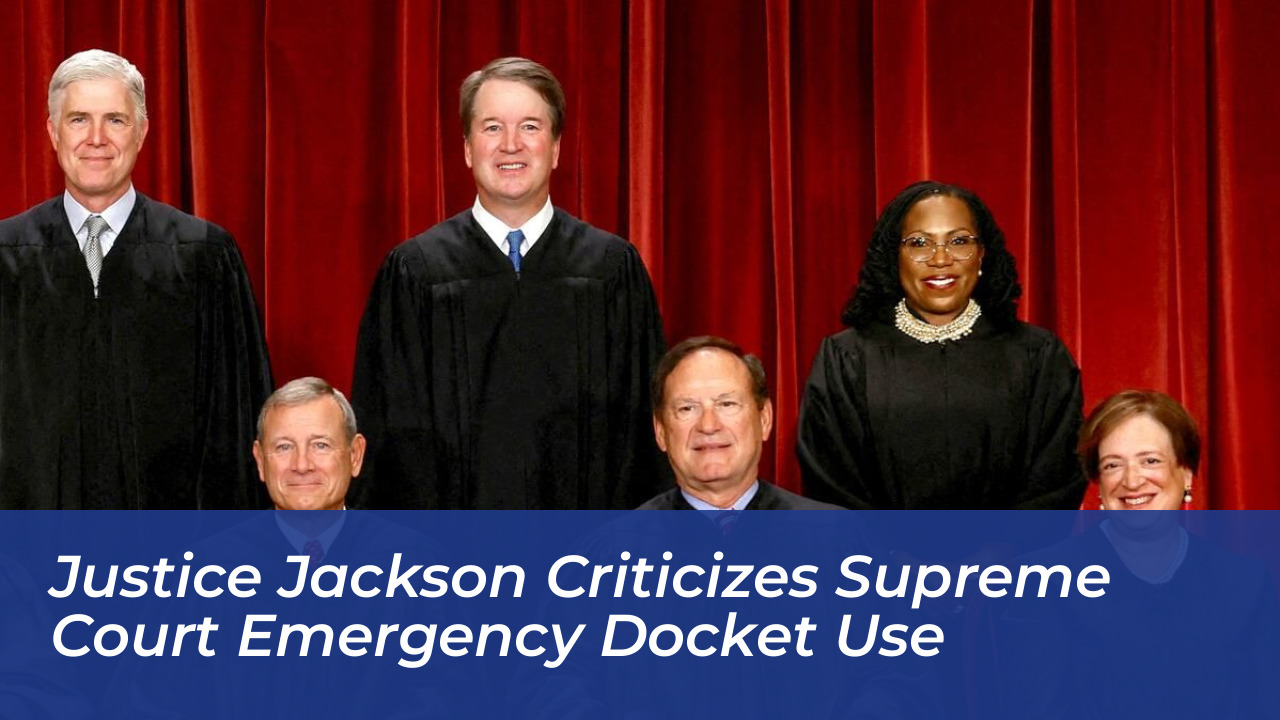
The Supreme Court emergency docket, frequently known as the shadow docket, handles urgent requests for relief that bypass standard briefing schedules, oral arguments, and extensive judicial deliberation. Historically reserved for rare matters requiring immediate intervention, the highest court increasingly applies this expedited procedure to high-profile ideological and administrative disputes. Justice Ketanji Brown Jackson recently voiced a prominent critique of this practice, sparking a broader national conversation about institutional power dynamics, transparency, and the fundamental erosion of public trust.
- Introduction to the Supreme Court Emergency Docket Controversy
- Understanding the Mechanics of the Emergency Docket
- Historical Intent Versus Modern Reality
- The Absence of Standard Judicial Safeguards
- The Fast Pass Critique: Justice Jackson’s Core Argument
- Inequity in Litigant Access
- Undermining Trial and Appellate Court Labor
- Institutional Imbalance and Executive Branch Advantages
- The Executive Branch Fast Track
- Challenging Nationwide Injunctions
- Transparency, Public Trust, and Operational Chaos
- The Erosion of Judicial Transparency
- Unintended Operational Consequences
- Evaluating Alternative Perspectives on Emergency Relief
- Arguments for Speed and Necessity
- Balancing Judicial Speed with Constitutional Integrity
- The Growing Debate Over Supreme Court Reform
- Proposed Procedural Changes
- Impact of Judicial Commentary on Reform Movements
A standard judicial process relies on deliberate pacing. Cases move upward through district courts and circuit courts before ever reaching the highest level. Each tier adds layers of factual development, witness testimony, and legal analysis. In contrast, emergency relief demands immediate action, often granting sweeping nationwide orders within a matter of days.
Justice Jackson delivered her pointed critique during a public address at the University of the District of Columbia law school. She focused her attention on the apparent inequities in how cases are selected for expedited treatment. Her remarks highlight how rapid interventions alter traditional institutional checks and balances.
Introduction to the Supreme Court Emergency Docket Controversy
The core conflict surrounding the emergency docket centers on speed versus thoroughness. When the judiciary acts with extreme velocity, it sacrifices the meticulous evaluation that defines American jurisprudence. This shift alters institutional power dynamics and places immense pressure on lower courts and everyday litigants.
Public trust relies heavily on the perception of neutral constitutional interpretation. When high-profile disputes receive preferential treatment without the standard procedural formalities, public confidence begins to fray. The debate over the emergency docket is ultimately a debate over the core function of the highest court in a democratic society.
Understanding the Mechanics of the Emergency Docket
Understanding the emergency docket requires examining both its historical intent and its modern evolution. The mechanism was never designed to handle routine statutory interpretations or major ideological showdowns. Instead, it was built as a narrow safety valve for extraordinary circumstances.
Historical Intent Versus Modern Reality
The original purpose of emergency intervention was restricted to rare, genuinely urgent matters requiring immediate halts. Think of imminent executions or catastrophic environmental disasters where waiting for a standard appeal would render a remedy completely meaningless. In past decades, the court utilized this tool sparingly.
Today, the landscape looks entirely different. The court frequently applies the expedited procedure to major ideological and administrative disputes. Immigration policies, environmental regulations, and voting rights restrictions now routinely zip through the emergency pipeline.
The Absence of Standard Judicial Safeguards
Speed comes at a direct cost to procedural safeguards. Emergency applications bypass standard briefing schedules, oral arguments, and deep judicial deliberation. Attorneys must file briefs on compressed timelines, often within hours.
This mechanical reality leads to sweeping nationwide orders issued in a matter of days. Without the benefit of robust adversarial debate, the court acts on incomplete information. The risk of judicial error multiplies significantly under these rushed conditions.
The Fast Pass Critique: Justice Jackson’s Core Argument
Justice Jackson used a vivid metaphor during her law school address to illustrate the unfairness of the current system. She questioned why specific litigants secure a fast pass while ordinary litigants wait patiently through the standard judicial queue.
Inequity in Litigant Access
The disparity in litigant access reveals a troubling systemic hurdle. Everyday plaintiffs spend years navigating the judicial system, filing motions, and awaiting trial dates. Meanwhile, powerful institutional actors frequently secure immediate priority at the highest court.
This preferential treatment creates a two-tiered system of justice. One tier belongs to ordinary citizens bound by procedural rules and lengthy timelines. The other tier belongs to select entities capable of utilizing emergency applications to short-circuit the entire process.
Undermining Trial and Appellate Court Labor
Lower court judges spend months reviewing evidence, hearing testimony, and crafting detailed opinions. This grueling labor forms the backbone of the federal judiciary. Emergency rulings often disrespect this meticulous work.
When the Supreme Court reverses or stays lower court rulings in a matter of days without substantive explanations, it devalues the expertise of trial judges. Lower court jurists study records for weeks, only to have their reasoned conclusions erased by a brief, unsigned order from above.
Institutional Imbalance and Executive Branch Advantages
The emergency docket also alters the traditional checks and balances between the branches of government. Federal agencies quickly learned to leverage expedited relief to achieve policy goals that might otherwise fail under normal legislative or judicial scrutiny.
The Executive Branch Fast Track
Executive agencies frequently petition the high court for emergency stays to halt lower court injunctions. This dynamic gives the executive branch unfair access to judicial resources. When a administration faces a hostile lower court ruling, the emergency docket offers a reliable escape hatch.
Jackson warned that routine reliance on this fast track distorts the balance of power. The executive branch gains an outsized advantage, bypassing the traditional appellate process to defend disputed policies on an expedited timeline.
Challenging Nationwide Injunctions
A related tension involves single district judges issuing nationwide injunctions against federal policies. These sweeping lower court orders often provoke aggressive emergency responses from the executive branch. The Supreme Court frequently steps in to grant stays, creating a cycle of rapid-fire judicial intervention.
Legal scholars debate whether these emergency stays function as a necessary corrective against district court overreach or as an overreach in their own right. Regardless of perspective, the reliance on emergency dockets to resolve these conflicts highlights a fractured procedural landscape.
Transparency, Public Trust, and Operational Chaos
Opaque decision-making carries heavy consequences for both public perception and practical implementation. When the highest court acts without transparency, the entire legal system absorbs the shockwaves.
The Erosion of Judicial Transparency
Issuing sweeping rulings without signed opinions or clear legal reasoning damages institutional legitimacy. Public confidence in the judiciary relies heavily on transparent decision-making where justices explain their logic. When opinions are absent or sparse, shadow docket decisions resemble political maneuvering rather than neutral constitutional interpretation.
Litigants and citizens deserve to know why the court decides one way or another. Without written reasoning, lower courts receive no guidance on how to handle similar cases in the future.
Unintended Operational Consequences
Expedited rulings carry a high risk of operational error. Without comprehensive adversarial briefing, justices lack the time to anticipate practical complications stemming from their orders.
This creates practical chaos for state election officials, administrative agencies, and lower courts attempting to implement sudden legal shifts. An election rule might change twenty-four hours before voting begins, leaving local officials scrambling to comply with conflicting mandates.
Evaluating Alternative Perspectives on Emergency Relief
Supporters of the current emergency docket framework offer distinct justifications for speed and necessity. Understanding these counterarguments provides a complete picture of the debate.
Arguments for Speed and Necessity
Proponents maintain that swift intervention remains essential to halt unconstitutional lower court orders before permanent damage occurs. If a federal policy faces an injunction that threatens national security or public safety, waiting months for a standard appeal is simply not viable.
Without this tool, the executive branch would lack immediate recourse against judicial overreach. Advocates argue that the court must retain the flexibility to act decisively when extraordinary circumstances demand it.
Balancing Judicial Speed with Constitutional Integrity
The ongoing tension between judicial efficiency and thorough deliberation defines modern court administration. Finding the right balance requires acknowledging the validity of urgent relief while curbing abuses that undermine standard procedures.
The Growing Debate Over Supreme Court Reform
Legal scholars and lawmakers continue to debate potential reforms aimed at bringing accountability to the shadow docket. Justice Jackson’s public commentary adds substantial momentum to these reform movements.
Proposed Procedural Changes
Reform proposals include establishing clearer, stricter criteria for granting emergency relief. Lawmakers and academics suggest requiring recorded votes so the public knows which justices supported a stay.
Another popular proposal mandates brief explanatory opinions for major stays. Requiring justices to articulate their reasoning would restore a measure of transparency and provide crucial guidance to lower courts.
Impact of Judicial Commentary on Reform Movements
Public critiques from sitting justices carry immense weight. When a Supreme Court justice speaks out about internal procedural flaws, it normalizes external scrutiny and encourages legislative action.
The future of accountability within the nation’s highest court depends on sustained pressure from both within and outside the institution. As the debate over the emergency docket continues to evolve, procedural reform remains a central focus for legal experts seeking to restore balance to the judicial branch.