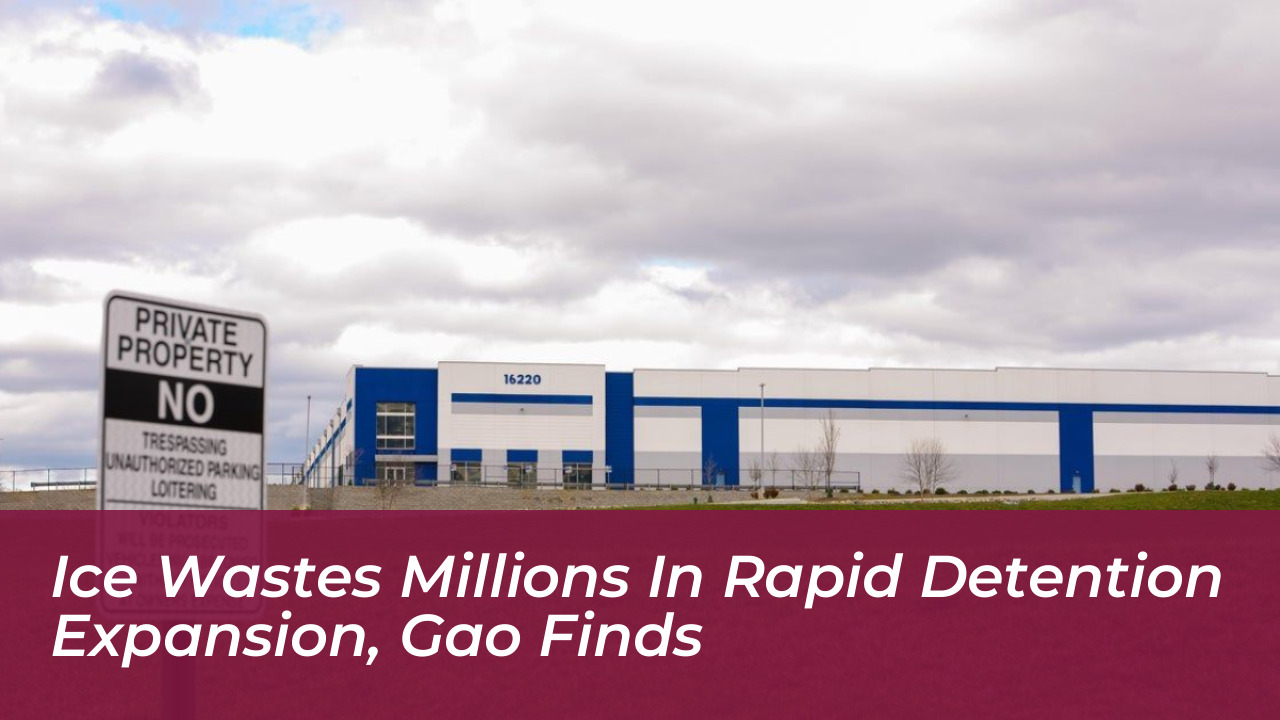
Immigration and Customs Enforcement faced sharp scrutiny following a comprehensive Government Accountability Office report detailing widespread financial waste, poor planning, and circumvented procurement processes. As the agency rushed to fulfill federal mandates for rapid detention expansion, backed by an unprecedented funding injection of $45 billion dedicated strictly to capacity building through the One Big Beautiful Bill Act, billions of taxpayer dollars evaporated into compressed timeframes. This rapid deployment resulted in tens of millions of dollars in direct losses, inflated per-bed operational rates, and abandoned infrastructure projects. Congressional investigators concluded that a severe lack of strategic foresight caused administrative bottlenecks, rushed purchasing agreements, and unrecoverable capital expenditures across multiple states.
- GAO Exposes Fiscal Mismanagement in ICE Detention Expansion
- The .07 Billion Industrial Warehouse Debacle
- Off-Budget Escrow Mechanics
- CoStar Market Data and Premium Pricing
- Abandoned Sites and Direct Capital Losses
- Paused Renovation Commitments
- Private Prison Buyouts: Federal Bailout Mechanisms
- Real Estate Transfers
- Corporate Debt Liability Management
- Inflated Per-Bed Operational Rates and Emergency Grant Loopholes
- The Florida FEMA Grant Anomaly
- Bureau of Prisons Overflow Pressures
- Comparative Operational Financial Breakdown
- Unused Military Infrastructure and Cancelled Field Projects
- Guantanamo Bay Facility Waste
- Aborted Base Expansions and Wasteful Overhead
- Systemic Oversight Deficits and Macro-Fiscal Vulnerability
- Delayed Corrective Planning
- Frequently Asked Questions
- What main causes of fiscal waste did the GAO report identify at ICE?
- How much total funding was provided for the detention expansion?
- Why were the daily rates in Florida facilities so much higher than average?
- What happened to the industrial warehouses purchased for detention?
GAO Exposes Fiscal Mismanagement in ICE Detention Expansion
The mandate to scale operations quickly forced a departure from standard federal procurement safeguards. When Congress injected $45 billion into the system without traditional annual budget review cycles, normal oversight mechanisms disappeared. The absence of preliminary strategic planning meant that administrative leaders prioritized speed over fiscal prudence. Without standard congressional guardrails, the agency advanced billions to intermediaries, overpaid private prison operators, and bypassed typical cost-benefit analyses that protect public funds from waste.
Watchdog summaries showed tens of millions in direct losses, bypassed procurement channels, and inflated operational costs. Removing traditional budget safeguards and enforcing compressed executive timelines created severe administrative bottlenecks, unrecoverable capital expenditures, and multi-billion-dollar market distortions. Investigators highlighted that without clear pre-acquisition metrics, the agency exposed taxpayers to immense financial risk.
The $1.07 Billion Industrial Warehouse Debacle
The core of the financial mismanagement centered on a frantic effort to acquire physical space for surging detainee populations. In January, the agency advanced billions of dollars in escrow to Chicago Title Insurance to secure real estate rapidly. Over a two-month window, the agency deployed $1.07 billion to purchase 11 industrial warehouses intended for conversion into detention megacenters.
Off-Budget Escrow Mechanics
Transferring billions into Chicago Title Insurance escrow accounts allowed the agency to circumvent standard procurement delays. This off-budget mechanism bypassed the normal transparency required for federal real estate acquisitions. The 30-day mandate issued by former Homeland Security Secretary Kristi Noem drove this urgency, sacrificing acquisition efficiency for sheer speed.
CoStar Market Data and Premium Pricing
Real estate analytics firm CoStar reported that the agency paid an 11% to 13% price premium across 11 industrial properties. This total outlay of $1.07 billion across two months for unvetted real estate assets locked the government into inflated valuations. Sellers capitalized on the artificial urgency created by executive directives.
Abandoned Sites and Direct Capital Losses
The warehouse initiative quickly collapsed under legal hurdles and local opposition. Leadership dropped plans for 7 of the 11 warehouses without ever housing a single detainee inside them. The agency lost $20 million in unrecoverable maintenance and property management fees on these abandoned assets before initiating sales. Financial experts warn of additional multi-million-dollar losses if secondary market sales generate returns below the initial purchase prices.
Paused Renovation Commitments
Financial commitments remained bound in paused renovation contracts for retained facilities in Arizona and Maryland due to legal injunctions and local opposition. A total of $426 million sat frozen in contracts that could not move forward, locking up capital that yielded zero operational value.
Private Prison Buyouts: Federal Bailout Mechanisms
Following the warehouse failure, the agency pivoted to acquiring operational facilities directly from private prison operators. In July and August, the agency transferred $2.2 billion from Chicago Title escrow accounts to purchase four detention facilities from CoreCivic.
Real Estate Transfers
The facility purchases from CoreCivic included two properties in California for $1.47 billion, followed by two additional facilities in Kansas and Minnesota for a combined $734 million. This marked a complete shift from lease models to outright federal ownership under compressed execution windows.
Corporate Debt Liability Management
CoreCivic corporate disclosures confirmed the use of federal acquisition capital to retire corporate debt. Private operators retained lucrative, separate ongoing facility management contracts while shifting capital asset risk entirely to taxpayers. The Government Accountability Office highlighted the agency’s failure to conduct mandatory three-year long-term affordability assessments before finalizing these multi-billion-dollar deals.
Inflated Per-Bed Operational Rates and Emergency Grant Loopholes
Beyond capital acquisition, the financial discrepancies extended heavily into daily detention operations through specialized grant structures and inter-agency reimbursements.
The Florida FEMA Grant Anomaly
Leadership bypassed traditional contract negotiation practices by directing $608.4 million through a specialized FEMA grant program with Florida as the sole eligible recipient. Through this mechanism, FEMA reimbursed the state for housing detainees in the controversial Everglades facility known as Alligator Alcatraz. The cost breakdown revealed a $249 per detainee daily rate, representing a staggering 171% markup over the agency median baseline rate of $92 per day. High daily payments continued at the Sanderson, Florida facility despite documented substandard living conditions and the June closure of Alligator Alcatraz.
Bureau of Prisons Overflow Pressures
Financial pressure also strained the federal prison system. The agency utilized facilities operated by the Bureau of Prisons to absorb overflow populations. The inter-agency reimbursement rate landed at $182 per detainee per day, which is double the baseline median. Cost drivers included excessive staff overtime, emergency employee reassignments, and security retrofitting inside federal prisons.
Comparative Operational Financial Breakdown
| Facility or Initiative | Financial Mechanism | Total Cost / Daily Rate | Primary GAO Finding |
|---|---|---|---|
| Industrial Warehouses (11 Sites) | Chicago Title Escrow | $1.07 Billion | 11 to 13% purchase premium; 7 sites abandoned; $20M lost in holding costs. |
| CoreCivic Buyouts (4 Sites) | Direct Capital Transfer | $2.20 Billion | No long-term affordability analysis; funded corporate debt reduction. |
| Alligator Alcatraz (Everglades, FL) | FEMA Special Grant | $249 / day ($608.4M total) | 171% cost elevation over median; facility shuttered due to defects. |
| Bureau of Prisons Overflow | Inter-agency Reimbursement | $182 / day | 100% cost elevation over baseline due to overtime and temporary staffing. |
| Guantanamo Bay Expansion | Military Base Allocation | $2.85 Million | Housing tent infrastructure erected and left almost completely vacant. |
Unused Military Infrastructure and Cancelled Field Projects
Capital losses extended further into failed expansions onto federal military installations. Rushed directives failed to align facility readiness with actual housing requirements.
Guantanamo Bay Facility Waste
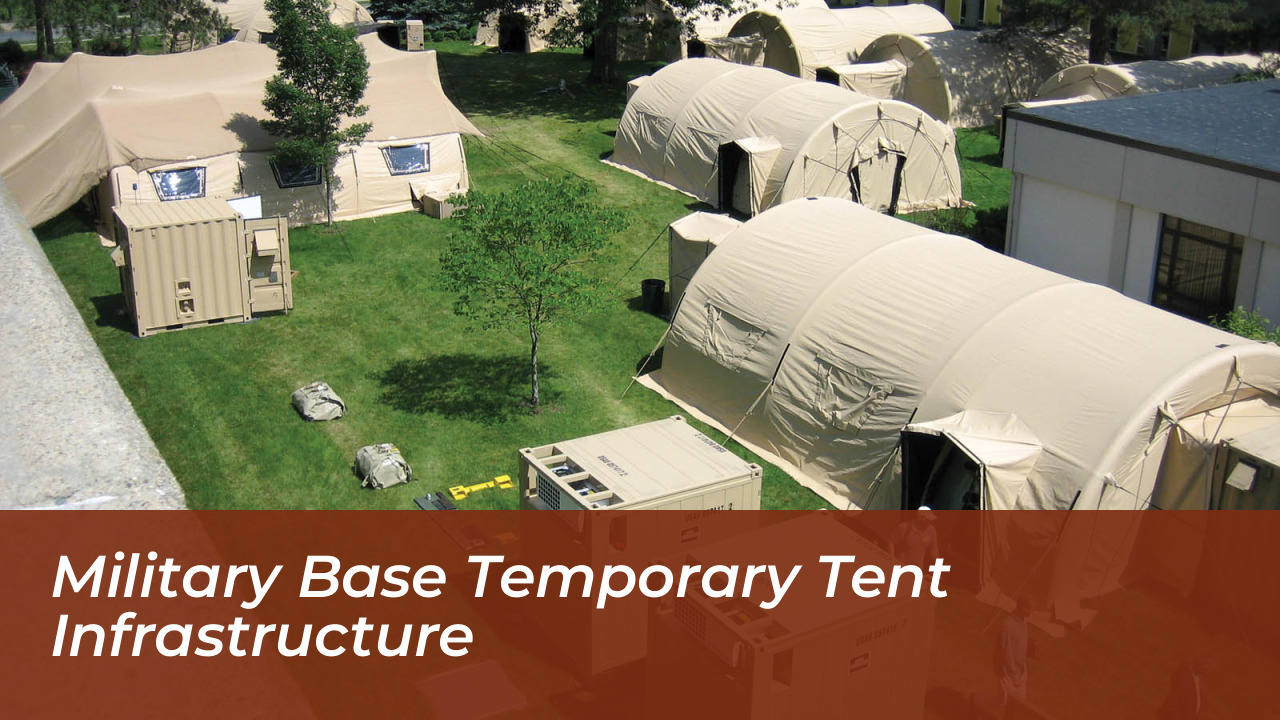
Deployment details showed $2.85 million spent erecting temporary tent cities designed for 30,000 detainees at the Guantanamo Bay naval base. However, utilization failed completely as the infrastructure remained largely unoccupied, holding only single-digit detainee numbers at peak usage.
Aborted Base Expansions and Wasteful Overhead
Failed expansion attempts at military installations in Indiana, New Jersey, and El Paso generated massive overhead without housing results. Specific supply waste included $7.1 million spent on unused detainee meals at Camp East Montana following sudden project cancellations.
Systemic Oversight Deficits and Macro-Fiscal Vulnerability
Structural analysis of lump-sum executive appropriations reveals how bypassing standard annual congressional budget cycles eliminates fiduciary accountability. According to analysis from oversight leadership regarding the absence of preliminary strategic planning, agencies cannot spend billions effectively without rigorous baseline checks.
Delayed Corrective Planning
The agency promised a strategic operational plan scheduled for delivery on August 31, 2027. Watchdog critics note that a 2027 implementation timeline arrives far too late to protect current capital allocations from ongoing mismanagement. Bypassing traditional congressional budget oversight strips the Department of Homeland Security of mandatory accountability mechanisms, allowing rushed directives to override basic fiduciary prudence.
Frequently Asked Questions
What main causes of fiscal waste did the GAO report identify at ICE?
The report highlighted rushed timelines, off-budget escrow mechanisms, lack of pre-acquisition planning, and bypassing traditional procurement safeguards. This led to overpaying for warehouses, funding unused military installations, and paying inflated daily rates.
How much total funding was provided for the detention expansion?
Congress provided $45 billion dedicated specifically to expanding detention capacity under the One Big Beautiful Bill Act, pushing total spending sharply upward over a short operational period.
Why were the daily rates in Florida facilities so much higher than average?
Leadership used a specialized FEMA grant program with Florida as the sole recipient rather than standard open-bid federal contracting. This resulted in a $249 daily rate compared to the agency baseline median of $92 per detainee.
What happened to the industrial warehouses purchased for detention?
The agency spent $1.07 billion on 11 properties at an 11% to 13% price markup. Seven sites were abandoned before housing any detainees, causing $20 million in direct maintenance losses, while $426 million in renovation projects on retained sites remain paused due to legal challenges.