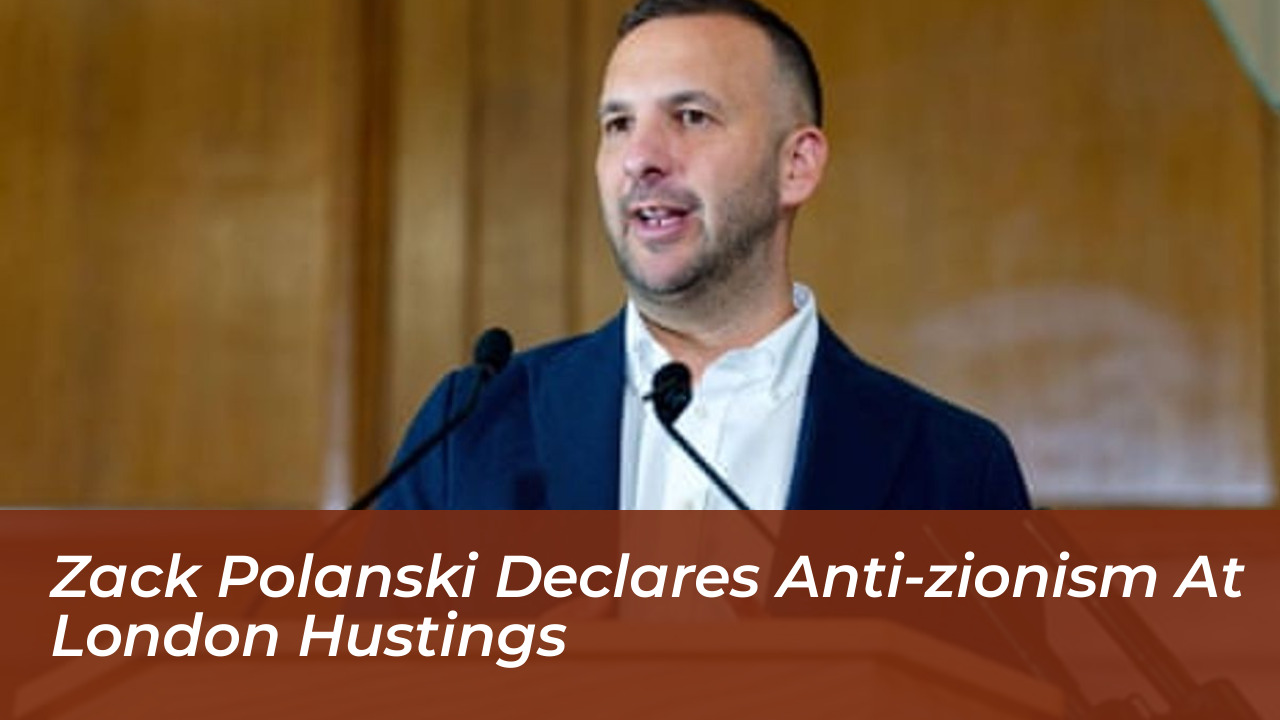
A tense atmosphere gripped a London community hustings as political divisions flared over international foreign policy debates. Zack Polanski, the leader of the Green Party and a candidate contesting the closely watched Holborn and St Pancras by-election scheduled for October 8, 2026, made statements that sent shockwaves through the British political establishment. Appearing before an audience organized by the London Jewish Forum and the Board of Deputies of British Jews, Polanski publicly declared himself an anti-Zionist. This declaration, delivered by a political leader who is himself ethnically Jewish, broke conventional political taboos and triggered immediate heckling, boos, and intense public fallout.
- The Electoral Context of the Holborn and St Pancras By-Election
- Exploring a Traditional Labour Stronghold
- The Impact of Community Forums on Campaign Narratives
- Detailed Breakdown of Polanski’s Statements at the Hustings
- Direct Answers and Philosophical Objections
- Distinguishing Geopolitical Critique from Antisemitism
- Internal Green Party Friction and the Upcoming Conference Motion
- The Contentious Autumn Conference Policy Motion
- Leadership Tightrope and Proposed Amendments
- Comparative Analysis of Media and Public Reactions
- Broader Political Ramifications and the Debate Over Antisemitism
- Frequently Asked Questions
- What did Zack Polanski declare at the London hustings?
- Which constituency is Zack Polanski contesting?
- How did the audience react to Polanski’s remarks?
- What internal party challenges does the Green Party face?
The by-election in Holborn and St Pancras holds immense national significance because the seat was previously occupied by former Prime Minister Keir Starmer. As candidates gathered to debate pressing local and international concerns, the conversation inevitably shifted toward the Middle East, the ongoing conflict in Gaza, and the definitions of antisemitism and Zionism. Polanski’s refusal to endorse Israel’s right to exist as a Jewish state, coupled with his characterization of Zionism in practice as a form of racism tied to the displacement of Palestinians, established a fierce ideological battleground. This event did not merely reflect local electoral friction; it exposed deep-seated ideological fractures within the Green Party itself, as internal factions prepare for an upcoming autumn conference vote on official policy regarding Zionism.
The Electoral Context of the Holborn and St Pancras By-Election
Exploring a Traditional Labour Stronghold
The timing of Polanski’s declaration is intricately linked to the high-stakes electoral contest in Holborn and St Pancras. Following political shifts that left the prominent central London constituency vacant, parties mobilized rapidly to secure a foothold in a traditionally safe Labour stronghold. Polanski positioned his campaign as a progressive alternative, aiming to capture disillusioned urban voters by leaning heavily into social justice advocacy and human rights discourse.
However, taking a definitive stance on foreign policy issues at a localized community hustings introduced severe electoral risks. The constituency boasts a diverse electorate, including active members of the British Jewish community who rely on representative bodies like the Board of Deputies and the London Jewish Forum to voice security concerns, combat community-level prejudice, and address rising rates of antisemitism.
The Impact of Community Forums on Campaign Narratives
By choosing this specific forum to announce his anti-Zionist stance, Polanski shifted the campaign narrative away from domestic municipal issues, such as housing, healthcare, and council taxation, and thrust international geopolitics directly into the heart of a British parliamentary race. Opposing candidates quickly seized upon the fallout.
Sagal Abdi-Wali, the Labour candidate and Camden council leader, emphasized her long-standing local roots and commitment to everyday municipal governance. She contrasted her community-focused approach with the polarizing national headlines generated by her Green opponent. Meanwhile, conservative candidates utilized the friction to highlight perceived vulnerabilities in the progressive left’s handling of communal sensitivities and international diplomacy.
Detailed Breakdown of Polanski’s Statements at the Hustings
Direct Answers and Philosophical Objections
The core controversy centers on the exact phrasing and ideological assertions made by Polanski during the panel discussion in Holborn and St Pancras. When an audience member directly asked him if he identified as a Zionist, Polanski answered without hesitation that he considers himself an anti-Zionist, asserting that countries evolve as ideas and that things change over time.
Elaborating on his philosophical and political objections, Polanski argued that Zionism, defined fundamentally as the movement for the self-determination and establishment of a Jewish state in the ancestral homeland, had transformed in practice into a system reliant on the displacement of the Palestinian people. Because of this perceived operational reality, he concluded that Zionism constituted a form of racism.
Distinguishing Geopolitical Critique from Antisemitism
During the intense exchange, Polanski addressed the contentious boundary between legitimate geopolitical criticism of the Israeli government and unlawful antisemitism. He asserted that conflating harsh critiques of military occupations and state policies with hatred of Jewish people actively endangers Jewish communities in the United Kingdom. In his view, weaponizing accusations of antisemitism to shield foreign state actions from scrutiny creates a dangerous feedback loop that diminishes overall community safety.
These assertions immediately drew loud boos, sharp verbal challenges, and visible distress from sections of the audience who viewed his remarks as an existential rejection of Jewish national self-determination and a minimization of genuine security threats. Representative community leaders noted that dismissing the foundational tenets of Zionism invalidates the historical trauma and safety requirements of the majority of British Jews.
Internal Green Party Friction and the Upcoming Conference Motion
The Contentious Autumn Conference Policy Motion
The fallout from the London hustings extends far beyond a single evening of debate, exposing profound internal divisions within the Green Party itself. As the party prepares for its annual autumn conference, members face a scheduled vote on a contentious policy motion officially declaring Zionism to be a form of racism. Drafted by external and internal hardline pro-Palestinian elements, the motion calls for the establishment of a single democratic Palestinian state across the entirety of historic Palestine.
The proposed motion also advocates for the full right of return for Palestinians and their descendants, alongside broad economic boycotts, institutional divestment, and comprehensive sanctions against Israel, treating the state similarly to apartheid-era South Africa. Leaked internal communications, including party WhatsApp chats, reveal intense anxiety among moderate Green officials and campaign strategies regarding these hardline proposals.
Leadership Tightrope and Proposed Amendments
Some activists loyal to the party leadership expressed deep concern that the motion, if passed in its current unamended form, would permanently alienate mainstream British Jewish supporters. Many of these supporters hold nuanced or critical views of the current Israeli administration but nonetheless support the underlying concept of a Jewish homeland. Conversely, hardline factions within the chat groups accused the leadership of attempting to water down ideological purity.
In response to these internal pressures, reports indicate that Polanski and his allies have backed specific amendments designed to tone down the motion. These proposed changes attempt to push back against the most absolutist demands regarding a single unitary state and seek to introduce safeguards protecting Jewish members who identify with various Zionist perspectives. Balancing these internal factions while maintaining credibility among progressive voters presents a delicate and precarious tightrope walk.
Comparative Analysis of Media and Public Reactions
British news outlets split rapidly along editorial lines when analyzing Zack Polanski’s declaration at the hustings. The Guardian focused heavily on the electoral math in Holborn, highlighting tight polling against Labour and the acute internal panic rippling through progressive campaign headquarters. Their coverage emphasized the risk of alienating moderate urban voters who prioritize local economic stability over international ideological battles.
Conversely, the Daily Mail framed the declaration as a direct provocation, detailing severe community condemnation from faith leaders and extensive debates regarding the limits of free speech within representative forums. Local reporting and specialized political blogs provided granular accounts of floor-level verbal clashes, capturing the raw emotional response of attendees who felt blindsided by the escalation of foreign policy rhetoric during a domestic council by-election.
Broader Political Ramifications and the Debate Over Antisemitism
The long-term fallout for the Green Party’s national brand involves serious challenges regarding coalition-building and mainstream political legitimacy. Mainstream political parties are actively re-evaluating how they engage with representative faith and community groups to ensure that debates do not cross the line into communal alienation. Candidates across the political spectrum now face heightened scrutiny regarding their personal stances on international identity politics.
Balancing international solidarity while maintaining social cohesion at home remains an enduring challenge for British politicians. As the October 8 by-election approaches, the events at the London community hustings serve as a stark reminder of how quickly global conflicts can intersect with local municipal campaigns, altering the trajectory of political careers and reshaping national party platforms.
Frequently Asked Questions
What did Zack Polanski declare at the London hustings?
Zack Polanski publicly declared himself an anti-Zionist during a community event organized by Jewish representative bodies.
Which constituency is Zack Polanski contesting?
He is contesting the Holborn and St Pancras by-election scheduled for October 8, 2026.
How did the audience react to Polanski’s remarks?
His statements triggered immediate heckling, loud boos, and sharp verbal challenges from community members in attendance.
What internal party challenges does the Green Party face?
The party is managing deep divisions regarding an upcoming conference motion that defines Zionism as a form of racism.