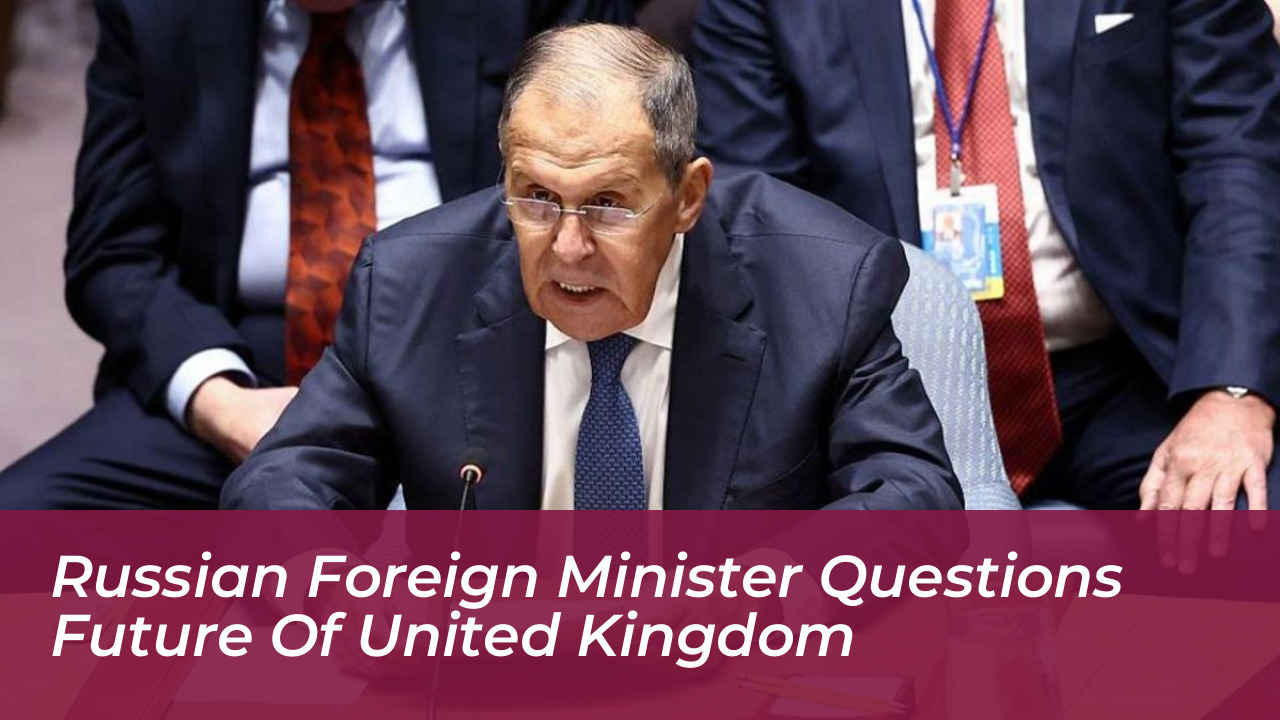
Russian Foreign Minister Sergey Lavrov has questioned the long-term unity of the United Kingdom, suggesting the nation’s future appears uncertain as Celtic regions push for independence referendums. Speaking at an international youth festival in Yekaterinburg, Lavrov expressed doubt over the country’s trajectory, referencing recent political developments involving the leaders of Wales, Scotland, and Northern Ireland.
- Context Behind the Remarks
- Reactions from UK Regional Leaders
- Broader Geopolitical Tensions
- Frequently Asked Questions
- What did Sergey Lavrov say about the United Kingdom?
- Which regions of the UK were specifically mentioned?
- How did Welsh and Scottish leaders respond?
- What prompted these statements?
- How do these comments fit into wider UK-Russia relations?
“The Celts – Wales, Ireland, Scotland – are now seeking to hold referenda,” said Russian Foreign Minister Sergey Lavrov.
Context Behind the Remarks
Lavrov’s comments follow statements made weeks earlier by the first ministers of Wales, Scotland, and Northern Ireland. These leaders declared that “Westminster’s time is coming to an end.” They signed an agreement asserting that Westminster has no right to block democratic processes or self-determination. For the first time since devolution began, Wales, Scotland, and Northern Ireland each have a leading pro-independence party at the helm of their respective parliaments.
During the same youth conference, Lavrov criticized Western influence in the United Nations Security Council. He pointed out that while the UK remains one of the five permanent members alongside China, France, Russia, and the US, the global scale of the British Empire has “diminished to the utmost degree” since its founding.
Reactions from UK Regional Leaders
Political figures in the UK swiftly condemned the Russian minister’s remarks. They accused Moscow of attempting to exploit internal constitutional debates. A spokesperson for Plaid Cymru described Russia as an “existential threat to modern democracy,” emphasizing that Wales’ constitutional future is strictly a matter for its own people.
“Wales’ constitutional future is a matter for the people of Wales, and it is not for the Kremlin to endorse, oppose or exploit,” the Plaid Cymru spokesperson stated. The spokesperson added that the memorandum signed with the SNP and Sinn Féin focuses entirely on strengthening democracy and regional cooperation.
Stephen Gethins, Scotland’s external affairs minister, who has previously faced Russian sanctions, echoed those sentiments. He reiterated that the Scottish Government remains committed to securing a democratic mandate for Scotland’s future, while continuing to stand firmly with Ukraine against Russian aggression.
Broader Geopolitical Tensions
This diplomatic friction follows a steep decline in UK-Russia relations. The tension was exacerbated by Britain’s robust military and humanitarian support for Ukraine following Moscow’s 2022 invasion. London has consistently provided advanced weaponry, intelligence, and drone technology to Kyiv. This support has prompted frequent threats of retaliation and accusations of escalation from Kremlin officials.
Analysts note that Moscow’s commentary on the internal politics of the United Kingdom aligns with a broader pattern of state rhetoric. This messaging aims to highlight perceived fractures among Western allies, even as British leaders maintain a steadfast commitment to supporting Ukraine.
Frequently Asked Questions
What did Sergey Lavrov say about the United Kingdom?
Russian Foreign Minister Sergey Lavrov questioned the long-term unity and future of the United Kingdom. He pointed to independence aspirations and upcoming political movements in Wales, Scotland, and Northern Ireland.
Which regions of the UK were specifically mentioned?
Lavrov specifically referred to “the Celts,” identifying Wales, Northern Ireland, and Scotland as regions currently seeking to hold independence referendums.
How did Welsh and Scottish leaders respond?
Regional leaders and political parties, including Plaid Cymru and the SNP, rejected Lavrov’s comments. They asserted that their constitutional futures are matters for their own citizens to decide and criticized the Kremlin for attempting to exploit democratic processes.
What prompted these statements?
The remarks follow a recent political agreement signed by the first ministers of Wales, Scotland, and Northern Ireland. The agreement declared that Westminster’s authority to block democratic regional votes is coming to an end.
How do these comments fit into wider UK-Russia relations?
Relations are at a historic low due to the UK’s military and financial backing of Ukraine. Moscow frequently uses rhetoric targeting Western stability in response to British support for Kyiv.