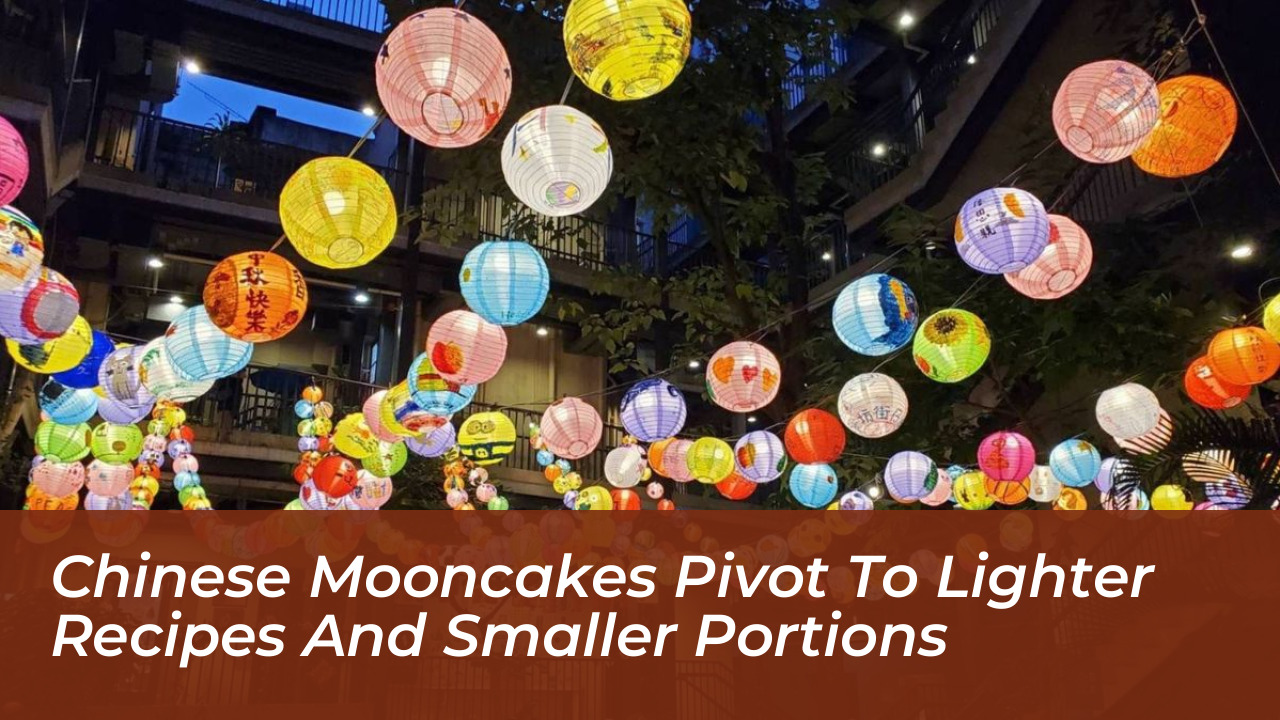
The Mid-Autumn Festival brings families together, but the traditional heavy profile of mooncakes is undergoing a massive transformation. Chinese mooncake producers are shifting to lighter recipes, smaller portions, and minimalist packaging to match modern health trends and strict government regulations.
- The Evolution of China Mooncake Production
- Moving Away From Corporate Status Symbols
- Regulatory Interventions and Packaging Reforms
- Driving Factors Behind Lighter Recipes
- Rise in Urban Health Consciousness
- Nutritional Reformulations and Functional Ingredients
- Portion Control and Mini-Sized Formats
- Redefining Standard Weights
- Shifting Consumption Scenarios and Retail Channels
- Everyday Snacking and Workplace Breaks
- The Digital Commerce Shift
- Market Comparison: Traditional Versus Modern Mooncakes
- Strategic Implications for Food Brands
- Prioritizing Mid-Price Accessibility
- Embracing Clean Labels
- Frequently Asked Questions
- Why are Chinese mooncake producers making portions smaller?
- What ingredients are replacing traditional heavy fillings?
- How have packaging rules changed for mooncakes?
- Where do modern consumers buy mooncakes?
The Evolution of China Mooncake Production
The traditional confectionery market is shedding its status-driven, ultra-luxury image. Instead of catering exclusively to elite gift-givers, the industry is embracing accessible everyday snacking. This change reflects a broader shift in consumer values across urban centers in China.
Bakery manufacturers now focus on high-volume production of everyday treats rather than relying on a few exorbitant holiday sales. This evolution ensures the seasonal pastry remains relevant to younger generations who prioritize taste, wellness, and personal enjoyment over formal tradition.
Moving Away From Corporate Status Symbols
- Decline of ultra-expensive luxury gift sets designed for corporate bribery or ostentatious display.
- Shift toward functional, accessible, and health-conscious confectionery for diverse consumer bases.
Regulatory Interventions and Packaging Reforms
- Government regulations limiting packaging costs relative to total retail price.
- Adoption of minimalist paper wrapping, recyclable containers, and compact multi-packs.
Driving Factors Behind Lighter Recipes
Public health awareness and changing consumer demographics are driving the demand for lighter recipes. Urban shoppers are more informed about the long-term effects of consuming excessive sugar and processed fats.
Younger demographics, particularly Millennials and Gen-Z, actively reject the heavy traditional fats and high-calorie ingredients that defined older recipes. They demand alternatives that fit active lifestyles without sacrificing the festive mood.
Rise in Urban Health Consciousness
- Growing focus on metabolic health, obesity prevention, and balanced nutrition among Millennials and Gen-Z.
- Rejection of heavy traditional fats and high-calorie ingredients.
Nutritional Reformulations and Functional Ingredients
- Replacement of refined cane sugar with natural sweeteners, low-glycemic alternatives, and sugar alcohols.
- Integration of alternative flours like buckwheat, whole wheat, and multigrain blends for higher fiber.
- Traditional Chinese medicine inspired fillings such as Chinese yam, dried tangerine peel, and sesame.
Portion Control and Mini-Sized Formats
Physical dimensions are shrinking to accommodate modern dietary goals and portion control practices. Traditional mooncakes often weighed between 120 and 150 grams per piece, presenting a dense caloric load.
Modern production lines now favor mini-sized formats ranging from 50 to 80 grams. These smaller portions allow consumers to enjoy seasonal treats without derailing their daily nutritional targets or feeling sluggish after a snack.
Redefining Standard Weights
- Transitioning from traditional 120-gram to 150-gram formats down to mini-sized 50-gram to 80-gram portions.
- Allowing consumers to manage caloric intake without abandoning cultural traditions.
Shifting Consumption Scenarios and Retail Channels
The ways people purchase and consume these seasonal treats have changed dramatically. Mooncakes are no longer confined to formal family reunion banquets and rigid gift-giving rituals.
Urban consumers now purchase mini mooncakes for everyday snacking, workplace breaks, and afternoon tea pairings. Digital platforms, social-commerce livestreams, and instant retail mini-programs dominate distribution, helping micro-brands gain viral traction.
Everyday Snacking and Workplace Breaks
- Transition from formal family reunion consumption to personal snacking and afternoon tea pairings.
- Extension of the sales window beyond the brief festival period.
The Digital Commerce Shift
- Dominance of digital platforms, social-commerce livestreams, and instant retail mini-programs.
- Discovery of micro-brand collaborations and novel flavors through viral content on digital platforms.
Market Comparison: Traditional Versus Modern Mooncakes
The confectionery sector has undergone a rapid structural transformation over the past few years. The comparison below illustrates the gap between legacy practices and current market realities.
| Market Metric | Traditional Paradigm | Modern Market Reality |
|---|---|---|
| Average Portion Size | 120g to 150g per piece | 50g to 80g mini formats |
| Packaging Style | Elaborate, multi-tier luxury boxes | Minimalist paper wrap, compact sets |
| Primary Consumer Motivation | Status display and formal gifting | Personal snacking, health, and flavor novelty |
| Dominant Price Segment | Super-premium tiers | Mid-price accessibility |
Strategic Implications for Food Brands
Bakery manufacturers and global retailers operating in the Asian confectionery sector must adapt quickly. Brands that fail to modernize their portfolios risk losing market share to agile competitors who cater to wellness demands.
Success requires focusing on mid-price accessibility and clean labels. By communicating transparent sourcing and reduced sugar content directly on product packaging, brands build lasting trust with modern consumers.
Prioritizing Mid-Price Accessibility
- Focusing production lines on the dominant mid-range price segment for high volume growth and repeat purchases.
Embracing Clean Labels
- Communicating functional health benefits, transparent sourcing, and reduced sugar content directly on packaging.
Frequently Asked Questions
Why are Chinese mooncake producers making portions smaller?
Producers are shrinking mooncakes to support portion control and appeal to health-conscious consumers managing their daily calorie intake.
What ingredients are replacing traditional heavy fillings?
Manufacturers use natural sweeteners, low-glycemic alternatives, multigrain flours, and traditional Chinese medicine ingredients like Chinese yam.
How have packaging rules changed for mooncakes?
Government regulations limit packaging costs relative to total retail price, forcing brands to move away from multi-tier luxury boxes.
Where do modern consumers buy mooncakes?
Digital commerce platforms, social-commerce livestreams, and instant retail mini-programs drive the majority of contemporary seasonal sales.