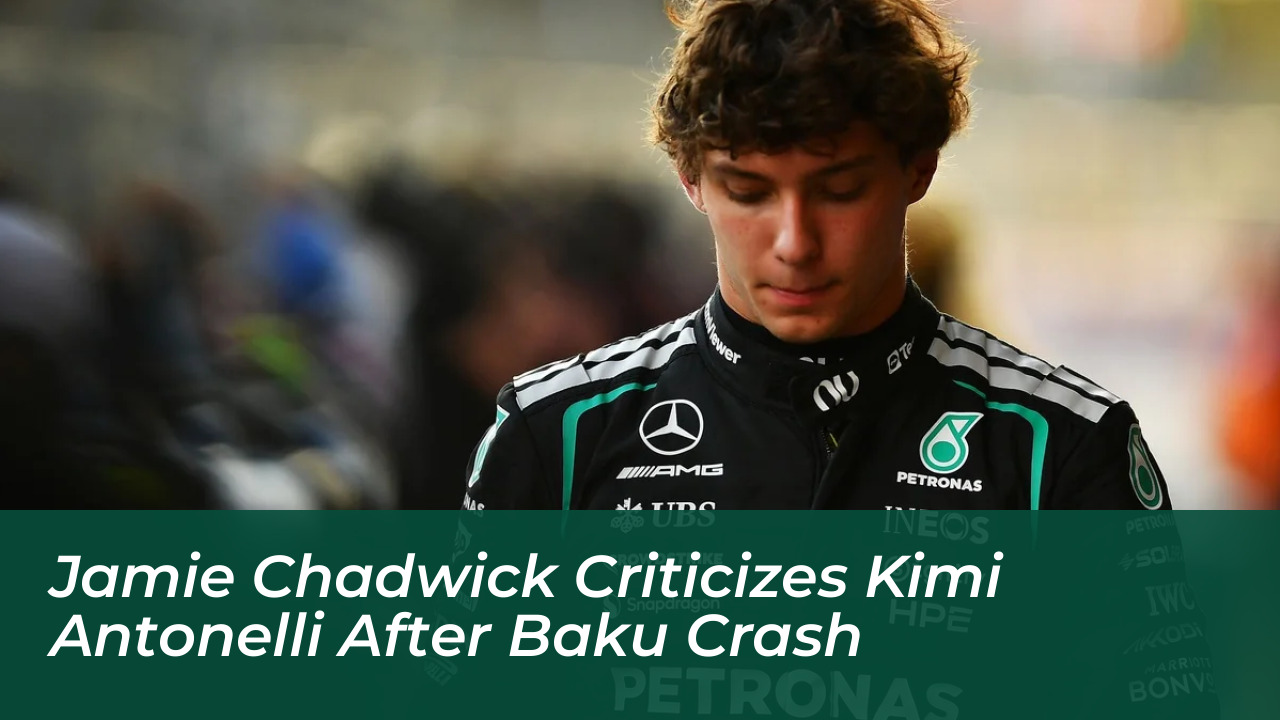
The high-stakes drama of the Azerbaijan Grand Prix qualifying session at the Baku City Circuit left the Formula 1 paddock stunned when championship leader Kimi Antonelli suffered a high-speed exit during the opening phase. Sky Sports F1 analyst Jamie Chadwick did not hold back in her live broadcast assessment, calling out the young Mercedes driver for a costly misjudgment that ended his session in the barriers. Set against George Russell securing a dominant pole position, this unexpected incident immediately intensified the championship battle and raised serious questions about racecraft management under extreme pressure.
- Understanding Street Circuit Dynamics
- Expert Analysis and Telemetry Breakdown
- Mechanical Factors and Driver Accountability
- Path to Redemption in the Race
- Strategic Recovery Framework
- Frequently Asked Questions
- What caused Kimi Antonelli to crash in Baku qualifying?
- What was Jamie Chadwick’s assessment of the incident?
- Where did George Russell qualify for the grand prix?
- Can Antonelli score points from 16th on the grid?
The accident occurred during the very beginning of Q1 as drivers explored track evolution and grip limits on the abrasive asphalt of the Azerbaijani street circuit. Antonelli carried too much speed into the notoriously tight Turn 1 complex, where a lack of natural runoff areas leaves zero margin for error. The front-left wheel made heavy contact with the concrete barrier, snapping steering components and forcing race engineer Peter Bonnington to issue an immediate instruction to shut the power unit down on track.
Understanding Street Circuit Dynamics
Street circuits present a unique engineering puzzle due to rapidly changing surface conditions. The abrasive asphalt evolves constantly as rubber builds up from support series and practice sessions. During the opening minutes of qualifying, track temperatures fluctuate, and drivers frequently struggle to find a consistent reference point for braking markers. This high-risk environment requires precise risk calibration, especially when running on the limit of adhesion.
The physical impact at Turn 1 was severe enough to inflict terminal damage on the W17 chassis. By the time race marshals cleared the stricken silver car, the front-left suspension geometry was entirely destroyed. Although Antonelli had recorded an early lap time, the elimination in 16th place left him stranded in the midfield traffic for race day, handing a massive psychological and tactical advantage to his teammate at the front of the grid.
Expert Analysis and Telemetry Breakdown
Analyzing the telemetry and visual evidence for Sky Sports F1, Chadwick argued that the crash stemmed from an unnecessary over-commitment on the installation lap of the session. She highlighted the stark contrast between Antonelli’s calculated consistency earlier in the year and this sudden lapse in judgment. The aggressive driving style that defined his junior career and his tumultuous 2025 campaign briefly resurfaced under the bright lights of Baku.
Chadwick further emphasized that the Mercedes W17 possessed a significant performance advantage over rival machinery around the Baku layout. Because the chassis was performing in a league of its own, the driver carried an enormous safety margin regarding raw pace alone. Pushing past the limit on the opening lap of Q1 represented an avoidable tactical error, particularly for a driver holding a commanding lead in the drivers standings.
Former world champion Jacques Villeneuve joined the broadcast analysis to offer a deeper mechanical explanation for the crash. Villeneuve agreed with Chadwick regarding the excessive risk exposure, but added that Antonelli’s specific chassis setup preferences played a significant contributory role in the accident. The young Italian historically favors a setup featuring a planted rear end and a degree of inherent understeer.
Mechanical Factors and Driver Accountability
This setup philosophy occasionally reduces front-end bite, making mid-corner adjustments difficult when track grip shifts unexpectedly. When a driver utilizes a setup geared toward stability under braking, unexpected increases in surface grip can catch the front axle off guard. The car suddenly bites harder than anticipated, sending the steering trajectory directly toward the perimeter walls.
Facing the media after the conclusion of qualifying, Antonelli offered a remarkably blunt and self-critical assessment of his performance. Unlike drivers who attempt to deflect blame toward traffic or unpredictable gusts of wind, the teenager took full ownership of the crash. He admitted that his misjudgment of the grip differential caused an entirely avoidable mistake that punished him severely.
Path to Redemption in the Race
Despite the setback, paddock pundits point to his stellar recovery drives earlier in the season as proof that a points finish remains entirely achievable. The current generation of technical regulations facilitates overtaking on long straightaways, meaning a top-ten finish is well within reach if he avoids further incidents during the chaotic opening lap.
Strategic Recovery Framework
- Executing a clean getaway through the high-risk braking zone at Turn 1.
- Maximizing tire degradation windows during alternative pit stop strategies.
- Capitalizing on DRS zones along the main straight to pick off midfield runners.
- Maintaining emotional composure to avoid compounding the error during defensive duels.
While an 81-point cushion provides a comfortable safety net, this weekend’s events demonstrate how quickly momentum can shift in a high-stakes title fight. George Russell starts the grand prix from pole position with a clear track ahead, presenting an ideal opportunity to slash his teammate’s championship lead.
| Driver | Grid Position | Key Qualifying Metric |
|---|---|---|
| George Russell | P1 | Fastest in all three sectors (1:42.526) |
| Charles Leclerc | P2 | Closest challenger (+0.837s) |
| Andrea Kimi Antonelli | P16 | Eliminated in Q1 after wall contact |
The mental weight of defending a maiden world title may be influencing risk management during high-pressure sessions. Sports psychologists note that maintaining absolute focus over a grueling twenty-four-race calendar presents immense challenges for young competitors. How Antonelli responds to this adversity on Sunday will reveal much about his long-term championship maturity.
Frequently Asked Questions
What caused Kimi Antonelli to crash in Baku qualifying?
Antonelli misjudged the rapid track evolution and grip levels during the opening phase of Q1, carrying excessive speed into Turn 1 and making heavy contact with the concrete barrier.
What was Jamie Chadwick’s assessment of the incident?
Chadwick criticized the Mercedes rookie for reverting to an all-or-nothing driving style reminiscent of his 2025 campaign, noting that he pushed past the limit when his car’s superior pace provided a comfortable safety margin.
Where did George Russell qualify for the grand prix?
George Russell secured pole position with a commanding lap time of 1:42.526, putting himself in prime position to capitalize on his teammate’s grid penalty or early exit.
Can Antonelli score points from 16th on the grid?
Yes, the current technical regulations and long straightaways at the Baku City Circuit facilitate overtaking, making a points finish entirely possible with a clean race strategy.