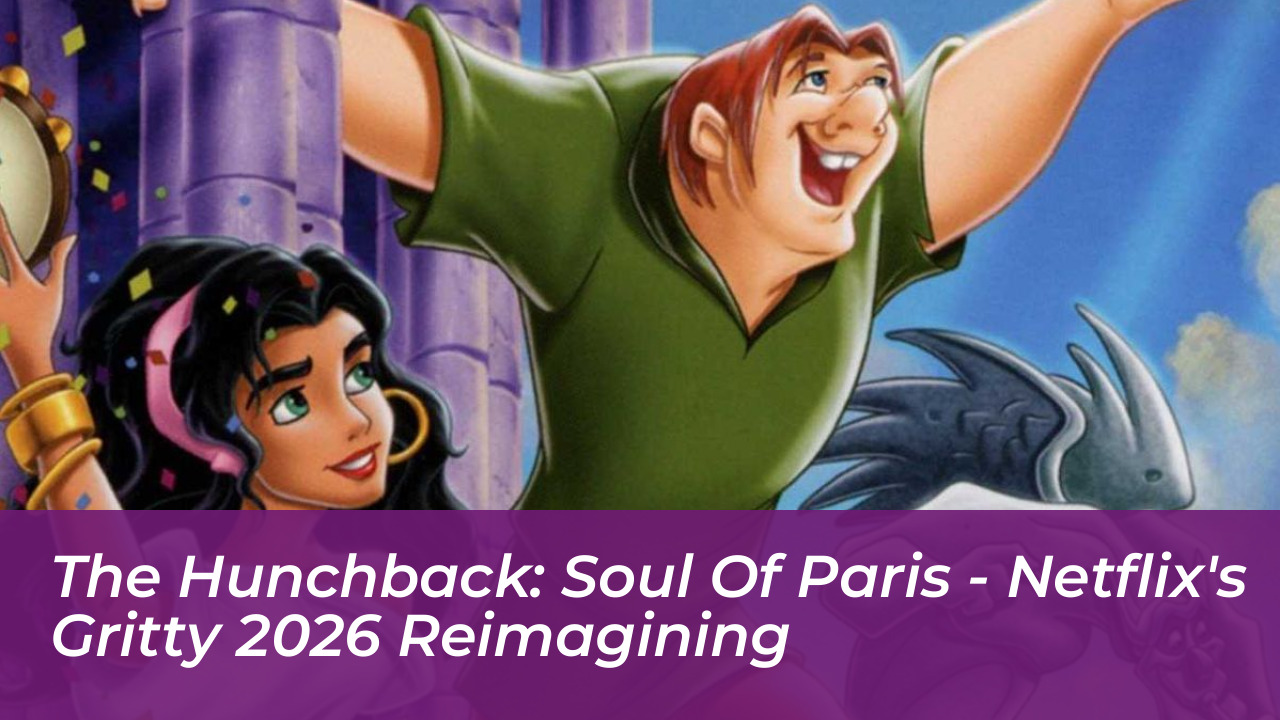
Netflix is set to redefine a literary classic with the upcoming release of The Hunchback: Soul of Paris on November 27, 2026. This high-profile production marks a definitive departure from the romanticized versions of Victor Hugo’s 1482 novel that have dominated pop culture for decades. By centering the narrative on the volatile 1830 July Revolution, director Jean-François Richet moves away from whimsical tropes to focus on raw, historical tension and the brutal realities of life in 19th-century France. This radical shift in timeline intentionally discards the medieval setting of the source material to explore a more modern, industrial era of social upheaval and political unrest.
- The Shift from Fairytale to Survival Thriller
- Jean-François Richet and the Vision for 1830s Paris
- Directorial Intent and Cinematic Style
- The Beauty of the Ugly
- The Cast and Character Dynamics
- Vincent Cassel as Quasimodo
- The Ensemble Supporting Roles
- Historical Realism and Narrative Themes
- The 1830 July Revolution as a Catalyst
- Public Health and the Cholera Outbreak
- Comparing the Hunchback Adaptations
- Production Design and Material Authenticity
- Unexplored Elements of the Production
- The Sonic Landscape
- The Real-Life Inspiration
- The Evolution of the Monstrous Protagonist
- Global Impact of Localized French Cinema
- Frequently Asked Questions
- Is this film a direct adaptation of the Victor Hugo novel?
- Does the film feature musical numbers?
- Who is the director of this project?
- Why change the time period from the original novel?
- Final Expectations for the November Release
The Shift from Fairytale to Survival Thriller
The transition from a story of tragic romance to a high-stakes survival thriller represents a bold creative pivot for the streaming platform. While previous iterations often prioritized the architectural majesty of the cathedral, this adaptation looks at the grime, desperation, and political instability of the era. The narrative functions as a grounded exploration of human endurance rather than a fable about inner beauty.
By rooting the story in the 1830 July Revolution, the film creates a sense of immediate danger for every character involved. The population is not merely acting out a script; they are caught in the gears of a society undergoing violent, systemic change. This choice forces the audience to view the protagonist not as a mythical figure, but as a man struggling to survive within a collapsing social order.
Jean-François Richet and the Vision for 1830s Paris
Directorial Intent and Cinematic Style
Jean-François Richet utilizes his background in action-thriller cinema to bring a visceral energy to this ambitious project. His directorial style here emphasizes claustrophobic, industrial, and decaying urban landscapes. The camera work is designed to trap the viewer in the same narrow, shadow-filled alleys that define the protagonist’s daily existence.
The film makes extensive use of muted color palettes and natural light, or the lack thereof, to isolate the characters. By stripping away the vibrancy often associated with period dramas, Richet forces the focus onto the texture of stone, the sweat on skin, and the harshness of the environment. This aesthetic choice aligns with his goal of presenting a version of Paris that feels authentic to the period’s misery.
The Beauty of the Ugly
Richet actively challenges traditional cinematic beauty standards throughout the film to reflect the harsh realities of the era. Instead of seeking to make the setting or the characters aesthetically pleasing, he leans into the grotesque. The visual language of the film celebrates the physical texture of the cathedral and the scarred reality of the human body.
Every set piece and costume undergoes a rigorous aging process to ensure it looks genuinely lived-in and weathered by the elements. The mud, soot, and rain-soaked clothing serve as visual reminders of the relentless environment that shapes the population.
The Cast and Character Dynamics
Vincent Cassel as Quasimodo
Vincent Cassel takes on the role of Quasimodo, delivering a performance that eschews monster-movie theatrics in favor of raw emotion. The physical transformation required for the role is significant, yet Cassel focuses heavily on the underlying humanity of the character. He portrays a man whose physical deformity is secondary to his status as a social pariah caught in a lethal game.
The Ensemble Supporting Roles
The ensemble cast, featuring Karim Leklou, Benjamin Voisin, and Daphné Patakia, provides a necessary look at the stratified class structure of 19th-century France. Each performance highlights the lack of agency the working class possessed during the revolution. These characters serve as mirrors to the protagonist, showing how different layers of society navigate the same oppressive environment.
The chemistry among the lead actors grounds the sweeping historical narrative in deeply personal stakes and authentic emotional conflicts. Their interactions expose the deep fractures within Parisian society just as the streets begin to boil over with revolutionary fervor.
Historical Realism and Narrative Themes
The 1830 July Revolution as a Catalyst
The political instability of the 1830s is not just a backdrop; it is the primary engine of the plot. The revolution dictates the pacing, creating a constant sense of urgency that permeates every scene. As the streets of Paris erupt in conflict, the personal stakes for the characters escalate, making the narrative feel like a relentless race against time.
Barricades go up overnight, transforming familiar neighborhoods into deadly warzones where loyalist troops and citizen militias clash violently. This chaotic environment forces unlikely alliances and exposes the fragile nature of order in a city pushed to its absolute breaking point.
Public Health and the Cholera Outbreak
The film explores the grim reality of the 1832 cholera epidemic, which devastated Paris shortly after the July Revolution concluded. It examines the societal panic and the desperate, often ineffective, public health responses of an overwhelmed administration. This inclusion adds a layer of moral complexity, framing the protagonist’s struggle as part of a larger systemic breakdown where the poorest citizens suffered the highest mortality rates.
Quarantine measures and panicked medical treatments create an atmosphere of paranoia that rivals the street violence of the revolution. The stark contrast between the wealthy elite and the afflicted masses highlights the profound inequality defining this turbulent epoch.
Comparing the Hunchback Adaptations
| Adaptation | Primary Tone | Core Focus |
|---|---|---|
| 1939 Version | Classic Drama | Romantic Tragedy |
| 1996 Animated | Fairytale/Musical | Moral Allegory |
| 2026 Netflix | Survival Thriller | Historical Realism |
Production Design and Material Authenticity
The production team invested heavily in recreating the specific density of 1830s Paris through meticulous craftsmanship. By utilizing practical sets over digital environments, the film captures the soot-stained limestone and the claustrophobic narrowness of pre-Haussmann streets. This tactile approach ensures that every frame feels weighted by the era’s specific socio-economic pressures.
Art directors studied period blueprints, police reports, and contemporary artwork to replicate the precise architectural decay of the Latin Quarter. The result is an immersive cinematic world that feels entirely authentic and resistant to modern Hollywood polish.
Unexplored Elements of the Production
The Sonic Landscape
There is significant mystery surrounding the film’s musical score and overall sound design. While many period pieces rely on sweeping orchestral arrangements, the thriller pacing suggests a move toward modern, industrial soundscapes. It remains to be seen how the production balances period-accurate instrumentation with the aggressive, rhythmic tension required for a survival-focused narrative.
Subtle ambient noises, from the distant rumble of artillery to the drip of stagnant water, create an oppressive auditory experience for the viewer.
The Real-Life Inspiration
The production team leaned heavily on the historical research of archivist Adrian Glew regarding real-life stonemasons at Notre Dame. By treating the character as a historical laborer rather than a literary archetype, the film grounds itself in credible reality. This approach allows the audience to engage with the story as a piece of historical fiction rather than a tired reinterpretation of a fictional legend.
The Evolution of the Monstrous Protagonist
Modern audiences are increasingly receptive to stories that strip away musical whimsy in favor of gritty historical realism. By removing the songs and the fairytale ending, the film forces a new kind of empathy from the viewer. We no longer feel for the protagonist because he sings about his pain; we feel for him because we witness his daily struggle to survive in a world that views him as disposable.
This psychological depth elevates the material from a standard monster movie into a profound meditation on dignity and resilience.
Global Impact of Localized French Cinema
Netflix continues to leverage its powerful platform to bring historically specific European content to a massive global audience. By investing in a project that is so deeply tied to French history and literature, the streamer is reshaping how international viewers perceive these classics. It moves the discourse away from sanitized versions and toward a more nuanced understanding of the source material’s darker themes.
Local production crews and native talent ensure that the cultural nuances remain intact, offering an authentic viewing experience worldwide.
Frequently Asked Questions
Is this film a direct adaptation of the Victor Hugo novel?
No, it is a radical reimagining that moves the setting from 1482 to the 1830 July Revolution, focusing on historical realism over the original plot.
Does the film feature musical numbers?
The production intentionally excludes musical elements to maintain a gritty, high-stakes survival thriller tone throughout the film.
Who is the director of this project?
Jean-François Richet directs the film, bringing his signature visceral action-thriller style to this historical narrative.
Why change the time period from the original novel?
The director chose the 1830s to emphasize the industrial and political volatility of the era, providing a sharper contrast to the medieval setting of the 1831 book.
Final Expectations for the November Release
With a tight runtime of 1 hour and 43 minutes, the film promises a focused and high-stakes cinematic experience. Jean-François Richet has crafted a version of Paris that prioritizes the visceral reality of human struggle over the grandeur of architecture. It is a grim, necessary look at a story we thought we knew, arriving on Netflix this November.