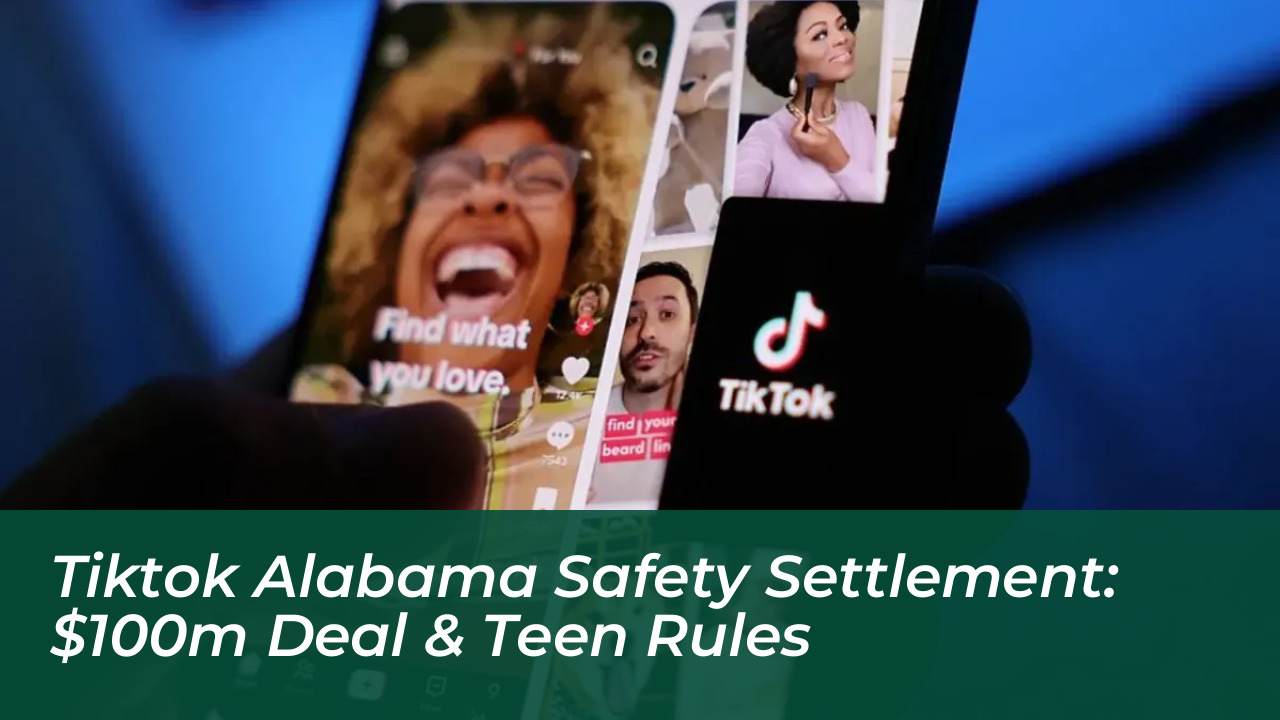
The state regulatory framework shifted dramatically when TikTok agreed to pay a minimum of $100 million to settle a groundbreaking state lawsuit concerning teen safety and addictive algorithmic designs. This resolution marks a defining moment in how state governments hold major technology platforms accountable for adolescent mental health. Below is a comprehensive breakdown of the TikTok Alabama safety settlement, the mandatory operational overhauls required for minor accounts, and the broader implications for the social media industry.
- Overview of the TikTok Alabama Safety Settlement
- Mandatory Platform Safety Changes for Teen Users
- Daily Usage Limits and Time Restrictions
- Enforcing Productive Pauses and Interrupting Infinite Scrolling
- Content Moderation and Algorithmic Adjustments
- Enhanced Parental Controls and Adult Interaction Safeguards
- Financial Breakdown and Remediation Funds
- Broader Legal Context and Industry Precedents
- Comparative Analysis of Recent Big Tech Settlements
- Frequently Asked Questions About the TikTok Settlement
- When must TikTok pay the initial settlement amount to Alabama?
- What happens to the total settlement payout if conditions are met?
- How does the agreement restrict teen usage times?
- Are cosmetic filters banned for all users under the new rules?
Overview of the TikTok Alabama Safety Settlement
Attorney General Steve Marshall led the Alabama state legal team in a relentless pursuit to hold ByteDance accountable for designing algorithms that intentionally target young users with addictive features. The landmark agreement was reached on September 25, 2026, successfully avoiding a high-stakes jury trial that was scheduled to begin the following Monday. This resolution prevents months of contentious courtroom battles while securing immediate financial and structural concessions.
Under the binding terms of the agreement, the company must transfer a mandatory baseline payment of $100 million directly into state coffers within 45 days of the filing. , the total payout has the potential to scale up to $300 million based on specific compliance benchmarks and complementary multi-state settlements. This financial framework ensures long-term accountability while immediately funding vital youth remediation programs across the state.
Mandatory Platform Safety Changes for Teen Users
Beyond monetary penalties, the agreement forces a complete operational overhaul for minor accounts across Alabama to curb compulsive viewing habits. State officials directly targeted infinite scroll mechanisms, aggressive algorithmic curation, and late-night notification loops as primary drivers of youth mental health decline. These structural changes dismantle the core engagement loops that keep young users glued to their screens for hours.
This legal victory establishes a strict regulatory template for state-level enforcement against major technology firms operating in the United States. Instead of relying on voluntary industry guidelines, Alabama successfully enforced legally binding product changes. Other states are already using this blueprint to draft parallel legislation targeting the design choices of competing social media platforms.
Daily Usage Limits and Time Restrictions
The settlement institutes rigid operational caps on how long young users can spend on the application each day. Regulators enforced a mandatory two-hour daily time limit for all minor accounts registered in the state. Parents gain superior administrative oversight through enhanced controls that allow them to tighten these limits further according to household rules.
Additionally, the agreement institutes strict overnight access blackouts. TikTok must block app usage for minors between midnight and 6:00 a.m. Messaging services and push notifications face parallel blackouts during these overnight hours and throughout official school hours to minimize daily distractions and protect adolescent sleep schedules.
Enforcing Productive Pauses and Interrupting Infinite Scrolling
To combat the hypnotic effect of algorithmic video delivery, the platform must implement automated interruptions known as productive pauses. Teen accounts receive mandatory screen breaks after 15 minutes of continuous video viewing. These micro-breaks disrupt the passive consumption cycle that leads to hours of unintended screen time.
Secondary and tertiary operational pauses are enforced at the 60-minute and 90-minute marks. These mandatory interventions force users to close feeds or step away from devices entirely. By interrupting these physiological reinforcement cycles, the platform reduces the compulsive behaviors linked to endless scrolling.
Content Moderation and Algorithmic Adjustments
Algorithmic transparency and content curation form a core pillar of the legal resolution. TikTok must provide teenage users in Alabama with a default non-personalized content feed. This change reduces the hyper-targeted psychological profiling that keeps young users engaged by feeding them increasingly extreme content.
Additionally, the platform implements a blanket prohibition against augmented reality cosmetic procedure filters for minors. This measure directly addresses body image anxieties and unrealistic beauty standards amplified by digital alteration tools. Age assurance protocols also become significantly more rigorous, requiring accurate verification before accounts receive unrestricted access.
Enhanced Parental Controls and Adult Interaction Safeguards
Child safety provisions extend directly into privacy settings and social interactions. All teen accounts default to private status, shielding personal content from general public view. The platform must also notify parents immediately if suspicious interactions occur between adult users and minors.
Discoverability of teen accounts by adult profiles faces strict algorithmic limitations. These restrictions reduce predatory access points within the digital ecosystem, making it significantly harder for malicious actors to locate and target underage users.
Financial Breakdown and Remediation Funds
The baseline $100 million payment arrives within 45 days of the agreement filing. State leadership designated these funds for remediation and restitution, directing capital toward youth mental health services, school safety resources, and public health initiatives. This direct investment aims to heal the psychological toll of excessive digital consumption.
If coordinated legal actions from other state attorneys general secure qualifying settlements within the designated timeframe, Alabama stands to gain up to an additional $183.8 million. This scaling financial model ensures that the state benefits from broader national momentum, pushing total potential restitution near the $300 million threshold.
Broader Legal Context and Industry Precedents
Alabama was positioned as the first state ready to present social media addiction claims before an actual jury. This willingness to go to trial gave state negotiators immense leverage during settlement discussions. The resulting agreement signals a permanent shift in how courts view platform liability regarding software design.
The resolution follows a $400 million federal settlement between TikTok and the Department of Justice regarding children’s privacy violations. It also mirrors structural adjustments agreed upon by Meta and other digital platforms, cementing a unified national regulatory standard. Big tech can no longer hide behind Section 230 immunity when designing addictive interfaces for minors.
Comparative Analysis of Recent Big Tech Settlements
Recent litigation involving major technology companies highlights a growing trend toward financial penalties and operational mandates. The following comparison details how the TikTok settlement stacks up against other major industry resolutions.
| Platform | Settlement Amount | Key Operational Mandates | Primary Focus Area |
|---|---|---|---|
| TikTok | $100 Million (Base) | 2-hour daily limit, midnight to 6 AM ban, non-personalized default feed | Alabama state trial resolution, minor addiction prevention |
| Meta | $117 Million (Alabama share) | Parental controls, feed transparency, algorithmic safety limits | Multi-state youth mental health litigation |
| Roblox | $12 Million (Funding) | School Resource Officer funding, enhanced minor protections | Online gaming platform safety measures |
Frequently Asked Questions About the TikTok Settlement
When must TikTok pay the initial settlement amount to Alabama?
The social media company must disburse the initial $100 million payment within 45 days of the settlement agreement finalization on September 25, 2026.
What happens to the total settlement payout if conditions are met?
While the guaranteed minimum stands at $100 million, Alabama could receive up to $300 million total if TikTok violates specific operational terms or if matching multi-state settlements achieve qualifying thresholds.
How does the agreement restrict teen usage times?
The platform must enforce a strict two-hour daily usage cap for minors, alongside a complete blackout on app usage, messaging, and push notifications between midnight and 6:00 a.m.
Are cosmetic filters banned for all users under the new rules?
No, the ban specifically targets teen accounts in Alabama, prohibiting the use of augmented reality cosmetic procedure filters to protect adolescent mental well-being.