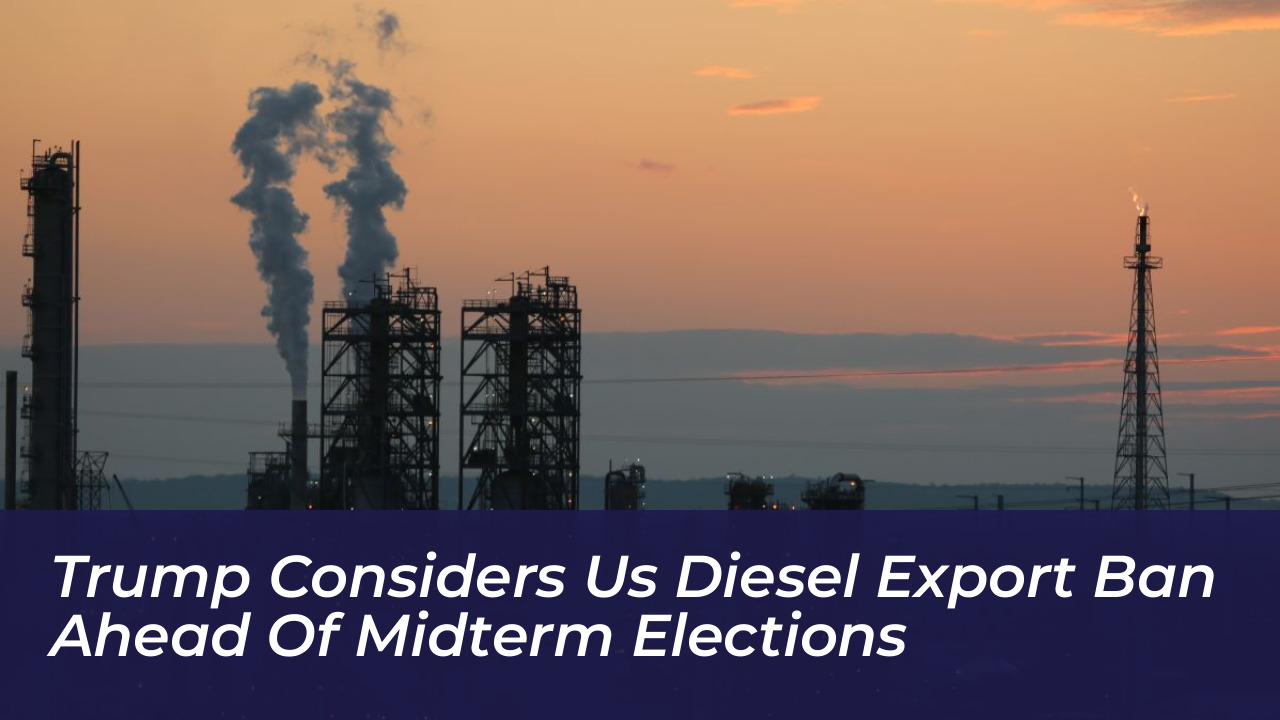
Rising energy costs force political action as national average diesel prices hit six dollars and fifty-one cents per gallon. Voters grappling with expensive commercial freight and inflated grocery bills direct frustration at current energy conditions, putting pressure on Washington ahead of the upcoming elections. The White House evaluates a temporary ninety-day restriction on refined fuel shipments to curb domestic inflation and signal direct support for American consumers.
- Political Urgency and Economic Pressures Before Midterms
- Surging Pump Prices and Consumer Strain
- Legislative Demands for Executive Action
- Treasury and Administration Evaluations
- Root Causes of the Global Fuel Crisis
- Geopolitical Disruptions and Supply Constraints
- Logistics Bottlenecks and High Crack Spreads
- Market Mechanics and the Risk of Domestic Refined Fuel Reductions
- The Warning from Energy Officials
- Industry Pushback on Artificial Trade Barriers
- Global Trade Relationships and Retaliatory Risks
- Refining Complexity and Regional Disparities
- The Technical Reality of Refinery Yields
- Secondary Impacts on Remote and Non-Logistics Sectors
- Strategic Outlook for Domestic Energy Markets
- Balancing Political Optics and Economic Reality
- Pathways Toward Sustainable Energy Relief
- Frequently Asked Questions
- Why is the White House considering a diesel export ban?
- How would an export ban affect domestic refineries?
- What are the risks of retaliatory trade measures from Europe?
- Do export bans help remote or off-grid communities?
This article analyzes the political pressures, market mechanics, and unintended economic fallout of a potential trade embargo. While a protectionist measure projects strong political resolve, economic data suggests that interfering with international supply chains may yield counterproductive results for local markets.
Political Urgency and Economic Pressures Before Midterms
Surging Pump Prices and Consumer Strain
Data from late September 2026 highlights a steep climb from three dollars and sixty-nine cents to six dollars and fifty-one cents per gallon within twelve months. This historic price jump creates immediate financial pain for households and businesses alike. Agricultural operators, long-haul logistics networks, and heavy industrial operations absorb unsustainable operational overhead that threatens profit margins across the board.
The sudden surge in fuel prices triggers severe financial strain across multiple critical sectors. Farmers managing large crop yields, logistics companies moving retail goods, and construction firms face unprecedented operating costs. These expenses quickly cascade down to everyday retail goods, driving up inflation throughout the broader economy.
Legislative Demands for Executive Action
Republican senators, including Chuck Grassley and Dan Sullivan, pressure the administration to prioritize local supply over international commitments. Proponents argue that keeping refined distillates inside national borders will immediately lower localized pump costs and offer tangible relief to working-class families. Lawmakers maintain that extraordinary economic conditions require direct federal intervention.
Political pressure mounts as midterm elections approach, leaving lawmakers searching for fast solutions to appease frustrated constituents. Advocacy groups representing trucking fleets and independent operators join the chorus for executive action. They demand immediate caps on outgoing fuel shipments to ensure domestic stockpiles remain robust and affordable.
Treasury and Administration Evaluations
Treasury Secretary Scott Bessent examines national refining capacity to determine if a partial or full ban remains viable without collapsing local market structures. Administration officials weigh the immediate political benefit against the risk of broader economic disruption. Internal debates center on whether a short-term restriction will actually lower prices or simply shift the burden elsewhere.
Economic advisors review historical trade data to model the potential fallout of restricting exports to key allies. The White House must balance public relations imperatives with the complex realities of modern commodity trading. Every proposed regulatory move undergoes intense scrutiny to gauge its potential impact on domestic inflation.
Root Causes of the Global Fuel Crisis
Geopolitical Disruptions and Supply Constraints
Persistent military strikes involving U.S. and Israeli actions against Iranian infrastructure destabilize regional energy output. These prolonged conflicts disrupt traditional tanker routes and create widespread uncertainty among international buyers. Energy markets react swiftly to every escalation in the Middle East, driving baseline crude and refined product costs higher.
Ukrainian drone campaigns target critical Russian refineries, compelling Moscow to enforce strict domestic export limits. This sudden loss of refining output in Eastern Europe strains global supply chains to their breaking point. International buyers scramble for alternative sources, intensifying competition for every available barrel of diesel.
Logistics Bottlenecks and High Crack Spreads
Ongoing security threats restrict product shipments through the Strait of Hormuz, forcing tankers to take longer and more expensive voyages. These maritime bottlenecks delay deliveries and increase shipping insurance premiums exponentially. The physical movement of fuel becomes a high-risk logistical challenge.
Crack spreads widen dramatically, with diesel trading near two hundred and seven dollars a barrel, far above baseline crude costs. Refiners capture massive margins on paper, but the underlying physical market remains dangerously tight. High crack spreads reflect an acute shortage of finished diesel relative to global demand.
Market Mechanics and the Risk of Domestic Refined Fuel Reductions
The Warning from Energy Officials
Energy Secretary Chris Wright characterizes an export ban as a blunt regulatory tool that could easily misfire. Halting commercial shipments risks filling storage tanks quickly, forcing refineries to scale back production runs. When domestic storage reaches maximum capacity, industrial operators have no choice but to throttle down processing units.
Cutting refinery output ultimately tightens domestic supply rather than expanding it, defeating the original purpose of the intervention. Energy experts warn that government mandates cannot override the physical storage limits of modern processing facilities. Artificial bottlenecks created by trade barriers often lead to unexpected shortages.
Industry Pushback on Artificial Trade Barriers
The American Petroleum Institute warns that trade restrictions disrupt the natural flexibility of global energy markets. U.S. refiners rely on international exports to maintain high utilization rates and protect operational margins across different fuel grades. Restricting these outlets forces operators to reevaluate their entire production schedules.
Major energy firms argue that free-flowing trade provides the best mechanism for balancing regional surpluses and deficits. Imposing artificial barriers prevents the market from self-correcting during periods of high demand. Refiners prefer market-driven adjustments over rigid government quotas that complicate long-term planning.
Global Trade Relationships and Retaliatory Risks
European allies depend heavily on American distillate imports to offset losses from Russia and the Middle East. European officials caution that a sudden U.S. cutoff could provoke retaliatory restrictions on gasoline shipments destined for the American Northeast. Such trade friction risks damaging vital diplomatic and economic alliances.
If European nations respond with their own export bans on lighter fuels, American consumers on the East Coast will face severe supply deficits. Interconnected global energy markets mean that unilateral actions rarely occur without immediate international consequences. Protecting one sector can easily destabilize another through retaliatory measures.
Refining Complexity and Regional Disparities
The Technical Reality of Refinery Yields
Refineries cannot isolate diesel production independently from gasoline and jet fuel due to the chemistry of crude processing. Mandating a halt on diesel exports creates an unbalanced product slate, causing regional gluts alongside severe shortages in import-dependent coastal hubs. Distillation columns yield a fixed ratio of products based on the grade of crude input.
Storing excess heavy distillates while continuing to produce lighter fuels presents a logistical nightmare for refinery operators. Without the outlet of foreign markets, domestic storage facilities will overflow within weeks. This technical reality makes a clean, isolated restriction on a single fuel type virtually impossible to manage smoothly.
Secondary Impacts on Remote and Non-Logistics Sectors
Rural communities in regions like Alaska rely entirely on diesel generators for baseline electrical power and home heating. National export bans offer zero targeted relief for localized micro-grids, exposing rural infrastructure to severe energy price shocks. Mainstream discussions often overlook these isolated populations entirely.
Small towns and remote industrial sites outside the major trucking corridors still face high operational costs regardless of federal trade policies. A blanket national embargo fails to address the unique infrastructure challenges faced by off-grid communities. Targeted assistance yields far better results for these vulnerable populations than broad trade restrictions.
Strategic Outlook for Domestic Energy Markets
Balancing Political Optics and Economic Reality
While a temporary embargo projects strong political resolve, economic data suggests protectionist policies may yield counterproductive results. Voters want decisive leadership, but poorly designed regulations can worsen the very problems they aim to solve. Policymakers must weigh short-term political gains against long-term market stability.
Navigating energy crises requires a delicate balance between public appeasement and sound economic management. Energy analysts maintain that lasting price stability depends on restoring global refining capacity rather than imposing trade barriers. Securing maritime trade routes remains paramount for insulating domestic supply chains from international conflict.
Pathways Toward Sustainable Energy Relief
Long-term solutions require expanding domestic extraction and modernizing aging processing facilities to handle shifting crude slates. Streamlining regulatory approval for infrastructure projects encourages private investment in production capacity. Building resilience into the supply chain protects consumers from future geopolitical shocks.
Collaboration between government agencies and private energy producers offers the most reliable path toward affordable fuel prices. By focusing on supply growth and logistical security, the nation can achieve lasting stability without resorting to disruptive trade embargoes.
Frequently Asked Questions
Why is the White House considering a diesel export ban?
The administration weighs this restriction to lower record-breaking domestic diesel prices, which reached six dollars and fifty-one cents per gallon, providing relief to consumers and industries before midterm elections.
How would an export ban affect domestic refineries?
Energy experts warn that stopping exports could fill storage tanks quickly, forcing refineries to scale back production and potentially tightening domestic supply rather than expanding it.
What are the risks of retaliatory trade measures from Europe?
Europe relies heavily on American diesel imports. A sudden U.S. cutoff could prompt European nations to restrict gasoline shipments to the American East Coast, causing severe regional shortages.
Do export bans help remote or off-grid communities?
Broad national export restrictions offer zero targeted relief for remote areas like Alaska that rely on diesel generators for baseline power and heating.