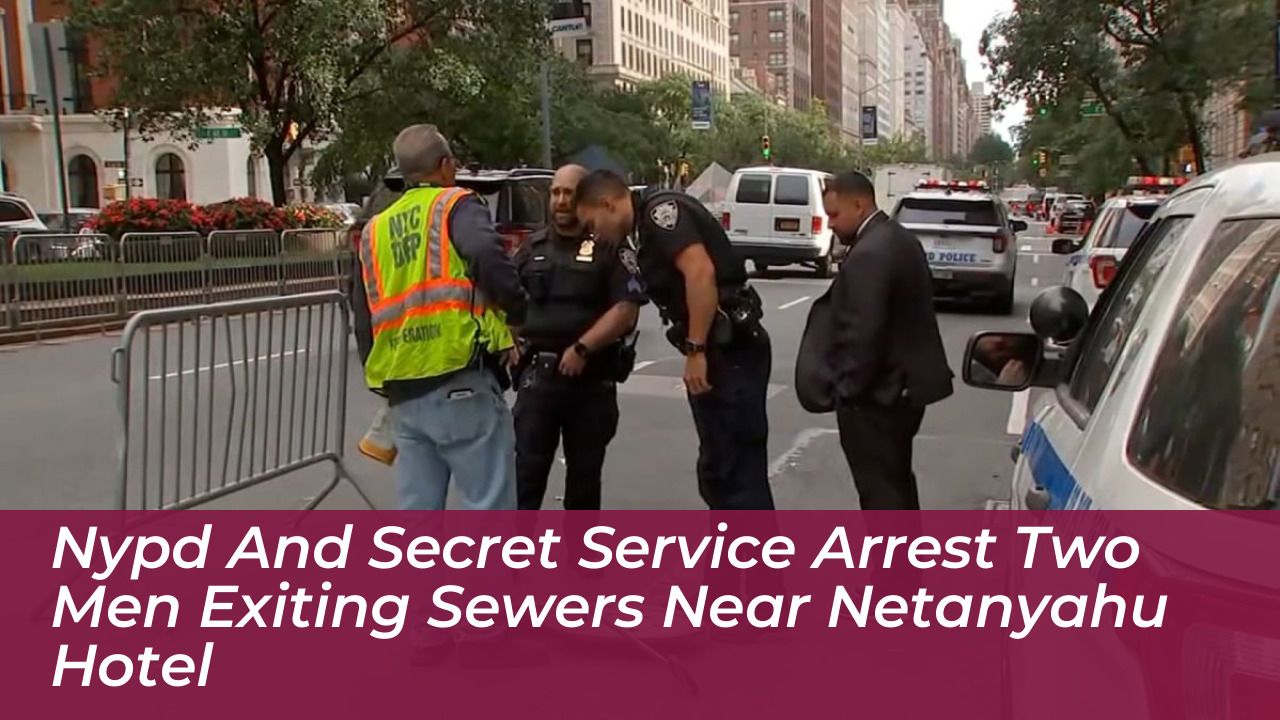
A high-stakes security breach in Midtown Manhattan during the United Nations General Assembly triggered an immediate and aggressive federal response when municipal sensors detected unauthorized human movement beneath the street pavement. The rapid apprehension of Kevin Rodriguez and Samuel Reveron after they exited a storm drain near East 61st Street and Park Avenue exposed critical intersections between urban exploration, subterranean scavenging, and international diplomatic security. This incident forced municipal and federal agencies to reevaluate the physical vulnerabilities inherent in dense urban infrastructure.
- The Midnight Security Breach Near Park Avenue
- Joint Law Enforcement and Federal Response
- Legal Proceedings and Arraignment Outcomes
- The Rising Trend of Subterranean Scavenging in New York City
- Subterranean Infrastructure and Citywide Vulnerabilities
- Securing the Underground: Diplomatic Protection Challenges
- Frequently Asked Questions
- Why were the suspects in the sewer near the Netanyahu hotel?
- Did the Secret Service find any explosives during their sweep?
- What legal charges did the arrested men face?
- How do unauthorized individuals access the New York City sewer system?
The Midnight Security Breach Near Park Avenue
The operational timeline began at 1:38 a.m. when witnesses reported suspicious subterranean movement near the luxury residential corridors of Park Avenue. Municipal surveillance systems captured three men ascending from an open storm drain frame at approximately 4:00 a.m. near 535 Park Avenue. Automated License Plate Readers tracked the fleeing suspects across the Queensboro Bridge into Queens, allowing local precinct units and federal task forces to identify the registered vehicles tied directly to the individuals involved.
Because the infiltration occurred inside an active United Nations General Assembly security zone, the location carried immense geopolitical sensitivity. The affected street grid sat adjacent to a luxury hotel hosting Israeli Prime Minister Benjamin Netanyahu. The close proximity to a foreign head of state forced immediate intervention by the United States Secret Service. Investigators quickly verified that the intrusion had no connection to terrorism, targeted political disruption, or foreign intelligence operations.
Joint Law Enforcement and Federal Response
The convergence of urban explorers and an active diplomatic protection zone necessitated a comprehensive subterranean sweep. The NYPD Bomb Squad and Secret Service Explosive Ordnance Disposal teams descended into the underground utility grid to verify the security of the area. Specialized tactical units cleared sewer lines, utility vaults, and storm corridors surrounding Park Avenue to ensure no threats remained hidden beneath the asphalt.
Thorough infrastructure inspections confirmed that the search teams found no explosive devices, tactical gear, or hazardous materials. Law enforcement officials officially classified the breach as an unauthorized entry driven entirely by property scavenging rather than a targeted security assault. However, urban exploration within a secured diplomatic zone inevitably triggers maximum threat responses due to the unpredictable nature of subterranean access points.
Legal Proceedings and Arraignment Outcomes
Following their apprehension, prosecutors in Manhattan Criminal Court filed two counts of criminal trespass and one count of conspiracy against both Kevin Rodriguez and Samuel Reveron. Both defendants entered formal pleas of not guilty during their Friday morning arraignment proceedings before the presiding judge. The legal categorization of the offense focused strictly on unauthorized physical intrusion rather than malicious intent.
Under New York State bail statutes, low-level non-violent misdemeanor charges do not permit judges to set monetary bail conditions. Consequently, the presiding judge ordered Samuel Reveron released under supervised court monitoring, while Kevin Rodriguez received a release on his own recognizance. These judicial decisions reflect standard statutory limitations for non-violent property offenses within the local court system.
The Rising Trend of Subterranean Scavenging in New York City
Subterranean exploration in major metropolitan areas frequently centers on the recovery of valuable items swept away by heavy precipitation. Heavy rainwater routinely flushes discarded metals, lost jewelry, loose currency, and small electronics off public roadways into urban drainage basins. Scavengers regularly enter these subterranean networks using chest waders, high-powered flashlights, and headlamps to filter through dense layers of silt and debris.
This event mirrors a broader, rising frequency of illegal sewer intrusions documented across New York City over recent months. NYPD intelligence records catalog multiple unauthorized entries in outer boroughs, including group incursions into storm drains across Brooklyn, heavy wader entries in residential Queens, and early morning sightings near Penn Station. The physical reality of these intrusions highlights persistent gaps in municipal utility security.
Subterranean Infrastructure and Citywide Vulnerabilities
The subterranean network beneath New York City features thousands of miles of interconnected drainage pipes, steam tunnels, and electrical vaults. Maintaining this vast subterranean architecture requires constant municipal oversight and frequent worker access across all five boroughs. Unauthorized actors often exploit these routine maintenance access points to bypass traditional surface-level security checkpoints.
City planners continually struggle to balance public worker accessibility with the necessity of keeping unauthorized civilians out of dangerous drainage zones. Fast-moving stormwater currents and toxic gas accumulations present lethal hazards to untrained individuals attempting underground transit. Municipal safety campaigns frequently emphasize the extreme physical dangers associated with unauthorized sewer exploration.
| Location & Zone | Intrusion Profile | Security Response Level | Legal Outcome |
|---|---|---|---|
| East 61st St & Park Avenue | 3-Man Storm Drain Entry | NYPD & Secret Service EOD Sweeps | Criminal Trespass & Conspiracy Charges |
| Penn Station Transit Corridor | Early Morning Wader Entry | Local Precinct Patrol Sweeps | Area Security Monitoring |
| Queens Residential Drainage Lines | Group Utility Entry | NYPD Field Operations Check | Trespassing Warnings Issued |
| Brooklyn Storm Sewer System | Multi-Person Exploration | District Patrol Intelligence Sweep | Infrastructure Access Blocked |
Securing the Underground: Diplomatic Protection Challenges
The intersection of underground scavenging and executive protection reveals structural vulnerabilities in municipal infrastructure. Standard manhole covers on public thoroughfares rely primarily on sheer weight rather than mechanical locking mechanisms, leaving access points vulnerable to determined individuals. Municipal agencies face an ongoing challenge in balancing public utility access requirements with stringent urban security demands.
During high-profile international events like the United Nations General Assembly, security perimeters must expand downward to encompass subterranean spaces. Law enforcement agencies now routinely conduct physical security inspections across underground conduits, subway tunnels, and drainage grates. Future-proofing urban infrastructure against unauthorized subterranean access remains a primary objective for municipal defense planners protecting visiting global leaders.
Frequently Asked Questions
Why were the suspects in the sewer near the Netanyahu hotel?
Investigators determined the individuals were scavenging for lost items and valuables washed into the drainage system rather than conducting a targeted security threat.
Did the Secret Service find any explosives during their sweep?
Explosive Ordnance Disposal teams thoroughly inspected the surrounding utility vaults and confirmed the area was entirely clear of hazardous materials.
What legal charges did the arrested men face?
Prosecutors in Manhattan Criminal Court charged both Kevin Rodriguez and Samuel Reveron with criminal trespass and conspiracy.
How do unauthorized individuals access the New York City sewer system?
Intruders typically lift heavy standard manhole covers or enter through open storm drains using specialized gear like waders and flashlights.