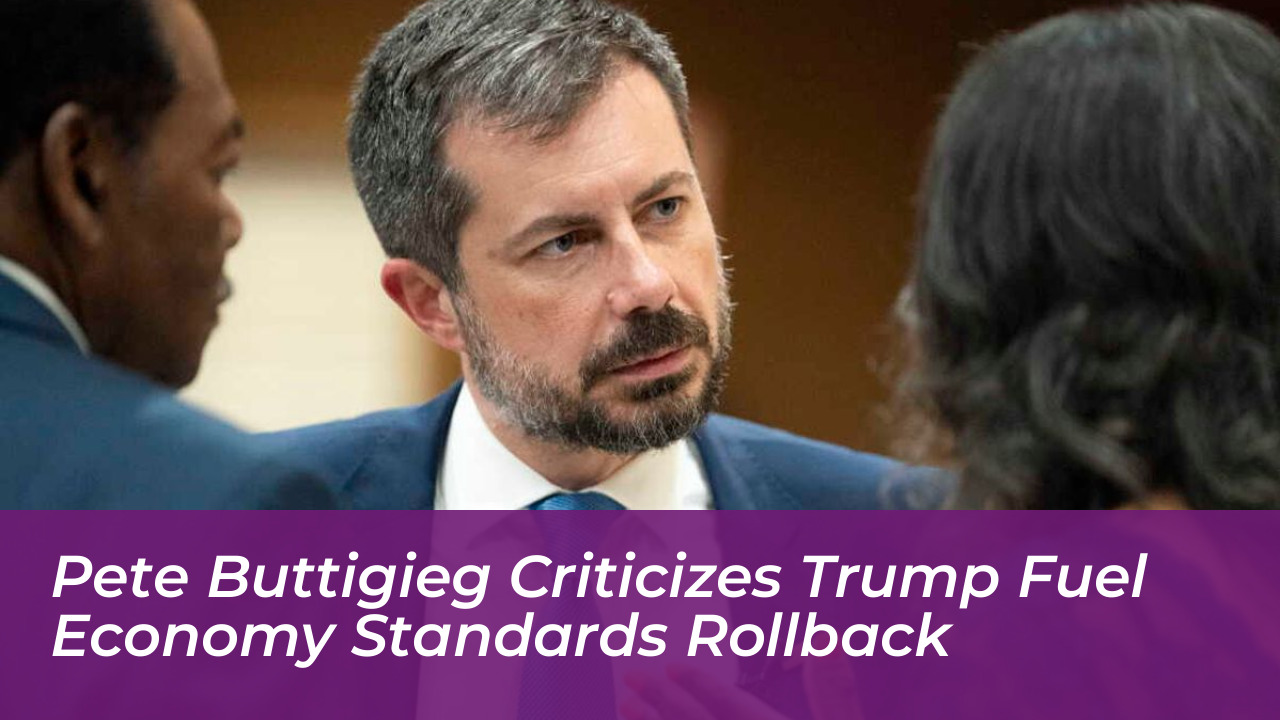
Former U.S. Transportation Secretary Pete Buttigieg strongly criticized the Trump administration’s decision to roll back federal fuel-economy standards. He warned that this policy shift could cost drivers more money over the lifetime of their vehicles. He also noted it could leave American automakers at a severe global competitive disadvantage, particularly against China.
Speaking in a public interview, Buttigieg challenged central claims made by the administration regarding vehicle affordability. The U.S. Department of Transportation estimated that weakening the rules could reduce the upfront price of a new vehicle by about $1,300. However, Buttigieg pointed out the hidden financial trade-offs.
Government estimates project that drivers could face roughly $1,600 in additional fuel costs over a vehicle’s lifetime under the relaxed standards. Buttigieg argued that this projection fails to fully account for potential spikes in gas prices. It also ignores tariffs impacting the broader automotive supply chain. Consequently, motorists could end up paying more in the long run.
Corporate Average Fuel Economy (CAFE) Standards
The policy at the center of the debate involves Corporate Average Fuel Economy (CAFE) standards. These regulations require automakers to meet specific, mandatory fuel-efficiency benchmarks. These benchmarks are calculated as an average across their entire vehicle fleets.
Domestic American automakers have largely welcomed the rollback. They argue that previous benchmarks were misaligned with consumer purchasing habits. Buttigieg pushed back on that narrative. He noted that the auto industry has historically resisted stricter environmental and fuel-efficiency rules before ultimately innovating and adapting to them.
Global Competitiveness and the Threat from China
Beyond immediate pocketbook impacts for drivers, Buttigieg raised serious concerns about the long-term future of American manufacturing innovation. International competitors, most notably China, are rapidly expanding their electric vehicle (EV) markets and vying for dominance in the global automotive sector. Buttigieg believes that lowering efficiency bars sends the wrong signal.
“Anything that means less innovation is going to help hand that advantage to China,” Buttigieg stated during the discussion.
The debate over CAFE standards highlights an ongoing partisan and economic tug-of-war in American transportation policy. It balances immediate consumer vehicle affordability against long-term climate goals, fuel expenditures, and international technological leadership.