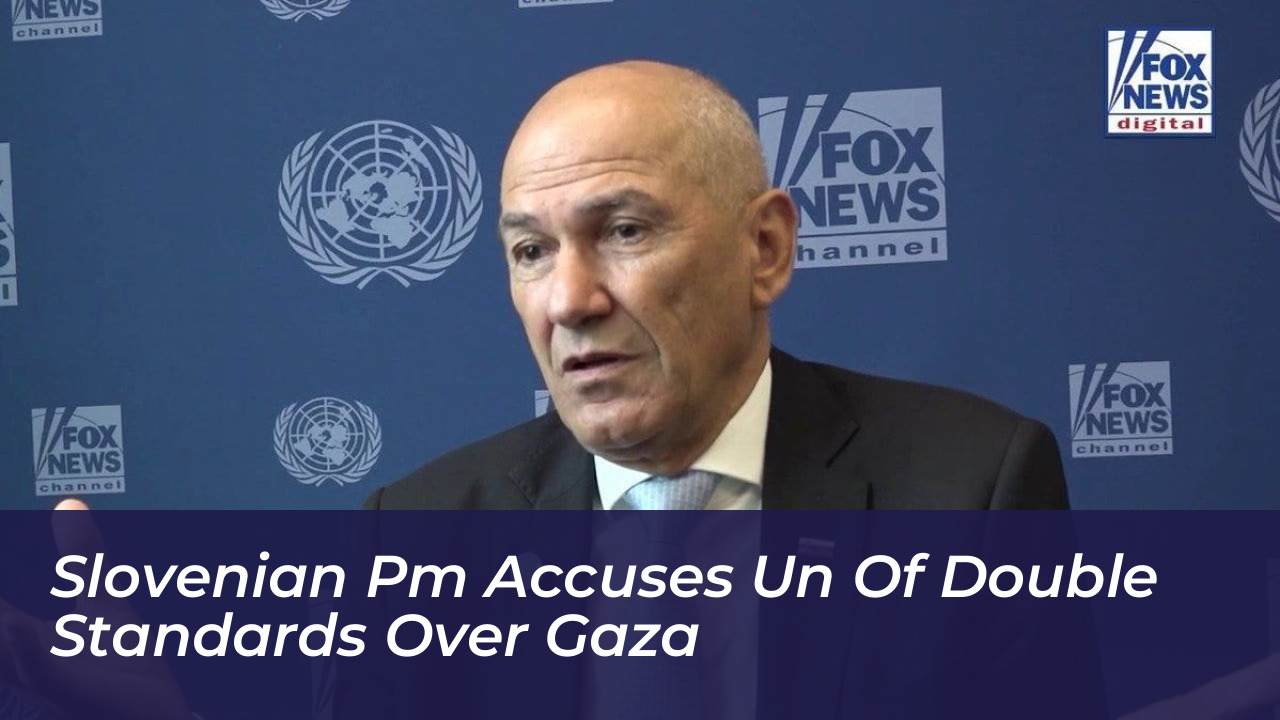
During the 81st session of the United Nations General Assembly in New York, Slovenian Prime Minister Janez Janša delivered sharp criticisms regarding global conflict management. Janša accused the international body of maintaining severe double standards, arguing that an overwhelming focus on the Gaza conflict has effectively sidelined other critical international security crises. These remarks highlight mounting tensions within European and global diplomacy regarding how resources, attention, and diplomatic tools are distributed among competing geopolitical emergencies.
- Janez Janša Claims UN Focus on Gaza Overshadows Ukraine War
- Disproportionate Diplomatic Energy
- The Original Mandate of the United Nations
- Overlooked Humanitarian and Security Crises Highlighted by Slovenia
- Escalating Persecution of Christians in Nigeria
- Summary Table of Global Crises Flagged by Janša
- Foreign Policy Shift: Realigning Ljubljana and Tel Aviv Relations
- Reversal of Previous Administration Policies
- Recent Bilateral Developments Between Slovenia and Israel
- Critique of European Approaches to Iran and Domestic Diversions
- Connecting Tehran, Moscow, and Regional Wars
- Contradictory Standards Among European Nations
- The Washington Connection and President Trump’s Promised Slovenia Visit
- Leveraging UNGA for Bilateral Channels with the United States
- The Official Invitation to President Donald Trump
- Analyzing the Strategic Implications of Janša’s UNGA Address
- Frequently Asked Questions
- What specific double standards did Slovenian Prime Minister Janez Janša accuse the UN of maintaining?
- How has Slovenia’s foreign policy changed regarding Israel?
- Did President Donald Trump agree to visit Slovenia?
The Slovenian Prime Minister argued that the opening speeches and primary diplomatic energy of the General Assembly were disproportionately consumed by the situation in Gaza. For Slovenia and neighboring European nations, Russia’s ongoing invasion of Ukraine represents an immediate, existential security threat right on the continent’s doorstep.
Janez Janša Claims UN Focus on Gaza Overshadows Ukraine War
Disproportionate Diplomatic Energy
- Opening speeches and primary diplomatic energy consumed by the situation in Gaza.
- Russia’s ongoing invasion of Ukraine as an immediate, existential security threat on Europe’s doorstep.
- Lack of credible indication that Moscow is prepared to negotiate an end to hostilities.
The Original Mandate of the United Nations
- The international body founded to prevent and manage large-scale interstate conflicts.
- How allowing a single regional flashpoint to dominate the institutional agenda undermines the mandate to maintain international peace and security.
Despite the proximity of the war and the lack of any credible indication that Moscow is prepared to negotiate an end to hostilities, European security concerns received comparatively muted attention during high-level sessions. The Slovenian leader emphasized that the United Nations was originally founded to prevent and manage large-scale interstate conflicts of this exact magnitude.
Allowing a single regional flashpoint to dominate the institutional agenda undermines the fundamental mandate to maintain international peace and security across multiple borders. Without a structural correction, member states risk treating chronic global security threats with selective apathy.
Overlooked Humanitarian and Security Crises Highlighted by Slovenia
Beyond the war in Ukraine, Janša pointed to several other severe humanitarian and security emergencies that he believes the international community routinely ignores. Among these concerns, he highlighted the escalating persecution of Christians in Nigeria, noting that systematic violence against religious minorities in West Africa warrants the same level of urgent diplomatic scrutiny and resource allocation as high-profile Middle Eastern crises.
International agencies often fail to allocate adequate funding or peacekeeping support to regions outside the primary media lens. By calling out these blind spots, Slovenia hopes to reshape the diplomatic priorities of Western allies.

Escalating Persecution of Christians in Nigeria
- Systematic violence against religious minorities in West Africa.
- Call for the same level of urgent diplomatic scrutiny and resource allocation as high-profile Middle East crises.
Summary Table of Global Crises Flagged by Janša
| Crisis Focus | Nature of Threat | Diplomatic Status |
|---|---|---|
| Russia’s War in Ukraine | Immediate security threat to European stability | No ongoing peace negotiations |
| Persecution in Nigeria | Widespread religious violence against Christians | Severely neglected by international bodies |
| Middle East Regional Dynamics | Over-concentration on Gaza | Obscures the broader nexus involving Iran |
Foreign Policy Shift: Realigning Ljubljana and Tel Aviv Relations
Janša’s critique at the United Nations coincides with a dramatic transformation in Slovenian foreign policy under his administration. Following his return to power, the current government has rapidly reversed several diplomatic initiatives implemented by the previous administration led by Prime Minister Robert Golob.
In June 2024, the Golob administration formally recognized Palestinian statehood, followed by the implementation of an arms embargo against Israel in July 2025. Those previous measures aimed to signal adherence to international law and protect civilian populations. However, Janša’s government has pursued a swift diplomatic pivot back toward traditional ties with Israel.
Reversal of Previous Administration Policies
- Golob administration formally recognizing Palestinian statehood in June 2024.
- Implementation of an arms embargo against Israel in July 2025.
- Janša administration pursuing a swift diplomatic pivot back toward traditional ties with Israel.
Recent Bilateral Developments Between Slovenia and Israel
- Resident Embassy Opening: Israel establishing its first resident embassy in Slovenia.
- High-Level Visits: Israeli Foreign Minister Gideon Sa’ar traveling to Ljubljana to formalize expanded political and economic cooperation agreements.
- Bilateral Accords: Comprehensive cooperation framework covering education, science, culture, youth programming, and sports through the year 2030.
Critique of European Approaches to Iran and Domestic Diversions
Janša extended his criticism to fellow European governments, asserting that many Western leaders fail to recognize the strategic operational connections linking Tehran, Moscow, and ongoing regional wars. Having publicly supported the Iranian opposition for decades, Janša maintained that sustainable peace in the Middle East remains impossible without fundamental political transformation inside Iran.
Additionally, the Slovenian prime minister accused specific European nations, explicitly naming Ireland and Spain alongside Slovenia’s former administration, of applying contradictory standards. He argued these governments support Ukraine’s defense while adopting accommodating stances toward Iran that ignore Tehran’s military supply relationship with Russia.
Connecting Tehran, Moscow, and Regional Wars
- Western leaders failing to recognize strategic operational connections.
- Janša’s history of publicly supporting the Iranian opposition for decades.
- The argument that sustainable peace remains impossible without fundamental political transformation inside Iran.
Contradictory Standards Among European Nations
- Explicit critique of Ireland, Spain, and Slovenia’s former administration.
- Supporting Ukraine’s defense while adopting accommodating stances toward Iran that ignore Tehran’s military supply relationship with Russia.
- Accusations that certain leaders deliberately spotlight the Palestinian issue as a political tactic to distract domestic electorates from economic struggles.
Janša also suggested that certain European leaders deliberately spotlight the Palestinian issue as a political tactic to distract domestic electorates from pressing economic and internal political struggles ahead of upcoming elections.
The Washington Connection and President Trump’s Promised Slovenia Visit
On the sidelines of the UN General Assembly, Janša leveraged the diplomatic trip to strengthen bilateral channels with the United States. This diplomatic engagement carries a distinct personal dimension due to Slovenia’s most prominent connection to Washington, which is First Lady Melania Trump.
Born in Novo Mesto and raised in Sevnica, Slovenia, before emigrating to the United States, Melania Trump serves as a significant source of national pride for many Slovenians. Janša praised her ongoing initiatives focused on child welfare during discussions in New York.
Leveraging UNGA for Bilateral Channels with the United States
- The personal dimension of Slovenia’s connection to Washington through First Lady Melania Trump.
- Janša praising Melania Trump’s child welfare initiatives during New York discussions.
The Official Invitation to President Donald Trump
- Janša meeting briefly with President Donald Trump on the sidelines of the General Assembly.
- Extending an official invitation for President Trump to visit Slovenia.
- President Trump responding positively and promising to make the trip.
He also confirmed that his delegation met briefly with President Donald Trump, during which Janša officially invited the U.S. president to visit Slovenia. According to the prime minister, President Trump responded positively to the invitation, promising to make the trip.
Analyzing the Strategic Implications of Janša’s UNGA Address
Janša’s outspoken address at the United Nations reflects a broader ideological realignment in Central European politics. By directly challenging the consensus on Gaza and reframing the debate around European security, Slovenia is positioning itself as an assertive voice within Western alliances.
Whether this critique will force procedural reforms within the United Nations General Assembly remains uncertain, but it successfully refocuses diplomatic attention on the interconnected nature of global conflicts. Smaller nations often rely on sharp rhetorical interventions to alter the broader security discourse.
Frequently Asked Questions
What specific double standards did Slovenian Prime Minister Janez Janša accuse the UN of maintaining?
Janša argued that the United Nations devotes a disproportionate amount of diplomatic energy, funding, and media attention to the crisis in Gaza while neglecting other pressing international security threats, most notably Russia’s ongoing invasion of Ukraine and the persecution of Christians in Nigeria.
How has Slovenia’s foreign policy changed regarding Israel?
Slovenia’s foreign policy has shifted significantly following the return of Janez Janša’s administration. The previous government under Robert Golob recognized Palestinian statehood in 2024 and imposed an arms embargo on Israel in 2025. Janša’s government has actively restored ties, welcoming Israel’s first resident embassy in Slovenia and signing multi-year bilateral cooperation agreements.
Did President Donald Trump agree to visit Slovenia?
Yes. During interactions on the sidelines of the United Nations General Assembly, Prime Minister Janez Janša extended an official invitation to President Donald Trump to visit Slovenia, and the U.S. president responded positively with a promise to make the trip.