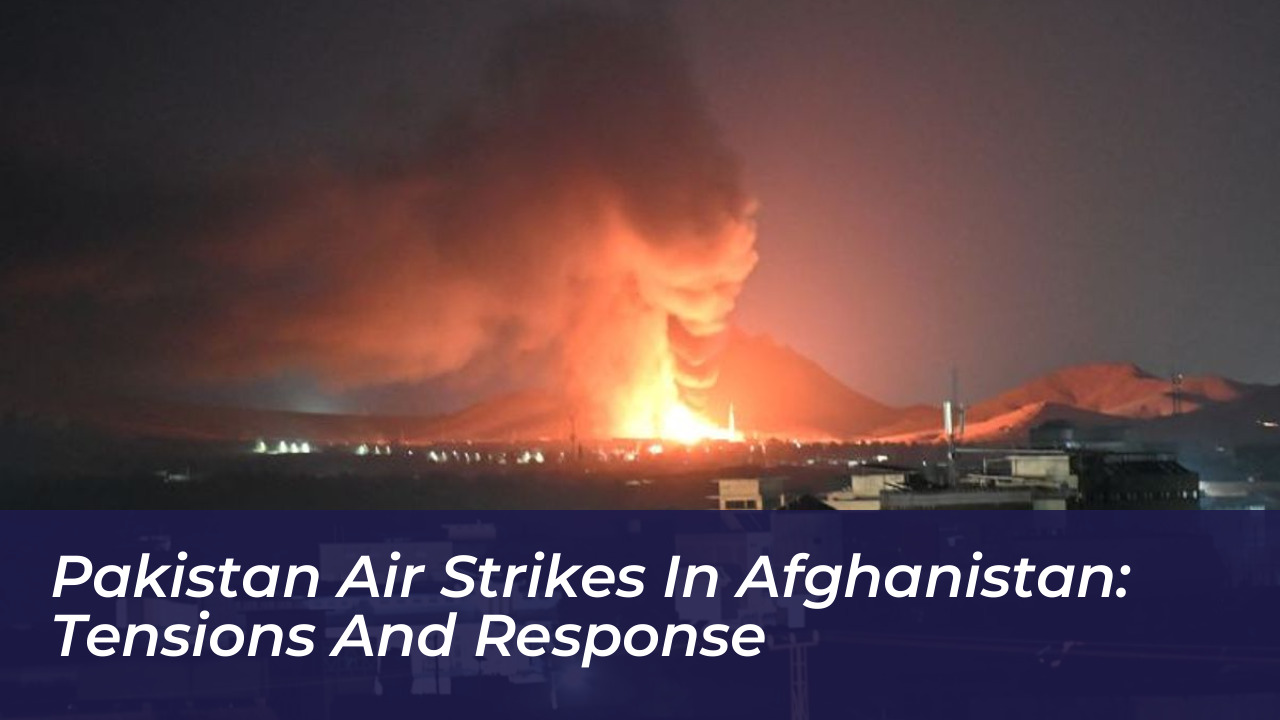
Regional stability along the frontier has suffered a severe breakdown after Pakistani military forces launched coordinated air strikes across ten distinct locations in southern and eastern Afghanistan. These midnight raids resulted in at least four civilian deaths, drawing sharp condemnation from Kabul and ending a brief three-month period of relative calm. The sudden escalation signals a dangerous turn in bilateral relations, raising urgent questions about border security, militant sanctuaries, and the future of diplomatic channels across South Asia.
- Overview of the Border Escalation
- Pakistani Military Rationale and Official Statements
- Strategic Objectives and Target Selection
- The Trigger Event: Cross-Border Militancy
- Taliban Government Response and Ground Reports
- Sovereignty Violations and Denial of Allegations
- On-the-Ground Impact Across Targeted Provinces
- The Root Conflict: Militancy and the Durand Line
- Implications for Regional Mediation and Peace Efforts
- Frequently Asked Questions
- Why did Pakistan launch air strikes inside Afghanistan?
- How did the Afghan Taliban respond to the attacks?
- What role do international mediators play in this conflict?
- Are the Afghan Taliban and the Pakistani Taliban the same organization?
The scope of the military operation spanned multiple provinces, including Kandahar, Paktia, and Khost. Afghan authorities reported that residential areas and military installations alike felt the impact of the aerial bombardments. This kinetic action abruptly shatters the fragile quiet that had settled over the border region following previous clashes earlier in the year, leaving local populations bracing for further conflict.
Overview of the Border Escalation
The latest flare-up highlights the deep structural fault lines dividing Islamabad and Kabul. Military planners in Pakistan authorized the operations under the banner of the Ghazab lil Haq counterterrorism campaign. Pakistani officials frame these actions as a necessary defense against mounting security threats originating from across the border.
- Scope of the military operation spanning ten locations across southern and eastern Afghanistan.
- Reported civilian casualties and immediate diplomatic fallout.
- End of the brief three-month period of relative calm along the frontier.
The Afghan Taliban administration immediately rejected the legitimacy of the air raids. Officials in Kabul condemned the incursions as a direct assault on national sovereignty and territorial integrity. Vowing to deliver an appropriate military and political response, the Afghan government signaled that further violations of its airspace will not go unanswered.
Pakistani Military Rationale and Official Statements
Pakistani Information Minister Attaullah Tarar defended the midnight air raids during an official press briefing. He characterized the operation as a deliberate, precise, and proportionate response to ongoing security provocations. According to Islamabad, the targeted facilities were active nodes in a broader campaign of cross-border hostility.
Strategic Objectives and Target Selection
Military briefings from Islamabad emphasize that the operation focused strictly on dismantling offensive capabilities rather than targeting civilian populations. Security forces aimed to neutralize infrastructure that poses a direct threat to Pakistani citizens and military personnel.
- Targeting storage and launching sites for unmanned aerial vehicles in Kandahar, Paktia, and Khost provinces.
- Interception of multiple incoming drones near the Torkham border crossing and Kohat.
- Official government defense presented by Information Minister Attaullah Tarar regarding calibrated and proportionate responses.
Intelligence reports from Pakistani security agencies indicated a surge in unmanned aerial vehicle activity originating from Afghan soil. Air defense units successfully intercepted several drones near strategic checkpoints, confirming the reality of the aerial threat in the eyes of military commanders.
The Trigger Event: Cross-Border Militancy
The immediate catalyst for the air strikes was a devastating assault on a police facility in Kohat. That attack claimed twenty-three lives, sparking outrage across Pakistan and intensifying political pressure on the government to take decisive action against perceived militant safe havens.
- The deadly assault on a police facility in Kohat claiming twenty-three lives.
- Islamabad allegations concerning Tehreek-e-Taliban Pakistan sanctuary and logistical support inside Afghan territory.
Islamabad maintains that the Tehreek-e-Taliban Pakistan operates freely within Afghan borders, utilizing local logistical support to launch domestic insurgency campaigns. Pakistani leaders argue that repeated diplomatic appeals to curb these militant factions yielded insufficient results, forcing the military to take direct action.
Taliban Government Response and Ground Reports
Kabul rejected Islamabad narrative entirely, framing the air raids as an unprovoked act of aggression. Afghan leadership maintains that the Islamic Emirate of Afghanistan does not permit foreign entities to use its territory for attacks against neighboring countries.
Sovereignty Violations and Denial of Allegations
Chief spokesperson Zabihullah Mujahid issued formal statements denouncing the strikes as fabrications designed to mask domestic policy failures. The Afghan administration insists that rising violence inside Pakistan stems from internal security shortcomings rather than external proxy warfare.
- Rejection of cross-border aggression claims by chief spokesperson Zabihullah Mujahid.
- Denial of state-sponsored proxy warfare or drone operations launched against Pakistani forces.
- Vows from the Islamic Emirate of Afghanistan to deliver an appropriate military and political response.
Despite diplomatic denials, the reality on the ground in targeted provinces points to severe physical destruction. Local populations continue to assess the damage while awaiting directives from central authorities regarding defensive measures.
On-the-Ground Impact Across Targeted Provinces
Residents in Kandahar city reported hearing the distinct roar of jet engines followed by massive urban explosions and subsequent fires. Similar accounts emerged from Paktia province, where bombs fell near installations belonging to the Afghan army 203rd Mansouri Corps.
| Province Targeted | Reported Casualties | Nature of Strike |
|---|---|---|
| Kandahar | Civilians and infrastructure hit | Urban center explosion and fire |
| Paktia | Military and civilian zones affected | Bombing near 203rd Mansouri Corps base |
| Khost | No immediate casualties reported | Targeted infrastructure strikes |
| Kunar | 3 civilians killed, 4 wounded | Northeastern anti-militant raids |
The Root Conflict: Militancy and the Durand Line
The ongoing violence is rooted in deep historical disputes over the Durand Line and divergent definitions of counterterrorism responsibility. While the Afghan Taliban and the Tehreek-e-Taliban Pakistan share ideological sympathies, Kabul maintains they operate as distinct entities.
Afghan representatives argue that Pakistan must focus on administrative and security reforms within its own borders. Projecting blame across the frontier fails to address the socio-political drivers of domestic insurgency, according to analysts familiar with regional dynamics.
- Distinction between the Afghan Taliban administration and the Tehreek-e-Taliban Pakistan militant coalition.
- Kabul stance that rising militant violence remains an internal security crisis for Pakistan rather than an Afghan export.
- Debate over administrative reforms versus cross-border kinetic action.
Implications for Regional Mediation and Peace Efforts
The escalation creates a major barrier for international mediators who have worked tirelessly to stabilize the region. Countries including China, Turkey, Qatar, and Saudi Arabia have invested substantial diplomatic capital in fostering dialogue between Islamabad and Kabul.
With border talks effectively frozen and military readiness on high alert, the risk of wider armed confrontation grows daily. Such instability threatens crucial regional trade corridors and humanitarian assistance efforts, casting severe uncertainty over the economic future of South and Central Asia.
- Setbacks for international mediators including China, Turkey, Qatar, and Saudi Arabia.
- Risks to regional trade corridors and humanitarian stability.
- Outlook for potential armed confrontations following the breakdown of border talks.
Frequently Asked Questions
Why did Pakistan launch air strikes inside Afghanistan?
Pakistan stated that the air raids were precise military responses targeting ten locations used to store and launch drones involved in cross-border attacks, following recent security incidents including a deadly bombing at a Pakistani police facility.
How did the Afghan Taliban respond to the attacks?
The Afghan Taliban government condemned the strikes as a severe violation of sovereignty, confirmed that at least four people were killed, denied any involvement in drone attacks against Pakistan, and vowed an appropriate response.
What role do international mediators play in this conflict?
Countries such as China, Turkey, Qatar, and Saudi Arabia have attempted to mediate peace and security arrangements between Islamabad and Kabul, though rising military escalations continuously threaten these diplomatic efforts.
Are the Afghan Taliban and the Pakistani Taliban the same organization?
No, the Afghan Taliban government is a distinct political and military authority governing Afghanistan, whereas the Tehreek-e-Taliban Pakistan is a separate militant coalition focused on insurgency inside Pakistan, despite sharing ideological sympathies.