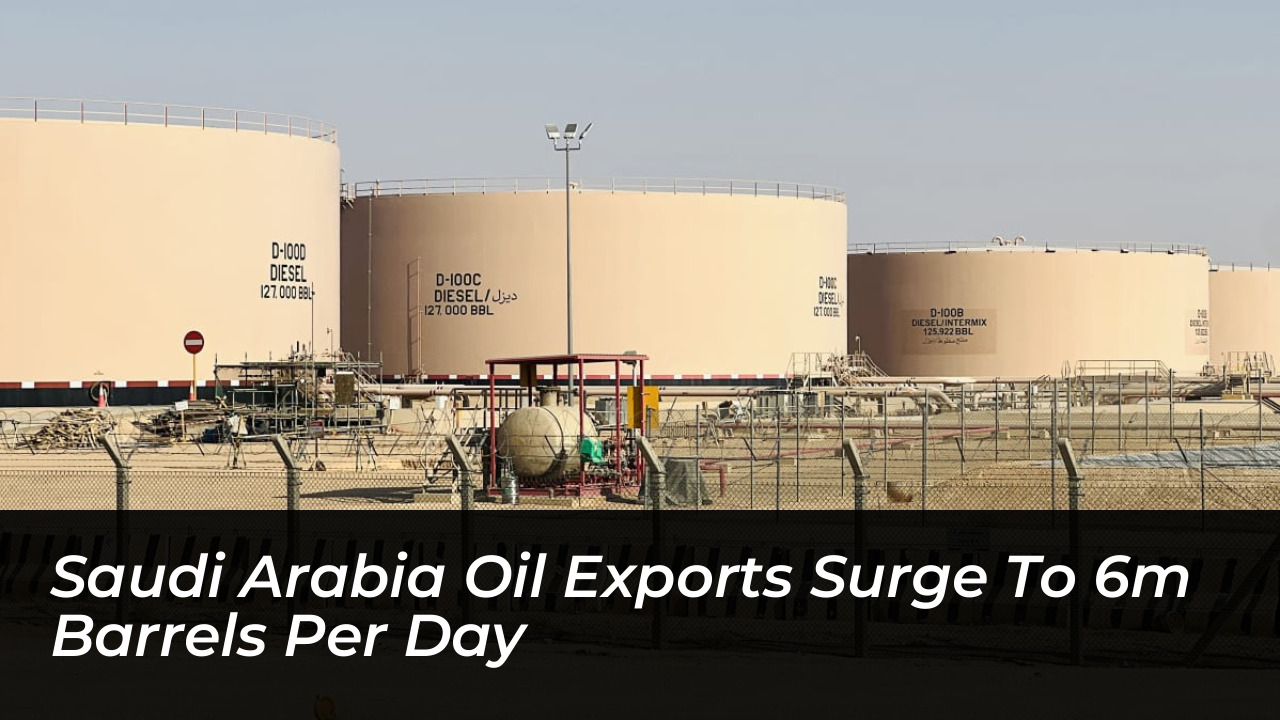
Saudi Arabia’s crude oil exports reached 6 million barrels per day in September. This marked the highest monthly volume since fighting with Iran-backed militants began seven months ago, according to trade intelligence firm Kpler. The export figures represent an almost 80% increase compared to the 3.4 million barrels per day recorded in August. This brought shipments back in line with the kingdom’s monthly average for 2025 despite significant operational disruptions.
The surge occurred even after Riyadh closed its critical East-West oil pipeline as a precaution. The infrastructure sustained damage from a drone strike launched from Iraq. This temporarily shut down an essential transit route that had served as an alternate path to the Red Sea terminal of Yanbu, bypassing the contested Strait of Hormuz.
Rerouting Supply Through the Strait of Hormuz
Throughout the conflict, the multi-phase East-West pipeline system acted as a crucial relief valve for global oil markets. It allowed Saudi Arabia to move crude from eastern production fields directly to the Red Sea and avoid maritime choke points. When the pipeline went offline, Brent crude oil briefly jumped to nearly $110 per barrel. Prices pulled back as investors realized the outage would not choke global supplies as severely as initially feared.
To compensate for the lost pipeline capacity, Saudi Arabia redirected crude shipments back through the Strait of Hormuz. The U.S. military facilitated this maneuver by carving out a secured shipping lane along Oman’s coast. While other Gulf states have relied on this corridor for months, navigating the strait remains a high-risk venture as Iran continues to target commercial tankers transiting those waters.
"The ramp-up from the Mideast Gulf is a consequence of the pipeline outage, but it likely also signals a greater confidence in using the Strait of Hormuz given rising traffic," said Matt Smith, director of commodity research at Kpler.
Operational Flexibility and Pipeline Recovery
Kpler data indicates that average oil exports through the Strait of Hormuz reached a seven-day average of 13.2 million barrels per day. This compares with approximately 17 million barrels per day before the Iran war disrupted regional shipping lanes. Industry sources reported that the damaged East-West pipeline managed to restart at low volumes and has begun ramping up throughput, though Saudi authorities have not issued immediate public confirmations.
Addressing the kingdom’s logistical resilience, Saudi Aramco CEO Amin Nasser stated that temporary interruptions to oil infrastructure typically last for days rather than weeks or months. Speaking on the company’s operational capabilities, Nasser emphasized that Aramco maintains the flexibility to meet customer commitments, explore alternative export routes, and expand overseas storage capacity to safeguard uninterrupted supplies against ongoing geopolitical turbulence.
Energy Market Implications
The swift recovery in Saudi oil exports highlights the resilience of the kingdom’s energy infrastructure and supply chain management. Energy analysts and market observers continue to monitor three key variables determining near-term petroleum costs: total Saudi export volumes, sustained traffic flow through the Strait of Hormuz, and official updates regarding the full capacity restoration of the East-West pipeline.