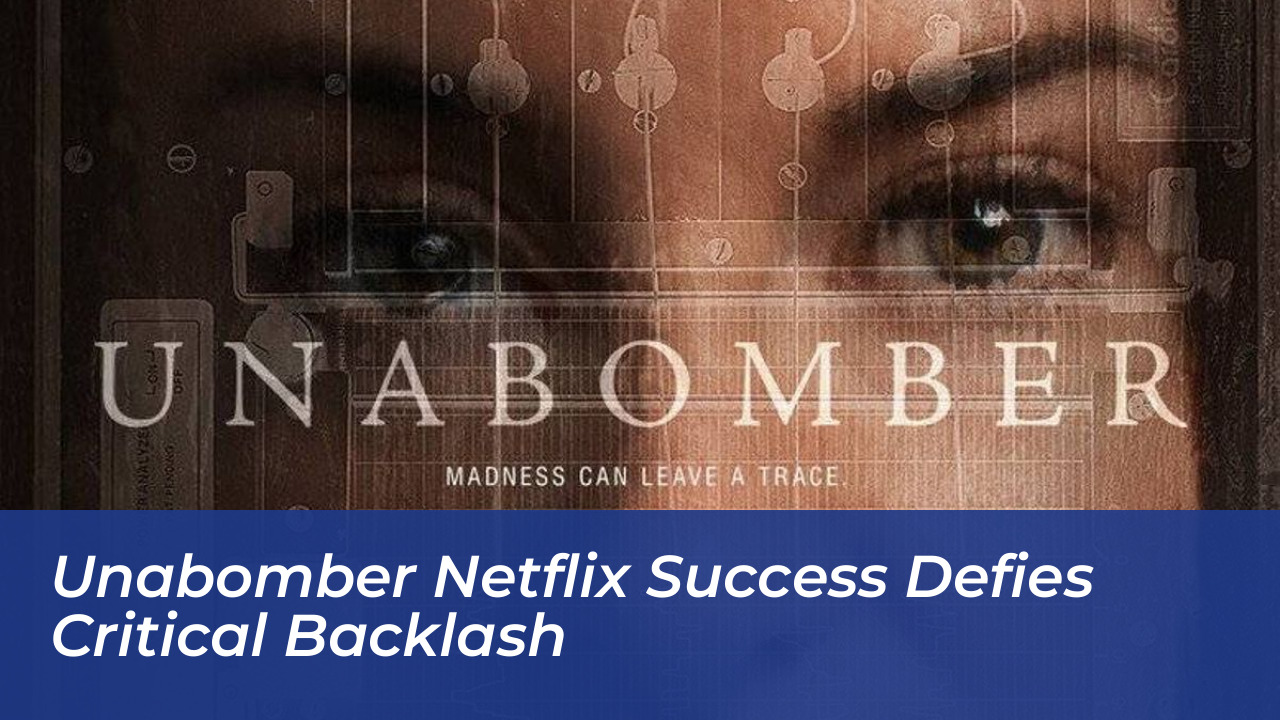
Netflix holds a unique position in modern entertainment where commercial triumph routinely defies critical consensus. The psychological thriller feature Unabomber immediately seized the number one spot on global viewership charts following its release, bypassing competing titles on streaming analytics platforms. This swift ascent proves that audiences remain endlessly fascinated by true-crime narratives and dark biographical projects. Yet, this massive streaming momentum stands in stark contrast to widespread critical condemnation from major industry reviewers.
- Streaming Dominance Versus Critical Repudiation
- Dual Timelines And Narrative Structure
- The Harvard Experiments And Russell Crowe Performance
- Comparative Analysis Of Critical Reception
- Netflix True-Crime Strategy And Market Competition
- Beyond the Scores: What Traditional Reviews Missed
- Frequently Asked Questions
- Who stars in the Netflix film Unabomber?
- What is the critical consensus on Unabomber?
- Does the film accurately portray Ted Kaczynski’s life?
- Why is the film ranking high on Netflix despite bad reviews?
Streaming Dominance Versus Critical Repudiation
The platform continues to dominate the home entertainment sector by leveraging sensational subject matter that captures immediate attention. When the movie dropped on the service, it instantly claimed the top slot globally on FlixPatrol metrics, outpacing high-budget action features and international comedies. This performance highlights the enduring commercial pull of serialized crime dramas, even when the underlying storytelling draws heavy fire from professional critics.
Review aggregators paint a very different picture of the project’s artistic merit. Rotten Tomatoes lists the film at a dismal approval rating, marking a career low for director Janus Metz Pedersen. Major trade publications cite tonal inconsistencies, cliché-ridden dialogue, and superficial psychological analysis as primary flaws. Despite these harsh assessments, viewers continue to press play, turning the dramatized true-crime project into an instant viral hit for the platform.

Dual Timelines And Narrative Structure
The film splits its narrative across two distinct eras to examine the life and capture of Ted Kaczynski. One timeline focuses on the late 1990s manhunt and eventual arrest of the domestic terrorist in a remote Montana cabin. Shailene Woodley stars as fictional FBI agent Joanne Miller, who analyzes the infamous manifesto to find linguistic clues and psychological markers.
Critics note that this investigative procedural follows a tired formula, complete with standard genre tropes and predictable dialogue. The modern-era manhunt storyline struggles to generate genuine suspense because the historical outcome is already common knowledge. Reviewers point out that these procedural beats feel like recycled television movie material that adds little fresh insight to a well-documented historical event.
The alternate timeline reaches back to the 1950s, depicting Kaczynski as a sixteen-year-old math prodigy entering Harvard University. Jacob Tremblay portrays the young student during his formative enrollment years. The script connects this academic period to his later radicalization through his participation in aggressive psychological experiments. Reviewers generally consider this college-era framing more engaging than the procedural elements, even if the execution remains heavy-handed.
The Harvard Experiments And Russell Crowe Performance
At the center of the 1950s storyline is Professor Henry Murray, played by veteran actor Russell Crowe. Murray conducts controversial psychological studies funded by shadowy intelligence interests, utilizing undergraduate subjects to test extreme stress limits. The film posits that these unethical experiments acted as the primary catalyst for Kaczynski’s anti-technology worldview and subsequent descent into extremism.
Crowe brings an avuncular yet sinister energy to the role, masking manipulative intentions behind elite academic charm. However, historians and biographers point out a significant factual discrepancy in this dramatic premise. Kaczynski stated in his personal journals that Murray’s experiments had minimal impact on his long-term worldview or his criminal actions.
By building an entire origin story around an unverified psychological trigger, the screenwriters trade historical accuracy for dramatic convenience. Critics argue this simplification diminishes the actual complexity of the subject. Instead of exploring the nuanced roots of radicalization, the film relies on a tidy cause-and-effect mechanism that feels artificial.
Comparative Analysis Of Critical Reception
Industry reviewers offer varied perspectives on why the film struggles to satisfy discerning audiences. Publications like Variety and The Hollywood Reporter highlight the disjointed nature of the dual-timeline structure, describing the project as two separate films welded together awkwardly. While individual performances receive modest praise, the overall tone feels like a standard procedural elevated only by high-end production gloss.
| Review Outlet | Rating / Assessment | Primary Critique |
|---|---|---|
| Rotten Tomatoes | 23% Approval Rating | Lowest critical score of director Janus Metz Pedersen’s career. |
| Variety | Unfavorable | Dual timelines fail to inform each other; rote dialogue and autopilot true-crime styling. |
| The Hollywood Reporter | Unfavorable | Facile and unenlightening character study with clichéd investigative tropes. |
| The Daily Beast | Positive | Praised as Netflix’s most thrilling movie in years. |
The stark divide between outlets like The Daily Beast, which praised the film’s brisk pacing and thriller mechanics, and major trade publications underscores a broader schism in modern entertainment. Mass audiences often prioritize visceral entertainment value over narrative rigor, explaining why commercial success persists despite negative critical consensus.
Netflix True-Crime Strategy And Market Competition
Netflix continues to capitalize on the public appetite for biographical crime dramas and serial killer profiles. The platform frequently maintains multiple true-crime titles in its daily top ten lists simultaneously. Unabomber joins other dark biographical properties, following a proven content playbook designed to capture immediate viewer attention through sensational subject matter.
This commercial dominance persists despite heavy competition within the streaming library. Titles ranging from international comedy features to action-heavy thrillers vie for audience attention daily. Yet, the magnetic pull of true crime ensures that even poorly reviewed projects achieve top-tier viewership rankings within hours of release.
Beyond the Scores: What Traditional Reviews Missed
Most mainstream reviews focus exclusively on Rotten Tomatoes scores and general acting performances. However, they consistently overlook critical angles that explain the wider cultural phenomenon surrounding this release. First, the timing of the release exploits viewer fatigue regarding sensationalized true crime while simultaneously feeding the demand for backgroundized evil. Netflix recognizes that audiences consume these films not for historical accuracy, but for psychological horror aesthetics.
Second, the casting of Jacob Tremblay represents a deliberate industrial pivot. Child stars transitioning into adult villain roles create an inherent meta-narrative shock value that drives social media engagement independently of critical reviews. Meme culture and communal viewing habits fuel online conversations, turning the movie into an event regardless of what professional critics write.

Analyzing the success of Unabomber requires examining audience psychology rather than cinematic merit alone. Viewers often treat streaming charts as a communal viewing event, choosing to watch poorly reviewed films simply to participate in online discourse. , the reliance on mid-century institutional paranoia reflects modern anxieties regarding institutional overreach and academic manipulation in the digital age.
Frequently Asked Questions
Who stars in the Netflix film Unabomber?
The film stars Jacob Tremblay as a young Ted Kaczynski during his Harvard years, alongside Russell Crowe as Professor Henry Murray and Shailene Woodley as an FBI investigator.
What is the critical consensus on Unabomber?
The film holds a low approval rating on Rotten Tomatoes, with critics citing disjointed timelines, clichéd dialogue, and an oversimplified exploration of radicalization.
Does the film accurately portray Ted Kaczynski’s life?
While based on historical events, critics and biographers note that the film dramatizes and exaggerates the impact of Harvard’s psychological experiments on Kaczynski’s later actions.
Why is the film ranking high on Netflix despite bad reviews?
Netflix’s strong true-crime audience base, combined with curiosity surrounding the cast and sensational subject matter, helped drive the movie to the top of global viewership charts.