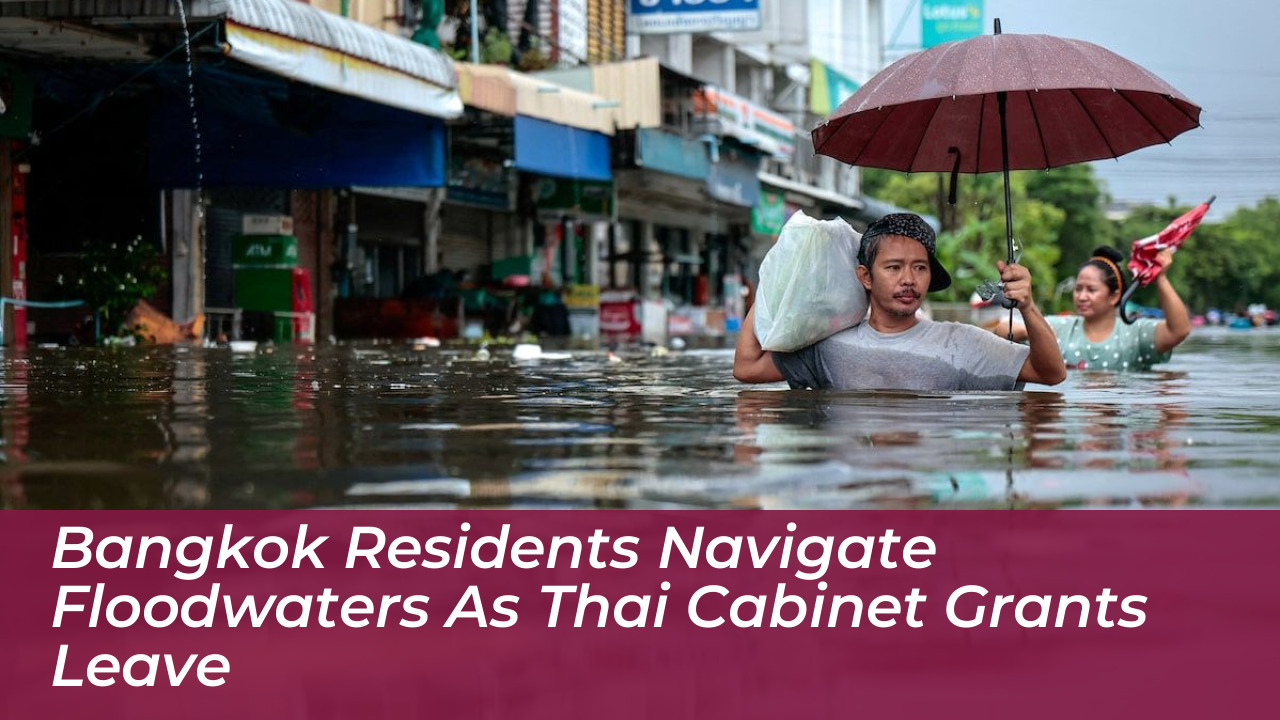
Bangkok residents used kayaks, inflatable boats, and makeshift floating containers to navigate submerged streets on September 28, 2026. This came two days after local authorities declared a city-wide flood disaster following heavy weekend rainfall across the Thai capital. The severe floodwaters followed nearly 300 mm (12 inches) of torrential rain accumulating over 48 hours. This left major roadways partially submerged and stranded thousands of residents in their homes before water levels slowly began to recede.
In response to the mounting infrastructure crisis and transit gridlock, Thailand’s cabinet approved special public service holidays on September 28 and 29. These applied to civil servants stationed in Bangkok and three surrounding provinces. The emergency measure was enacted to limit unnecessary travel and reduce traffic disruptions across the sprawling metropolitan area.
“The measure aims to reduce travel and ease traffic disruptions for the public,” government officials stated. They noted that essential official duties may continue if deemed appropriate by agency heads. Meanwhile, the Constitutional Court confirmed its scheduled Monday verdict reading regarding February election ballots would proceed unaffected by the government-mandated holiday.
The impact of the deluge was heavily felt across all 50 districts of the capital. In the heavily affected eastern district of Bang Kapi, roadside vendors stood waist-deep in murky floodwaters to sell meat, fresh produce, and household supplies. Shoppers traveled using wheelbarrows, canoes, and plastic storage tubs.
Impact on Infrastructure and Daily Life
According to the Bangkok Metropolitan Administration (BMA), nearly 4,900 people were evacuated to 233 temporary shelters. Approximately 52,000 households were directly affected by the rising waters. Meteorological reports recorded more than 330 mm of rainfall in specific sectors of the city between Thursday and Sunday, marking some of the heaviest seasonal downpours in recent years.
Residents living along major waterways expressed shock at the sudden and destructive rise of the water levels. Kosin Nilset, a 44-year-old office worker residing along the Premprachakorn canal on the outskirts of the capital, reported that his house remained under water for roughly 30 hours. “This time, the water level is higher than the 2011 flood,” Nilset remarked while sweeping out residual water from his ground floor.
Supermarkets and convenience stores experienced heavy customer traffic over the weekend as residents rushed to stock up on essentials. The prime minister’s office issued public advisories urging citizens to avoid panic-buying. It also sternly warned that price gouging during a declared disaster remains a criminal offense.
Government Response and Drainage Operations
Bangkok Governor Chadchart Sittipunt urged residents to avoid unnecessary travel as the city’s network of canals remained critically high. The Royal Thai Army was deployed to assist with disaster relief operations, establishing field kitchens and managing temporary shelters in designated public schools.
- Deployment of military field kitchens and personnel for local evacuations.
- Activation of 233 temporary shelters accommodating displaced residents.
- Intensive pumping operations by the BMA to clear water from overflowing canals.
- Closure of hundreds of city schools to ensure student and staff safety.
While the city’s main international airport remained fully operational, the tourism authority advised international travelers to allow an extra two to three hours for transit. This was to ensure they caught scheduled flights amidst the localized traffic disruptions. Weather agencies forecast that while additional thunderstorms could hit isolated areas, overall rainfall would begin to taper off, allowing drainage crews to accelerate recovery efforts across the capital.