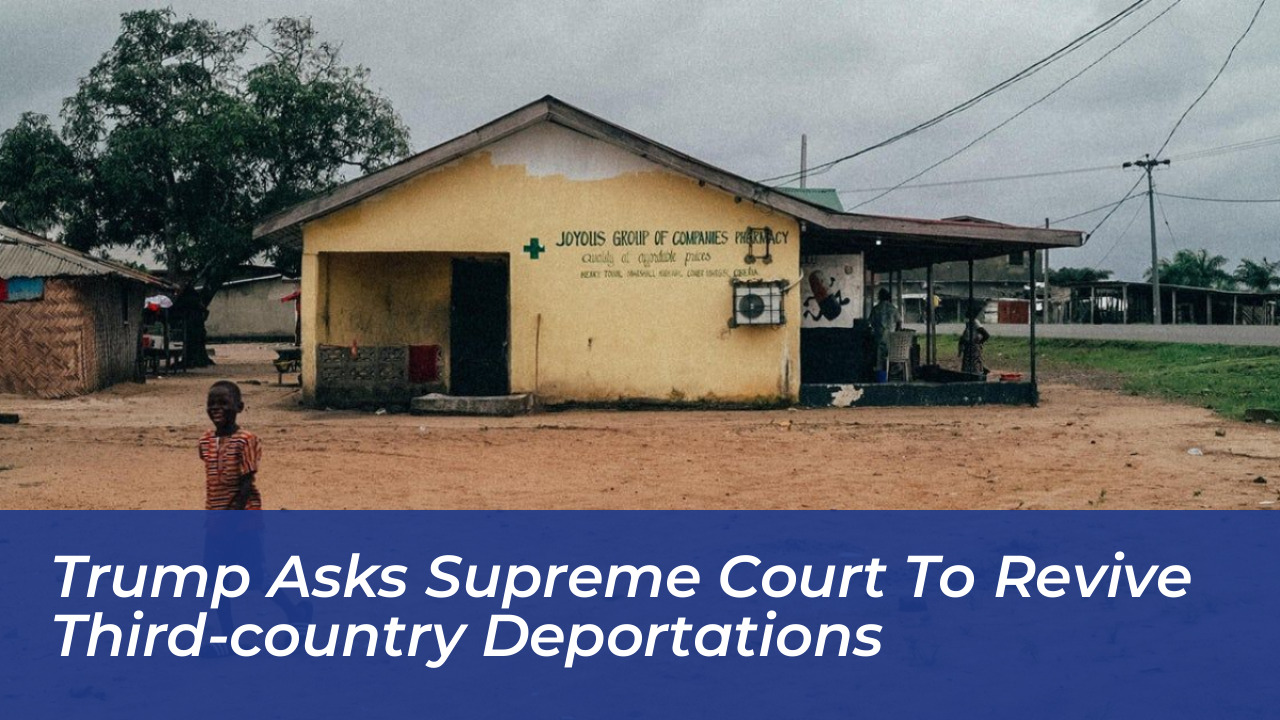
The Trump administration filed an emergency application with the United States Supreme Court to overturn a lower court injunction blocking a key deportation policy. At the center of this legal battle is a Department of Homeland Security framework that permits federal immigration officials to deport detainees to third-party nations without prior notice or an individual opportunity to challenge the removal. This high stakes legal confrontation highlights the tension between executive enforcement discretion and constitutional due process rights for noncitizens caught in the federal immigration system.
- The Supreme Court Emergency Appeal
- The Filing by Solicitor General D. John Sauer
- Third Time Before the High Court
- Legal Mechanics of Third-Country Removals
- Understanding Third-Party Transfers
- Due Process and Statutory Requirements
- Operational and Diplomatic Implications
- Impact on ICE Operations and Removal Flights
- Human Rights Concerns and Destination Realities
- Timeline of Judicial Actions
- Chronology of the Legal Battle
- Next Steps in the Supreme Court
- Balancing National Security and Constitutional Rights
- Frequently Asked Questions
- What are third-country deportations?
- Why did the administration file an emergency application?
- What rights do plaintiffs argue are being violated?
The Supreme Court Emergency Appeal
The Filing by Solicitor General D. John Sauer
U.S. Solicitor General D. John Sauer submitted a 42-page emergency application to the high court asking justices to lift a judicial block on federal removal operations. This legal move targets a February 2026 ruling by U.S. District Judge Brian Murphy in Boston, which found the unannounced transfer policy legally deficient. The U.S. Court of Appeals for the 1st Circuit subsequently upheld the injunction, leaving federal immigration authorities unable to execute certain deportation flights.
The administration argues that these lower court rulings impose severe logistical hurdles and undermine executive branch authority over national security. According to government filings, the judicial restrictions disrupt sensitive foreign policy negotiations and prevent the Department of Homeland Security from removing dangerous criminal aliens whose home countries refuse repatriation.
Third Time Before the High Court
This emergency application marks the third time the administration has asked the high court to intervene in this specific litigation. The procedural history of the case reflects deep divisions across the federal judiciary regarding the scope of executive authority over immigration enforcement. Justice Ketanji Brown Jackson, who handles emergency applications originating from the 1st Circuit, directed attorneys representing the immigrant class-action plaintiffs to file a prompt response.
The legal stakes surrounding this emergency review extend far beyond the immediate parties. A decision by the justices could permanently reshape how the federal government utilizes third-party transfers and test the limits of judicial oversight in fast-moving immigration matters.
Federal attorneys emphasize that administrative delays compromise foreign diplomacy and border enforcement integrity daily. Legal experts analyze these developments closely to gauge future constraints on federal executive actions.
Legal Mechanics of Third-Country Removals
Understanding Third-Party Transfers
Third-country removals occur when the United States deports a noncitizen to a nation other than their country of origin or the country specified in their initial removal order. Under the Department of Homeland Security framework established following executive directives, immigration enforcement relies on blanket diplomatic assurances from receiving countries. These agreements promise that deportees will not face torture or persecution upon arrival.
This expedited framework differs significantly from standard deportation protocols. Instead of returning individuals to their home countries where consular processes are established, the government partners with secondary nations to absorb overflow populations or individuals who cannot be repatriated home.
Due Process and Statutory Requirements
Federal district and appellate courts determined that the unannounced transfer framework violates statutory due process rights. The judicial mandates require immigration officials to provide deportees with written notice of the intended destination and a meaningful opportunity to contest the removal based on fears of persecution.
Lower court orders require the government to evaluate whether an immigrant fear of torture is reasonable, rather than applying a stricter probability standard, or grant a 15-day window to reopen immigration proceedings. The following table breaks down the core statutory requirements mandated by the judiciary:
| Requirement | Description |
|---|---|
| Destination Notice | Mandatory advance notification identifying the specific third-party nation. |
| Due Process Window | A formal chance for legal counsel and detainees to challenge the transfer. |
| Diplomatic Assurances | Governmental agreements substituted for individualized torture screenings. |
| Jurisdictional Review | Federal district court authority to review removal challenges outside formal petitions. |
Operational and Diplomatic Implications
Impact on ICE Operations and Removal Flights
The legal standoff directly impacts ongoing removal operations managed by U.S. Immigration and Customs Enforcement. Solicitor General Sauer noted that the appellate court mandate forced the cancellation of deportation flights carrying dozens of individuals, including those with serious criminal backgrounds.
Administration officials report that over 25,000 migrants have been sent to at least 29 different third-party nations since the inception of the broader policy enforcement. The inability to continue these flights creates massive detention backlogs and strains agency resources.
Border enforcement teams rely heavily on these secondary routes to manage capacity limitations in domestic processing facilities. Operational disruptions ripple across multiple states, compounding logistical challenges for federal detention networks.
Human Rights Concerns and Destination Realities
Critics and human rights organizations raise serious ethical concerns regarding the destination countries. Many deportees have been transferred to nations experiencing severe political instability, armed conflict, and economic collapse, including the Central African Republic, South Sudan, and Equatorial Guinea.
Migrants interviewed in West Africa described experiencing statelessness and disorientation after arriving in unfamiliar countries without prior notification or existing personal ties. Foreign policy sensitivities remain high as receiving governments negotiate terms with U.S. diplomats.
Timeline of Judicial Actions
Chronology of the Legal Battle
The procedural history of this litigation reflects a rapid escalation of judicial interventions. In January 2025, President Trump directed the Department of Homeland Security to utilize all legal mechanisms to remove noncitizens with final deportation orders.
By March 2026, District Judge Brian Murphy issued an injunction barring unannounced third-country removals without notice and due process protections. The high court subsequently voted in June 2026 to pause the district court injunction, allowing removals to resume temporarily until the September 2026 appellate court ruling against the policy prompted this new emergency appeal.
Each successive court filing highlights deeply entrenched philosophical divisions regarding judicial review of foreign policy decisions. Appellate panels continue to balance executive authority against established statutory protections.
Next Steps in the Supreme Court
Balancing National Security and Constitutional Rights
Immigrant advocacy legal teams are preparing their opposition briefs to counter the government emergency application. The legal community anticipates a swift decision from the justices given the operational urgency expressed by the Solicitor General.
The ultimate outcome of this case will define the limits of executive power in managing national borders and establishing foreign removal partnerships. Protecting administrative efficiency while upholding constitutional due process remains the core challenge for the high court in this ongoing dispute.
Future rulings from the Supreme Court will establish critical precedents for administrative law and executive enforcement powers. Legal scholars monitor these arguments to understand the evolving landscape of immigration jurisprudence.
Frequently Asked Questions
What are third-country deportations?
Third-country deportations involve sending a noncitizen to a nation other than their home country or the country specified in their initial removal order.
Why did the administration file an emergency application?
The administration wants the Supreme Court to lift a lower court injunction that currently blocks unannounced third-party removal flights.
What rights do plaintiffs argue are being violated?
Plaintiffs argue that unannounced removals violate statutory due process by denying deportees advance notice and a chance to challenge dangerous destinations.