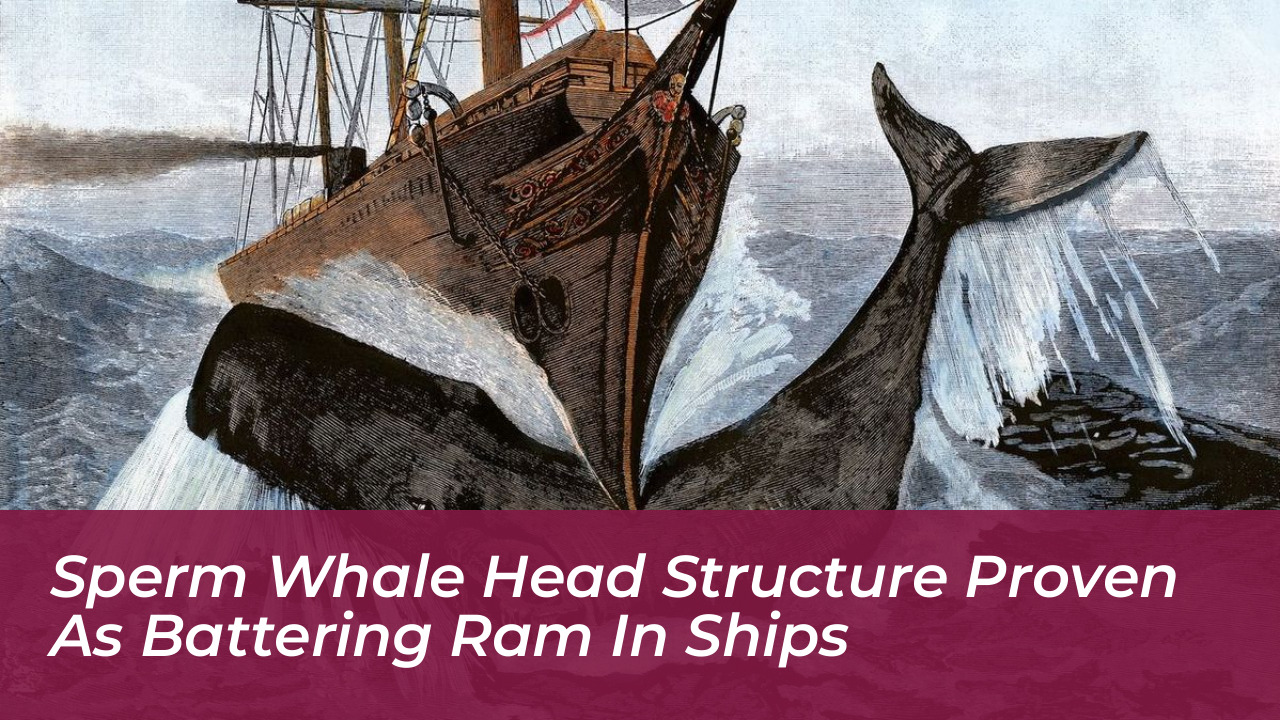
The sperm whale head structure represents one of the most astonishing evolutionary designs in the natural world. Recent biomechanical research finally proves that this colossal biological apparatus functions as a high-performance battering ram capable of devastating ship attacks. This revelation bridges the gap between centuries-old maritime folklore and rigorous modern science.
- Anatomy of the Deep: The Colossal Head of the Sperm Whale
- Validating the Essex Incident: Maritime Legend Meets Reality
- Biomechanics of the Spermaceti and Junk
- Comparative Anatomy of Sperm Whale Head Structures
- Evolutionary Drivers of Male Aggression
- Future Horizons in Marine Biomechanics
- Frequently Asked Questions
- Why do male sperm whales have larger heads than females?
- How does the sperm whale prevent skull fractures during a ramming strike?
- Are sperm whale attacks on ships common today?
Anatomy of the Deep: The Colossal Head of the Sperm Whale
The sperm whale possesses an unusual anatomy where the head accounts for up to one-third of its total body length. Inside this massive structure lies the spermaceti organ and the junk, two large oil-filled compartments that long baffled marine biologists. Historically, the whaling industry targeted these lipid-rich reservoirs for high-grade lamp oil and lubricants. Modern science, however, reveals a far more dynamic purpose for this biological machinery beyond simple buoyancy.
For generations, researchers debated the primary functions of this expansive cranial region. Consensus pointed primarily toward echolocation, acoustic communication, and buoyancy control. Yet these standard explanations failed to account for the extreme structural reinforcement found specifically within the foreheads of male sperm whales. The physical architecture of the head is heavily sexually dimorphic, with males carrying significantly larger foreheads than females, pointing directly to intra-species combat traits.
Biologists note that these massive facial features require immense metabolic energy to maintain and grow throughout a lifetime. Understanding this physiological investment highlights how critical these physical traits are for male dominance and reproductive success.
Validating the Essex Incident: Maritime Legend Meets Reality
In November 1820, a massive bull sperm whale rammed and sank the Nantucket whaling ship Essex in the central Pacific Ocean. First mate Owen Chase documented the disaster in detail, noting that the whale intentionally attacked the vessel twice. Chase wrote that the creature’s head was admirably designed for this violent mode of attack. Thirty years later, the destruction of the whaling ship Ann Alexander under remarkably similar circumstances further cemented these dramatic maritime legends in public history.
Despite these historical accounts, the scientific community met the battering ram hypothesis with extreme skepticism for decades. Researchers argued logically that high-speed marine impacts would shatter the fragile bones of the whale’s skull and severely damage sensitive acoustic organs essential for survival. Modern biomechanical investigations finally set out to test this long-standing anatomical paradox using advanced engineering principles.
Historical logs from other whaling vessels frequently mention unexpected nautical encounters involving aggressive cetaceans. These persistent accounts eventually prompted modern scientists to re-examine the physical capabilities of these marine mammals.
Biomechanics of the Spermaceti and Junk
To evaluate the mechanical feasibility of ramming, engineers and evolutionary biologists constructed sophisticated computer models. Simulating high-velocity impacts usually requires precise material properties found in structural engineering projects like bridges and skyscrapers. Lacking direct empirical data for living whale tissue, the team deployed probabilistic simulations to study impact variations, material stress, and force distribution across the skull.
The structural secret lies within the junk, a complex network of oil-filled compartments separated by robust connective tissue partitions. When a male sperm whale delivers a high-speed strike, these fibrous tissues act as a hydraulic shock absorber. The partitions compress uniformly, dissipating kinetic energy and protecting the delicate cranium from fatal fractures. Without this specialized internal buffering, the immense force generated during a strike would cause catastrophic cranial failure.
Engineers analyzing these fluid-filled structures hope to replicate their shock-absorbing efficiency in modern industrial applications. The natural architecture provides a blueprint for managing extreme kinetic forces without sustaining structural damage.
Comparative Anatomy of Sperm Whale Head Structures
| Anatomical Feature | Primary Function | Secondary Role |
|---|---|---|
| Spermaceti Organ | Buoyancy and Echolocation | Energy Storage |
| Junk Sacs | Shock Absorption | Impact Stress Dissipation |
| Connective Partitions | Structural Reinforcement | Force Distribution |
Evolutionary Drivers of Male Aggression
Aggressive head-butting remains rare among most cetaceans, but it is well-documented in their terrestrial relatives. Even-toed ungulates, known scientifically as artiodactyls, frequently engage in aggressive territorial ramming. Evolutionary biologists suggest that sperm whales inherited these baseline aggressive tendencies from ancient land-dwelling ancestors before returning to the oceans millions of years ago.
Male sperm whales compete fiercely for access to groups of females during reproductive cycles, turning physical mass into a dominant reproductive advantage. This evolutionary pressure explains why males developed oversized foreheads optimized for combat durability. Females possess the same anatomical structures due to genetic correlation, even though they do not engage in high-impact ramming combat, highlighting a classic trade-off where a structure optimized for aggression retains vital sensory roles.
Intraspecific combat shapes social hierarchies among bull whales, dictating breeding access in deep ocean pelagic environments. This intense competition acts as a primary catalyst for physical adaptations.
Future Horizons in Marine Biomechanics
Confirming the battering ram mechanics of the sperm whale opens exciting new doors for comparative anatomy and marine biology. Researchers now plan to investigate other marine species that exhibit aggressive head-butting behavior. Bottle-nosed whales, narwhals, and killer whales display similar aggressive traits that remain mathematically unmodelled in current scientific literature.
Decoding the physics behind these natural shock absorbers may even inspire new protective engineering designs in human manufacturing, automotive safety, and high-impact sports gear. The validation of historical logbooks bridges the gap between old maritime folklore and rigorous modern science. Whalers like Owen Chase observed living animal behaviors accurately long before laboratories had the tools to measure them, proving that historical field observations continue to yield profound insights.
Future field studies will likely combine telemetry tracking with high-resolution acoustic monitoring to observe these dramatic ramming events in the wild. Recording live impacts will refine existing computational models and expand our understanding of cetecan behavior.
Frequently Asked Questions
Why do male sperm whales have larger heads than females?
Males possess significantly larger foreheads to endure the intense mechanical stress of high-speed physical combat during mating season.
How does the sperm whale prevent skull fractures during a ramming strike?
The junk acts as a hydraulic shock-absorbing system that compresses uniformly and dissipates kinetic impact energy across fibrous connective tissues.
Are sperm whale attacks on ships common today?
Modern commercial vessels travel much faster and emit different acoustic profiles, making targeted ramming incidents extremely rare in contemporary oceans.