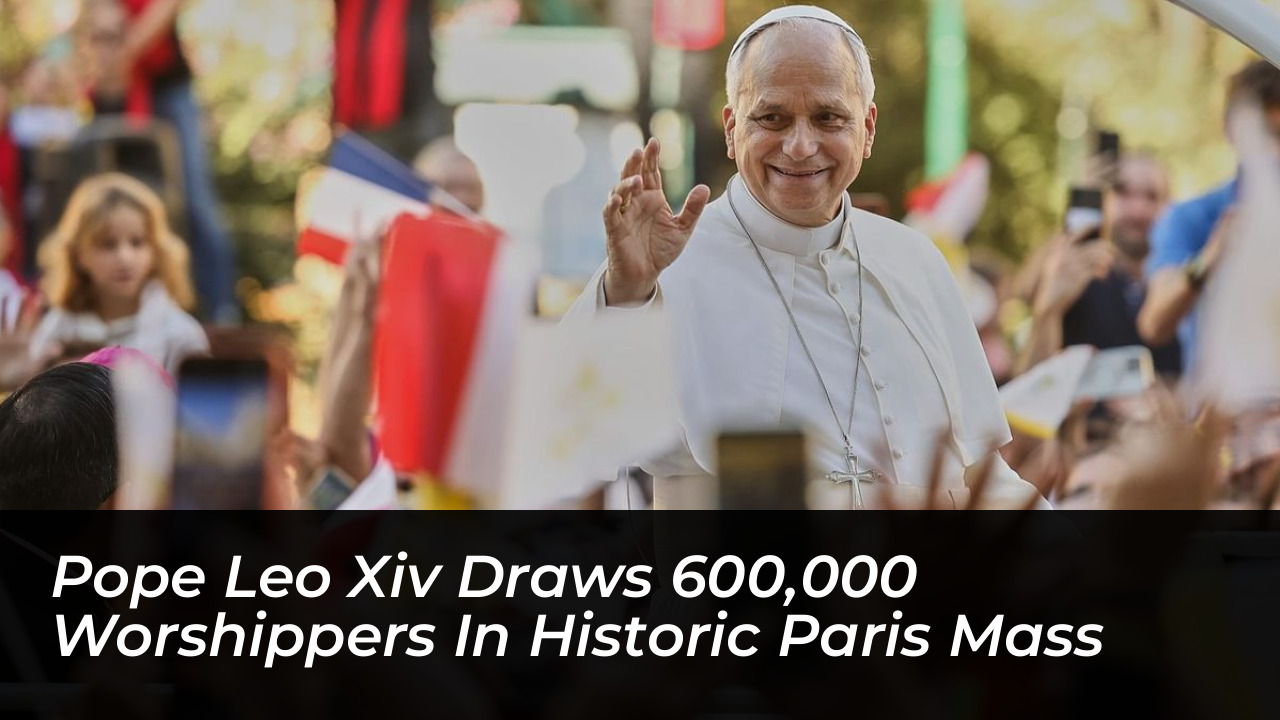
Pope Leo XIV recently drew an estimated 600,000 to 700,000 worshippers to the Place de la Concorde for an open-air Mass during his four-day apostolic journey to France. This historic gathering marks a major moment for the Catholic Church, blending massive public turnout with the distinct cultural backdrop of a famously secular nation.
- Introduction to the Historic Papal Visit in Paris
- The Scale and Logistics of the Place de la Concorde Mass
- The Popemobile Procession Along the Champs-Élysées
- The Historical Significance of the Venue
- Surrounding Trends: Secularism Versus Surging Adult Conversions
- Comprehensive Itinerary of the Four-Day Papal Journey
- Addressing Social Justice, Migration, and Modern Technology
- Encounter at Maison Bakhita
- Warnings Against Unchecked Artificial Intelligence
- Political Engagement and Public Reception
- Upcoming Legs in Lourdes and Metz
- Conclusion
- Frequently Asked Questions
- What was the main purpose of Pope Leo XIV visiting France?
- How many people attended the open-air Mass in Paris?
- Which cities were included in the papal itinerary?
Introduction to the Historic Papal Visit in Paris
Pope Leo XIV drew an estimated 600,000 to 700,000 worshippers to the Place de la Concorde in Paris for a massive open-air Mass. This landmark event occurred on the second day of the pontiff’s four-day apostolic journey to France. The massive turnout surpassed initial registration numbers of 600,000, prompting French church officials to establish overflow areas along the Avenue de la Grande Armée and the Place de l’Étoile. The historic gathering highlights a surprising cultural dynamic in a nation governed by strict secular laws.
The 71-year-old pontiff arrived in France for his first state visit to the country. His packed itinerary includes stops in Paris, the Marian shrine at Lourdes, and the northeastern city of Metz. While France maintains a deeply entrenched secular identity, the enthusiastic reception across multiple events signals an unexpected surge in spiritual engagement among younger demographics and adult converts.
The Scale and Logistics of the Place de la Concorde Mass
Examining the unprecedented security and operational coordination required to host hundreds of thousands of people in central Paris. Securing central Paris for an event of this magnitude required unprecedented coordination between Vatican organizers and French law enforcement.
Law enforcement deployment, helicopter patrols, and sniper security on surrounding rooftops ensured safety for the massive crowds. Despite these heavy security measures, the atmosphere remained celebratory, drawing attendees from diverse backgrounds and age groups who gathered to witness the service.
The Popemobile Procession Along the Champs-Élysées
Detailing the journey of Pope Leo XIV along the iconic avenue before reaching the altar beneath a giant white canopy. Before reaching the makeshift altar, the pontiff journeyed along the Champs-Élysées in the popemobile.
Cheering crowds waved French and Vatican flags while hoisting children onto their shoulders to catch a glimpse of the leader. This 2-kilometer parade route transformed a secular boulevard of commerce and national celebration into a pathway of deep religious fervor.
The Historical Significance of the Venue
Analyzing the symbolic weight of choosing Place de la Concorde for a Catholic liturgy. Choosing this specific venue carried deep historical and symbolic weight for both church and state.
Designed in the late 18th century, the square served as a primary execution site during the French Revolution, witnessing the guillotine deaths of King Louis XVI and Queen Marie-Antoinette. In modern times, the square embodies the French Republic, hosting Bastille Day parades and serving as an athletic hub during major national events. Critics argued that the secular republic’s heart should remain neutral, yet the unprecedented crowd size justified the venue selection.
Surrounding Trends: Secularism Versus Surging Adult Conversions
Investigating the complex religious landscape of France during the papal visit. France operates under a strict constitutional model of laïcité, which separates religious institutions from the state. Official statistics indicate that only about five percent of the country’s population attends Catholic services regularly.
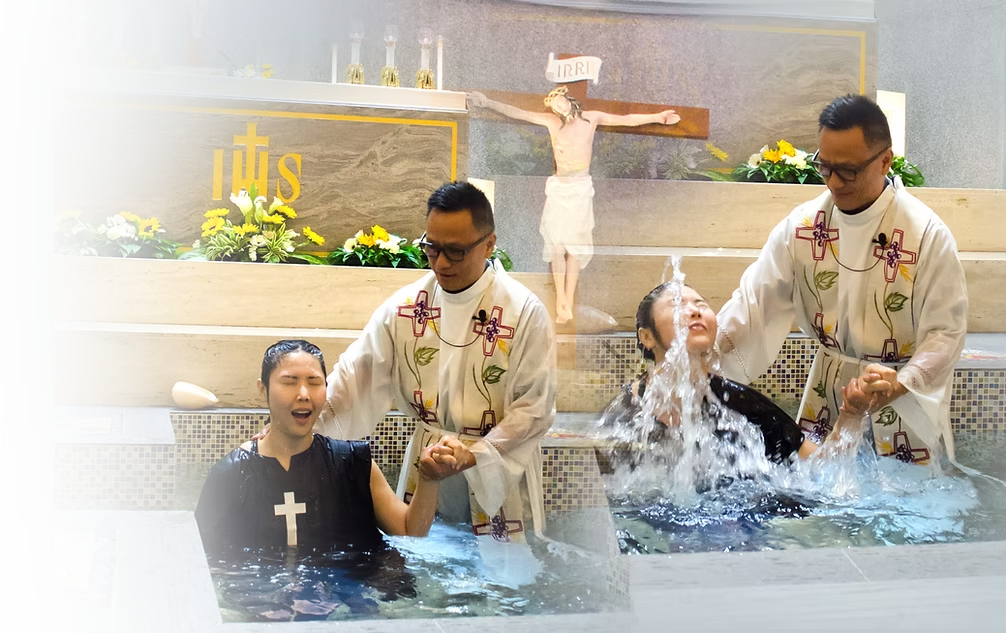
However, Pope Leo XIV highlighted a counter-trend during his address at the Catholic Institute of Paris: a remarkable surge in adult and teenage baptisms. While infant baptisms dropped significantly over the past few decades, adult baptisms have tripled since 2016, with approximately 13,000 adults receiving baptism this year alone.
Comprehensive Itinerary of the Four-Day Papal Journey
Detailed breakdown of the primary stops, core themes, and public addresses throughout the apostolic visit. Pope Leo XIV maintained a demanding schedule addressing pressing socio-political issues alongside spiritual duties.
| Date & Location | Primary Events | Core Themes & Messages |
|---|---|---|
| Friday (Paris) | Arrival, Notre-Dame Cathedral visit, Stade de France youth vigil (80,000 attendees). | Ethics in artificial intelligence, peace in Ukraine, calling youth the “saints of France”. |
| Saturday (Paris) | Maison Bakhita migrant center, Catholic Institute, Champs-Élysées procession, Place de la Concorde Mass. | Dignity and peace in migration, role of women, living water of faith in a secular society. |
| Sunday (Lourdes) | Visit to the Sanctuary of Our Lady of Lourdes, private meeting with seven clerical abuse victims. | Healing, accountability, pastoral care for the sick and vulnerable. |
| Monday (Metz) | Final address on European unity and peace. | Geopolitical harmony, transnational cooperation, reconciliation. |
Addressing Social Justice, Migration, and Modern Technology
Highlighting the socio-political commentary delivered by Pope Leo XIV during his engagements in Paris. The pontiff used his platform to address critical contemporary challenges, ranging from technological ethics to migrant rights.
He urged global leaders to look beyond material gains and focus on human dignity, poverty alleviation, and international solidarity.
Encounter at Maison Bakhita
The pontiff’s visit to the diocesan shelter providing support to Christian and Muslim refugees highlighted the importance of compassion. During his visit with aid workers and migrants, the pope emphasized that peaceful coexistence remains entirely achievable through mutual respect.
He also underscored the fundamental role of women in building what he termed a civilization of love, praising their contributions to community resilience.
Warnings Against Unchecked Artificial Intelligence
Examining the pope’s caution to global leaders regarding technology. Building upon his Friday address, the pontiff cautioned against an uncritical reliance on algorithms.
He warned that unchecked technology could create an isolated paradise of machines that strips away essential human connection and spiritual depth.
Political Engagement and Public Reception
Analyzing the intersection of religion and politics as France approaches a presidential election. The papal visit took place against a backdrop of domestic political shifts, occurring just seven months before voters choose a successor to President Emmanuel Macron.
While President Macron was represented at the Mass by his wife Brigitte due to scheduling, prominent political figures attended the service, including former president Nicolas Sarkozy and far-right leaders Marine Le Pen and Jordan Bardella. Observers noted that the demographic makeup of the crowd extended far beyond traditional churchgoers.
Upcoming Legs in Lourdes and Metz
Tracing the final phases of the apostolic journey beyond the capital. Following the historic liturgies in Paris, Pope Leo XIV traveled to the southwestern town of Lourdes.
Catholic tradition holds that the Virgin Mary appeared in a grotto there to a peasant girl named Bernadette Soubirous in 1858. In Lourdes, the pontiff met privately with victims of clerical sex abuse, addressing accountability following a landmark independent inquiry report.
Conclusion
Summarizing the broader implications of the historic Paris gathering for modern European Christianity. The massive turnout at Place de la Concorde proves that traditional religious institutions still hold significant public reach.
By balancing critiques of modern materialism with messages of hope and interfaith dialogue, the visit marks a defining moment for the Catholic Church in France as it navigates shifting cultural paradigms.
Frequently Asked Questions
What was the main purpose of Pope Leo XIV visiting France?
The four-day apostolic journey focused on spiritual outreach, social justice discussions, and addressing contemporary cultural challenges in a secular European nation.
How many people attended the open-air Mass in Paris?
An estimated 600,000 to 700,000 worshippers gathered at the Place de la Concorde for the historic service.
Which cities were included in the papal itinerary?
The pontiff visited Paris, the Marian shrine at Lourdes, and the northeastern city of Metz during his state tour.