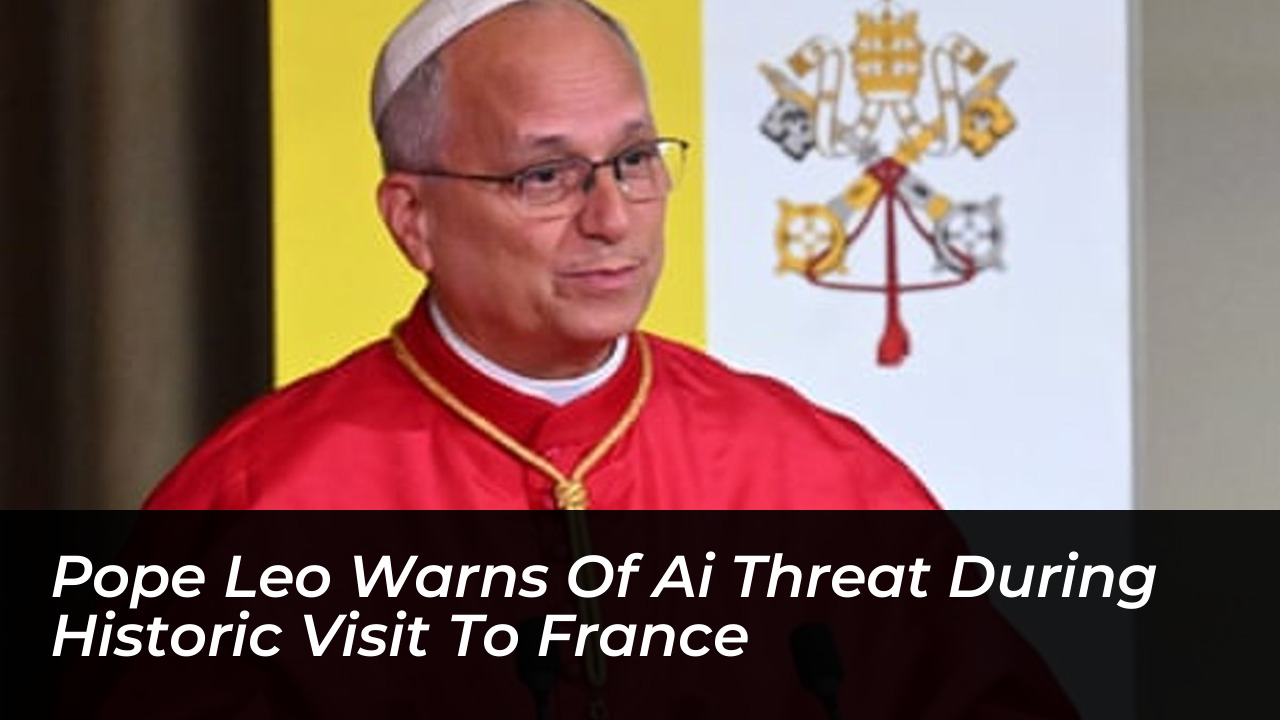
Pope Francis commenced his landmark four-day official visit to France with a direct caution regarding the unchecked expansion of artificial intelligence. Speaking at the Élysée Palace in Paris alongside French President Emmanuel Macron, the head of the Catholic Church described an impending reality where automated systems risk conditioning daily life. This journey marks a significant papal visit to the country, placing technological ethics at the center of international diplomacy.
- Introduction to the Papal Visit and AI Warning
- The Setting at the Élysée Palace
- The Core Ethical Warning Against Automated Systems
- The Danger of Daily Conditioning
- Slowing the Pace of Innovation
- Addressing Dehumanization at UNESCO
- Productivity Metrics Versus Human Worth
- Restoring the Moral Compass of Science
- The Push for International Regulation and Guardrails
- Enforcing Robust Oversight
- Broader Geopolitical and Social Agenda in France
- Key Stops Across the Country
- Navigating Domestic French Policies
- Frequently Asked Questions
- Why did the Pope visit France recently?
- What specific warning was given regarding artificial intelligence?
- What role does UNESCO play in this dialogue?
- Are international tech companies responding to these ethical calls?
Introduction to the Papal Visit and AI Warning
The pontiff emphasized that technological advancement requires rigorous ethical boundaries to protect human dignity. During his address to diplomats and government officials, he articulated the core risk facing modern societies in the digital age. The historic nature of this four-day trip highlights the Vatican commitment to addressing modern technological disruption at the highest levels of global governance.
The Setting at the Élysée Palace
- Joint appearance with French President Emmanuel Macron in Paris.
- Positioning technological ethics at the forefront of international diplomacy.
- The core message regarding machines conditioning daily existence.
During the joint appearance, discussions centered on how modern infrastructure absorbs digital automation without adequate societal debate. President Macron welcomed the dialogue, noting the importance of balancing national digital sovereignty with human-centric values. Both leaders agreed that unchecked automation presents profound governance challenges.
The Core Ethical Warning Against Automated Systems
Examining the specific language used by the Vatican regarding the risk of losing humanity inside a paradise of machines brings clarity to this global agenda. If societies fail to establish firm moral boundaries, automated tools will quietly dictate human choices, stripping away genuine autonomy. The pontiff warned that convenience often blinds citizens to the erosion of their personal freedoms.
The Danger of Daily Conditioning
- How algorithms and automation quietly shape human behavior and choices.
- The loss of agency when convenience outweighs moral awareness.
- The necessity of training new generations in ethical discernment.
Algorithms now manage everything from news consumption to financial credit approvals, operating behind opaque interfaces. This daily conditioning reduces complex human decisions to binary data points. Without targeted educational initiatives, future generations will struggle to identify manipulation masked as helpful digital efficiency.
Slowing the Pace of Innovation
- The papal appeal to tech developers and policymakers to pause rapid deployment.
- Allowing regulatory frameworks and safety guardrails to catch up with raw innovation.
- Balancing commercial growth with long-term social stability.
Tech executives often prioritize speed-to-market over comprehensive safety audits, creating vulnerabilities across public infrastructure. The Vatican advocates for a deliberate slowdown in the scaling of generative models. This pause allows legislators to construct meaningful oversight mechanisms before algorithms cause irreversible social damage.
Addressing Dehumanization at UNESCO
Continuing his critique of modern technology, the pontiff addressed staff and dignitaries at the Paris headquarters of UNESCO. He expanded on the linguistic and cultural shifts occurring as computational tools adopt terminology historically reserved for human cognition. The leader noted that while artificial systems receive designations associated with thought, human worth often faces severe devaluation based on productivity metrics.
Productivity Metrics Versus Human Worth
- The danger of measuring human value strictly through economic output and efficiency.
- Systemic rejection of vulnerable populations who do not fit corporate molds.
- The linguistic shift where computational tools adopt cognitive terminology.
When individuals are judged strictly through the lens of economic efficiency, those who do not fit corporate molds face systemic exclusion. Society increasingly evaluates human beings like industrial assets, measuring worth through output rather than inherent dignity. This utilitarian framework threatens the social safety net and marginalizes the elderly, disabled, and economically disadvantaged.
Restoring the Moral Compass of Science
- Science losing its foundational purpose without strict ethical boundaries.
- The impoverishment of genuine intellectual discourse and human relationships.
- Ensuring technology serves the human person instead of driving social domination.
Science without ethical foundations loses its fundamental purpose and moral compass. Computational models risk impoverishing human relationships and genuine intellectual discourse by replacing face-to-face empathy with synthetic interactions. Technology must act as a supportive tool for humanity rather than an instrument of social control and domination.
The Push for International Regulation and Guardrails
The Vatican has consistently positioned technological regulation as a top priority of recent pontifical teachings. Encyclicals and public addresses call for robust oversight and urge developers to prioritize the common good over short-term financial gains. International tech executives face mounting scrutiny over the rapid scaling of autonomous systems, making global legislative alignment an urgent necessity.
Enforcing Robust Oversight
- Prioritizing the common good above short-term financial gains for developers.
- Structured dialogue between tech executives, ethicists, and government regulators.
- Industry receptiveness to mechanisms preventing widespread displacement.
The Vatican advocates for structured dialogue between tech leaders, ethicists, and governments to establish transparent guidelines. Observers note that many industry leaders show openness to finding mechanisms that prevent mass workforce displacement. Establishing these guardrails requires unprecedented international cooperation across legal and cultural divides.
Broader Geopolitical and Social Agenda in France
Beyond artificial intelligence, the pontiff addressed critical social and geopolitical issues during his extensive French itinerary. His schedule includes high-profile stops in Metz near the German border and the pilgrimage site of Lourdes in southwestern France. These visits provide opportunities to engage with local clergy, political leaders, and vulnerable communities facing modern economic pressures.
Key Stops Across the Country
- The Élysée Palace address on human rights and the right to life.
- The post-restoration prayer service and peace message at Notre-Dame Cathedral.
- Private meetings with abuse survivors during the pilgrimage to Lourdes.
The historic reopening and post-restoration prayer service at Notre-Dame Cathedral served as a powerful symbol of cultural resilience. Meanwhile, the private meetings in Lourdes underscore the ongoing commitment to ecclesiastical accountability and healing. Each stop on the journey reinforces a consistent message of peace, human rights, and moral stewardship.
Navigating Domestic French Policies
- Addressing a delicate political climate marked by secular policies and assisted dying legislation.
- Reinforcing moral principles and historical accountability amid geopolitical friction.
- The broader call to reject nuclear deterrence and defend freedom of the press.
The visit coincides with a delicate political climate in France, marked by shifting secular policies, debates over assisted dying legislation, and constitutional protections for individual rights. Church leaders hope the ongoing dialogue reinforces moral principles while addressing historical accountability. As the visit concludes, the papacy continues to urge global leaders to reject the inevitability of war, abandon nuclear deterrence doctrines, and protect freedom of the press.
Frequently Asked Questions
Why did the Pope visit France recently?
The Pope traveled to France to address international technological ethics, meet with government leaders at the Élysée Palace, and participate in cultural events.
What specific warning was given regarding artificial intelligence?
The Vatican warned that unchecked automated systems risk conditioning daily human life, eroding personal autonomy, and reducing human value to mere economic output.
What role does UNESCO play in this dialogue?
UNESCO hosted discussions on the linguistic shifts of computational tools and the importance of ensuring technology serves human dignity rather than corporate metrics.
Are international tech companies responding to these ethical calls?
Many industry leaders show openness to establishing regulatory guardrails and engaging in structured dialogues with ethicists and global policymakers.